
老年人在常压缺氧环境下进行抗阻运动后的急性白细胞和细胞因子反应
The acute leukocyte and cytokine response of older adults to resistance exercise in normobaric hypoxia.
作者信息
Allsopp Giselle Larissa, Addinsall Alex Bernard, Stephenson Garth, Basheer Faiza, Gatta Paul Adrian Della, May Hoffmann Samantha, Russell Aaron Paul, Wright Craig Robert
机构信息
Institute for Physical Activity and Nutrition, School of Exercise and Nutrition Sciences, Deakin University, Victoria, Australia.
Department of Physiology and Pharmacology, Karolinska Insitutet, 171 77 Stockholm, Sweden.
出版信息
Biol Sport. 2023 Apr;40(2):425-438. doi: 10.5114/biolsport.2023.116005. Epub 2022 Jun 1.
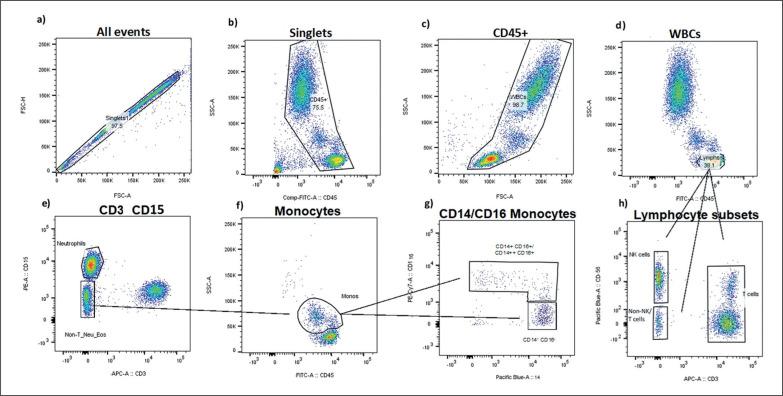
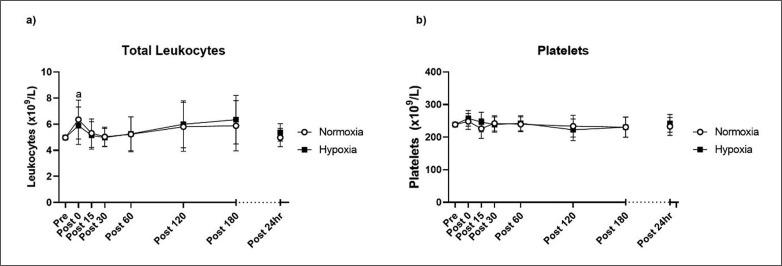
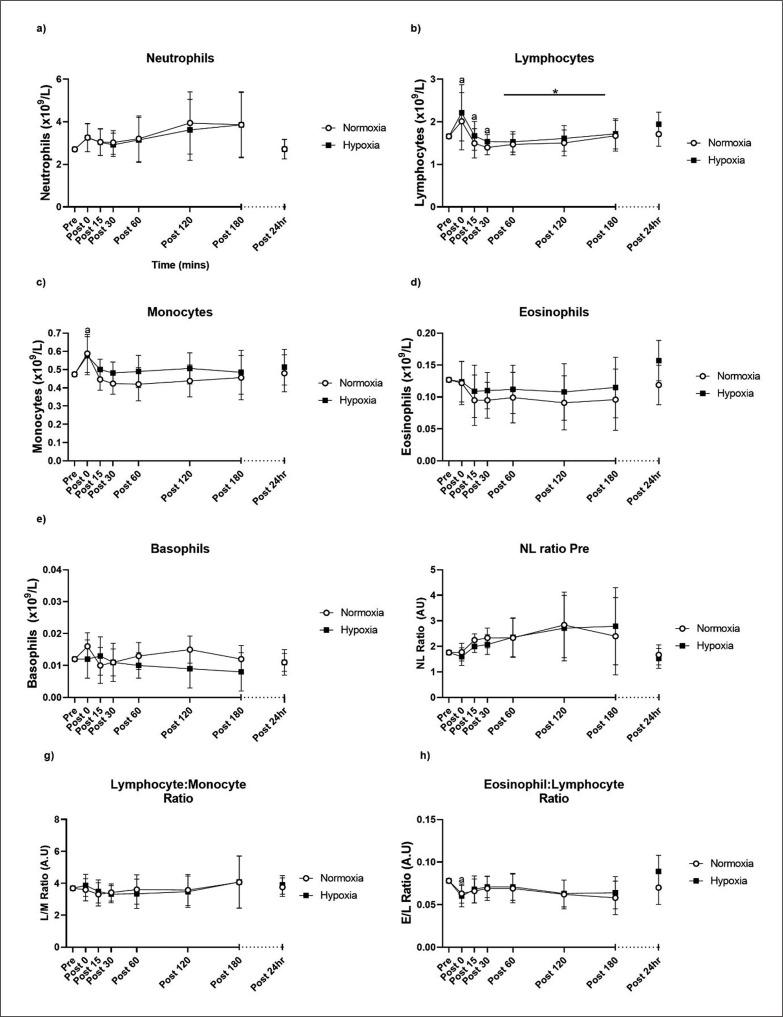
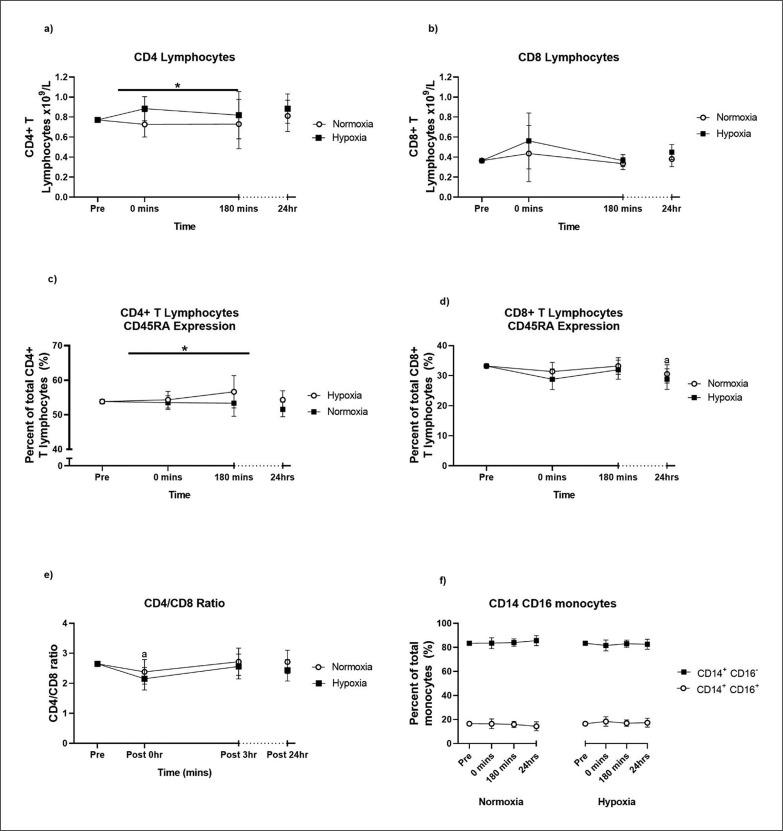
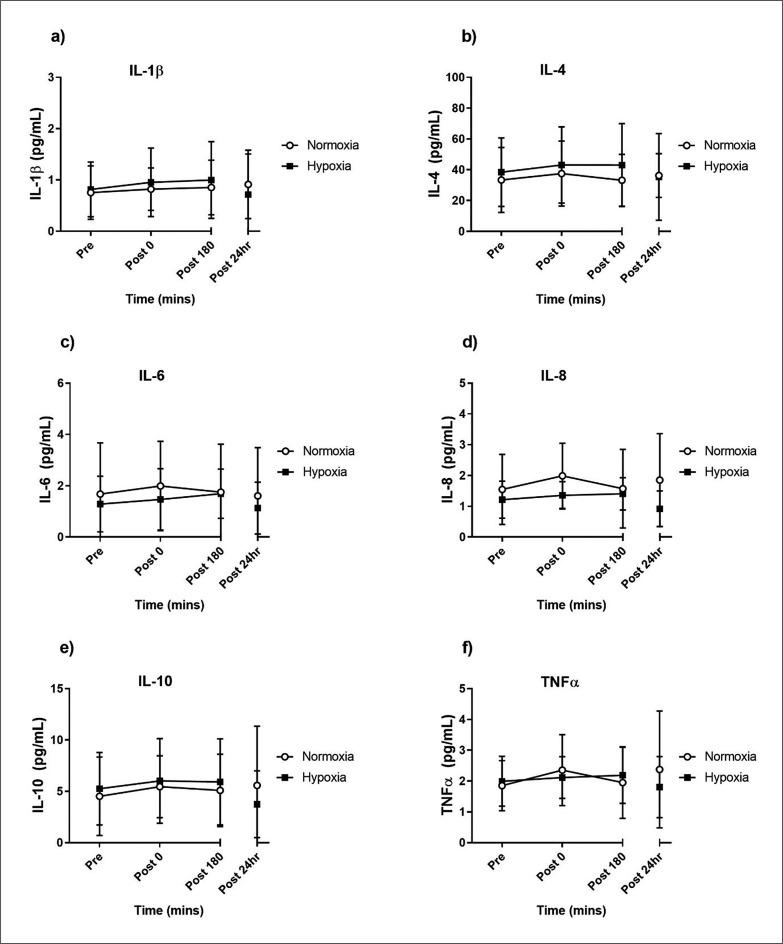
Ageing causes a decline in leukocyte function and blunted leukocyte responses to resistance exercise. Systemic hypoxia exposure augments the leukocyte response to resistance exercise in young adults, yet this response remains uncharacterised in older adults. This study characterised the effects of normobaric hypoxia on the acute leukocyte and inflammatory cytokine responses to resistance exercise in older adults. We recruited 20 adults aged 60-70 years to perform an acute bout of resistance exercise in normobaric hypoxia (FiO 14.4%; n = 10) or normoxia (FiO 20.93%; n = 10). Participants completed 4 × 10 repetitions of lower and upper body exercises at 70% of their predicted 1-repetition maximum. Venous blood was sampled before and up to 24 hours post-exercise to quantify neutrophils, lymphocytes, monocytes, eosinophils, basophils and cytokines (IL-1β, IL-4, IL-6, IL-8, IL-10, TNFα). Flow cytometry was used to classify lymphocytes as T (CD4 helper and CD8 cytotoxic), B and NK cells, in addition to the expression of the senescence marker CD45RA on T cells. The hypoxic group showed a larger lymphocyte response over the 24 hours post-exercise compared to the normoxic group (p = 0.035). Specifically, there were greater concentrations of CD4 T helper cells following hypoxic exercise compared to normoxia (p = 0.046). There was also a greater proportion of CD45RA CD4 T helper cells, suggesting that the cells were more senescent (p = 0.044). Hypoxia did not impact any other leukocyte population or cytokine following exercise. Normobaric hypoxia increases the lymphocyte response to an acute bout of resistance exercise in older adults.
衰老会导致白细胞功能下降以及白细胞对阻力运动的反应减弱。全身低氧暴露可增强年轻人白细胞对阻力运动的反应,但这种反应在老年人中仍未得到充分研究。本研究旨在探讨常压低氧对老年人急性白细胞和炎性细胞因子对阻力运动反应的影响。我们招募了20名60-70岁的成年人,让他们在常压低氧(FiO₂ 14.4%;n = 10)或常氧(FiO₂ 20.93%;n = 10)条件下进行一次急性阻力运动。参与者以其预计的1次重复最大重量的70%完成4组每组10次的上下肢运动。在运动前及运动后长达24小时采集静脉血,以定量分析中性粒细胞、淋巴细胞、单核细胞、嗜酸性粒细胞、嗜碱性粒细胞和细胞因子(IL-1β、IL-4、IL-6、IL-8、IL-10、TNFα)。除了T细胞上衰老标志物CD45RA的表达外,还使用流式细胞术将淋巴细胞分类为T(CD4辅助性和CD8细胞毒性)、B和NK细胞。与常氧组相比,低氧组在运动后24小时内淋巴细胞反应更大(p = 0.035)。具体而言,与常氧运动相比,低氧运动后CD4辅助性T细胞浓度更高(p = 0.046)。CD45RA⁺ CD4辅助性T细胞的比例也更高,表明这些细胞更衰老(p = 0.044)。低氧对运动后的其他白细胞群体或细胞因子没有影响。常压低氧可增强老年人对急性阻力运动的淋巴细胞反应。


 Zotero 插件