
Delta-6 去饱和酶(Fads2)缺乏改变了小鼠白色脂肪组织中的三酰基甘油/脂肪酸循环。
Delta-6 desaturase (Fads2) deficiency alters triacylglycerol/fatty acid cycling in murine white adipose tissue.
机构信息
Department of Human Health and Nutritional Sciences, University of Guelph, Guelph, ON, Canada.
Department of Pharmacology, Dalhousie University, Saint John, NB, Canada.
出版信息
J Lipid Res. 2023 Jun;64(6):100376. doi: 10.1016/j.jlr.2023.100376. Epub 2023 Apr 19.
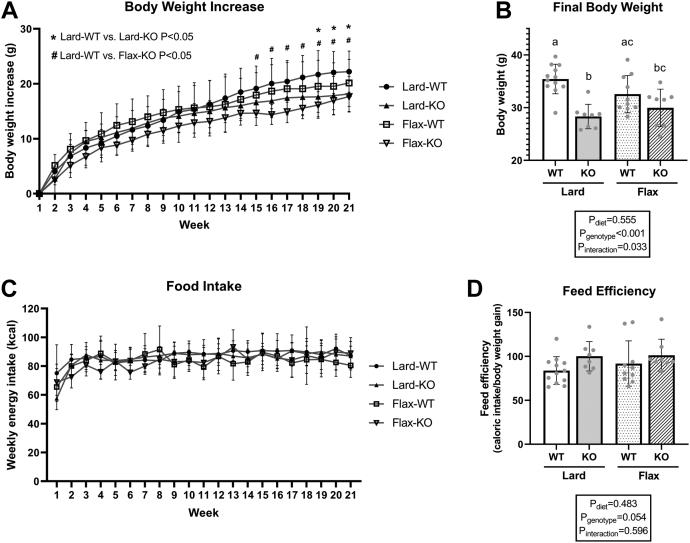
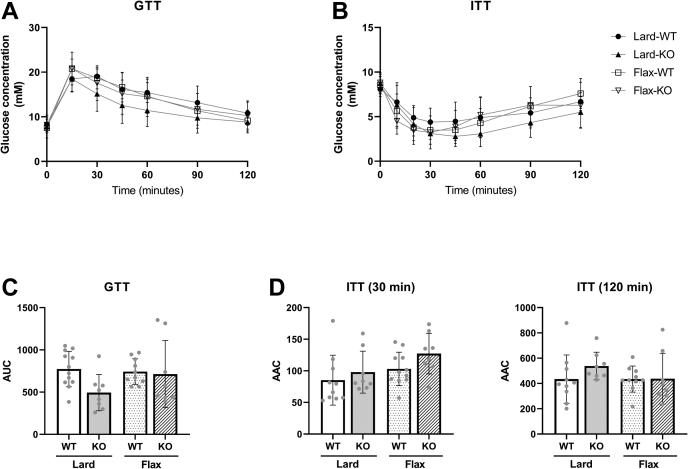
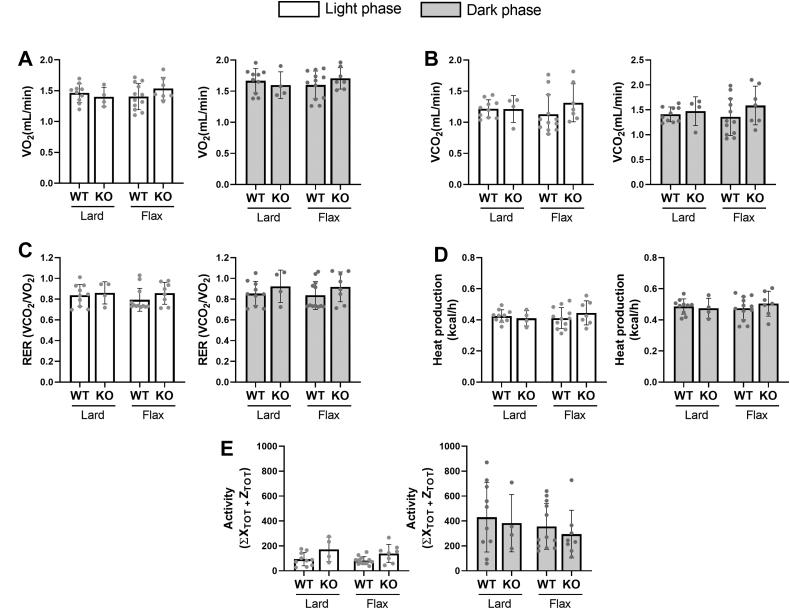
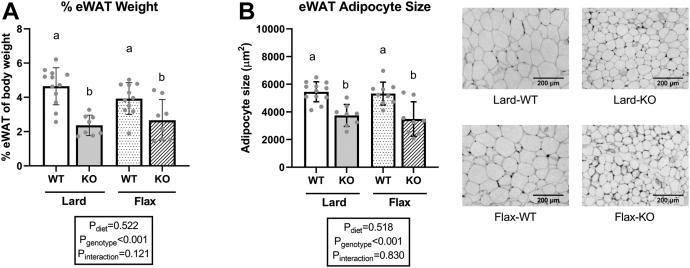
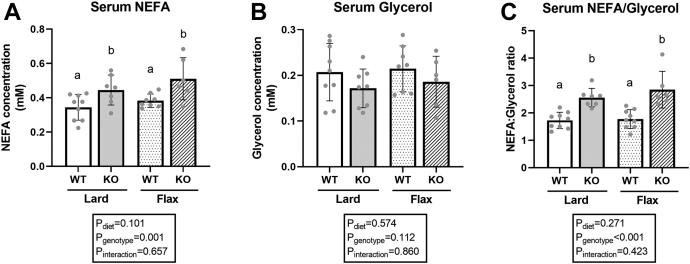
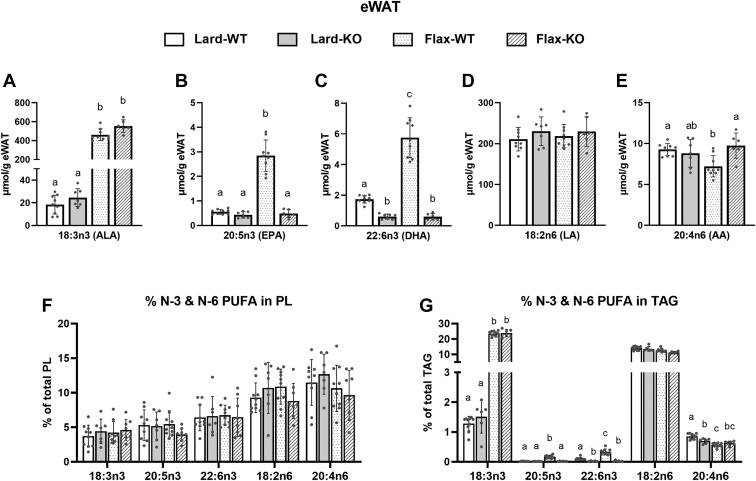
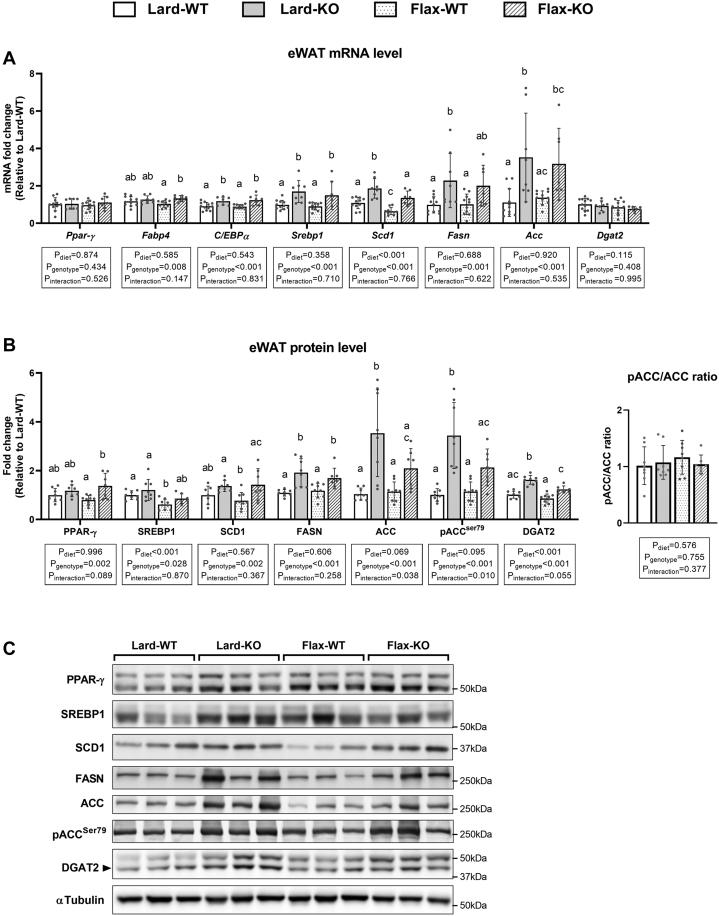
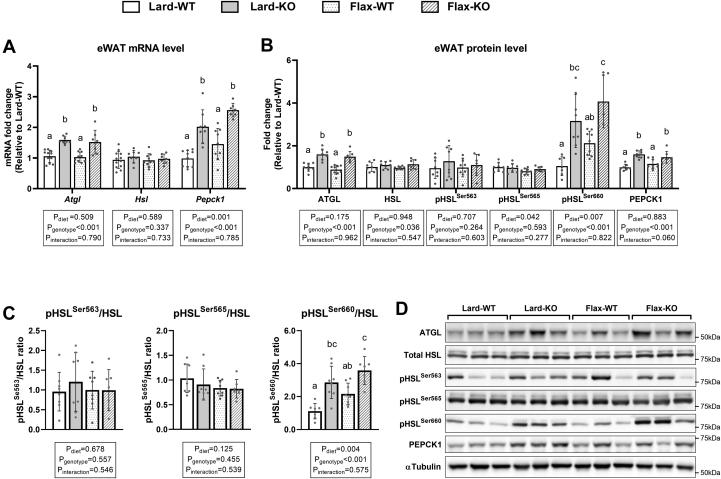
The Δ-6 desaturase (D6D) enzyme is not only critical for the synthesis of eicosapentaenoic acid (EPA) and docosahexaenoic acid (DHA) from α-linolenic acid (ALA), but recent evidence suggests that it also plays a role in adipocyte lipid metabolism and body weight; however, the mechanisms remain largely unexplored. The goal of this study was to investigate if a D6D deficiency would inhibit triacylglycerol storage and alter lipolytic and lipogenic pathways in mouse white adipose tissue (WAT) depots due to a disruption in EPA and DHA production. Male C57BL/6J D6D knockout (KO) and wild-type (WT) mice were fed either a 7% w/w lard or flax (ALA rich) diet for 21 weeks. Energy expenditure, physical activity, and substrate utilization were measured with metabolic caging. Inguinal and epididymal WAT depots were analyzed for changes in tissue weight, fatty acid composition, adipocyte size, and markers of lipogenesis, lipolysis, and insulin signaling. KO mice had lower body weight, higher serum nonesterified fatty acids, smaller WAT depots, and reduced adipocyte size compared to WT mice without altered food intake, energy expenditure, or physical activity, regardless of the diet. Markers of lipogenesis and lipolysis were more highly expressed in KO mice compared to WT mice in both depots, regardless of the diet. These changes were concomitant with lower basal insulin signaling in WAT. Collectively, a D6D deficiency alters triacylglycerol/fatty acid cycling in WAT by promoting lipolysis and reducing fatty acid re-esterification, which may be partially attributed to a reduction in WAT insulin signaling.
Δ-6 去饱和酶(D6D)不仅对于从α-亚麻酸(ALA)合成二十碳五烯酸(EPA)和二十二碳六烯酸(DHA)至关重要,而且最近的证据表明,它在脂肪细胞脂质代谢和体重中也发挥作用;然而,其机制在很大程度上仍未得到探索。本研究的目的是研究 D6D 缺乏是否会由于 EPA 和 DHA 产生的中断而抑制甘油三酯的储存,并改变小鼠白色脂肪组织(WAT)库中的脂肪分解和脂肪生成途径。雄性 C57BL/6J D6D 敲除(KO)和野生型(WT)小鼠分别用 7%w/w 猪油或亚麻(富含 ALA)饮食喂养 21 周。用代谢笼测量能量消耗、身体活动和底物利用。分析腹股沟和附睾 WAT 储存库中组织重量、脂肪酸组成、脂肪细胞大小以及脂肪生成、脂肪分解和胰岛素信号的标志物的变化。与 WT 小鼠相比,KO 小鼠的体重较低、血清非酯化脂肪酸较高、WAT 储存库较小、脂肪细胞较小,而饮食不改变食物摄入、能量消耗或身体活动。无论饮食如何,脂肪生成和脂肪分解的标志物在 KO 小鼠中的表达均高于 WT 小鼠。这些变化伴随着 WAT 基础胰岛素信号的降低。总的来说,D6D 缺乏通过促进脂肪分解和减少脂肪酸再酯化来改变 WAT 中的甘油三酯/脂肪酸循环,这可能部分归因于 WAT 胰岛素信号的降低。


 Zotero 插件