
木犀草素:一种在鸡体外肝脏模型中减轻鼠伤寒沙门氏菌鞭毛蛋白诱导炎症的植物化学物质。
Luteolin: A Phytochemical to Mitigate Typhimurium Flagellin-Induced Inflammation in a Chicken In Vitro Hepatic Model.
作者信息
Tráj Patrik, Sebők Csilla, Mackei Máté, Kemény Ágnes, Farkas Orsolya, Kákonyi Ákos, Kovács László, Neogrády Zsuzsanna, Jerzsele Ákos, Mátis Gábor
机构信息
Division of Biochemistry, Department of Physiology and Biochemistry, University of Veterinary Medicine, István utca 2., H-1078 Budapest, Hungary.
National Laboratory of Infectious Animal Diseases, Antimicrobial Resistance, Veterinary Public Health and Food Chain Safety, University of Veterinary Medicine, István utca 2., H-1078 Budapest, Hungary.
出版信息
Animals (Basel). 2023 Apr 20;13(8):1410. doi: 10.3390/ani13081410.
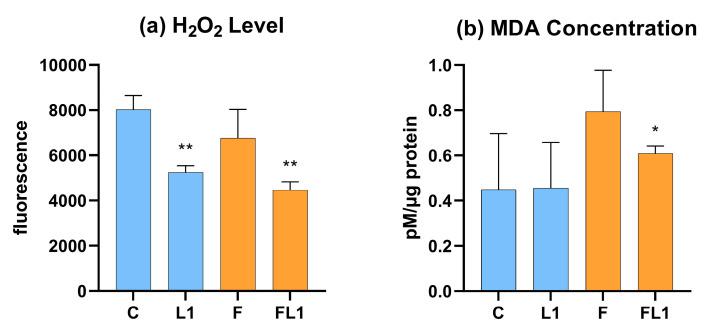
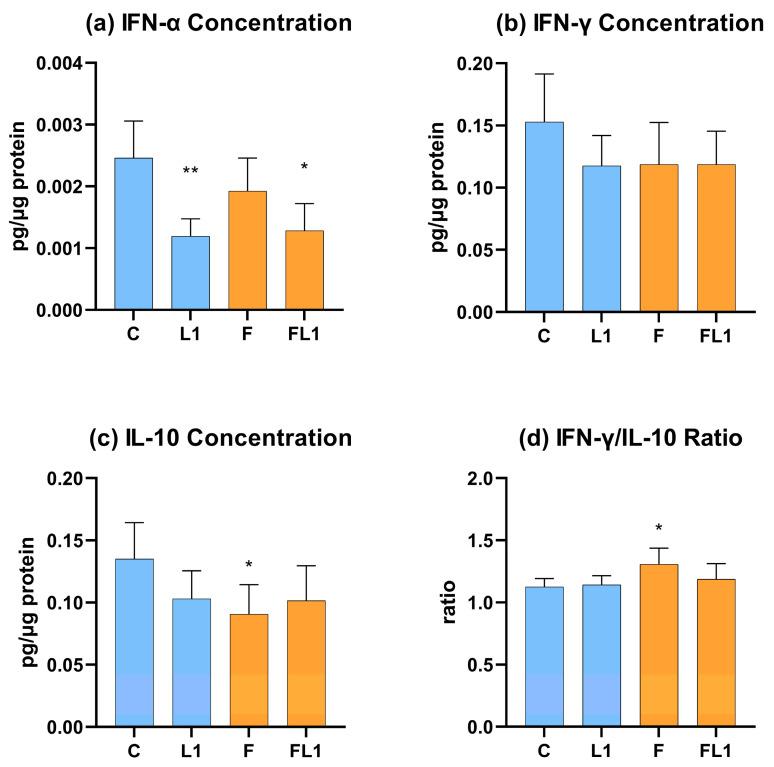
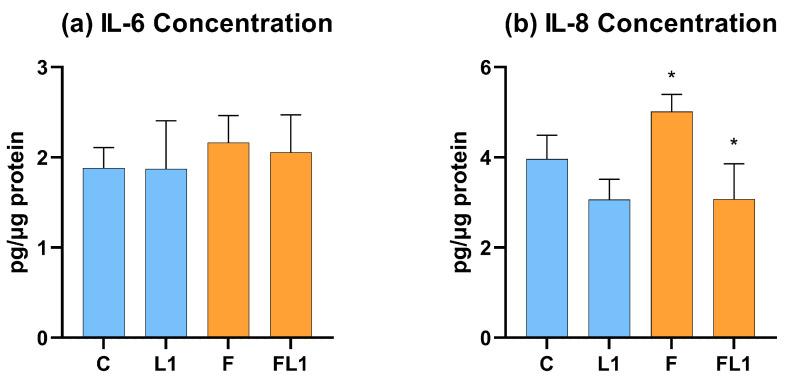
The use of natural feed supplements is an alternative tool to diminish the damage caused by certain bacteria, improving animal health and productivity. The present research aimed to investigate the proinflammatory effect of flagellin released from the bacterial flagellum of serovar Typhimurium and to attenuate the induced inflammation with luteolin as a plant-derived flavonoid on a chicken primary hepatocyte-non-parenchymal cell co-culture. Cells were cultured in a medium supplemented with 250 ng/mL flagellin and 4 or 16 µg/mL luteolin for 24 h. Cellular metabolic activity, lactate dehydrogenase (LDH) activity, interleukin-6, 8, 10 (IL-6, IL-8, IL-10), interferon-α, γ (IFN-α, IFN-γ), hydrogen peroxide (HO) and malondialdehyde (MDA) concentrations were determined. Flagellin significantly increased the concentration of the proinflammatory cytokine IL-8 and the ratio of IFN-γ/IL-10, while it decreased the level of IL-10, indicating that the model served adequate to study inflammation in vitro. Luteolin treatment at 4 µg/mL did not prove to be cytotoxic, as reflected by metabolic activity and extracellular LDH activity, and significantly reduced the flagellin-triggered IL-8 release of the cultured cells. Further, it had a diminishing effect on the concentration of IFN-α, HO and MDA and restored the level of IL-10 and the ratio of IFN-γ/IL-10 when applied in combination with flagellin. These results suggest that luteolin at lower concentrations may protect hepatic cells from an excessive inflammatory response and act as an antioxidant to attenuate oxidative damage.
使用天然饲料补充剂是减少某些细菌造成损害的一种替代工具,可改善动物健康和生产力。本研究旨在调查鼠伤寒血清型细菌鞭毛释放的鞭毛蛋白的促炎作用,并以木犀草素作为一种植物来源的黄酮类化合物,在鸡原代肝细胞-非实质细胞共培养物中减轻诱导的炎症。将细胞在补充有250 ng/mL鞭毛蛋白和4或16 µg/mL木犀草素的培养基中培养24小时。测定细胞代谢活性、乳酸脱氢酶(LDH)活性、白细胞介素-6、8、10(IL-6、IL-8、IL-10)、干扰素-α、γ(IFN-α、IFN-γ)、过氧化氢(HO)和丙二醛(MDA)浓度。鞭毛蛋白显著增加促炎细胞因子IL-8的浓度和IFN-γ/IL-10的比值,同时降低IL-10水平,表明该模型足以用于体外炎症研究。4 µg/mL的木犀草素处理未显示出细胞毒性,这从代谢活性和细胞外LDH活性可以反映出来,并且显著降低了培养细胞中鞭毛蛋白触发的IL-8释放。此外,当与鞭毛蛋白联合应用时,它对IFN-α、HO和MDA的浓度有降低作用,并恢复了IL-10水平和IFN-γ/IL-10的比值。这些结果表明,较低浓度的木犀草素可能保护肝细胞免受过度的炎症反应,并作为抗氧化剂减轻氧化损伤。


 Zotero 插件