
维生素K缺乏诱导蛋白II:一种区分胰腺导管腺癌与胰腺良性病变并预测血管侵犯的潜在生物标志物。
Protein Induced by Vitamin K Absence II: A Potential Biomarker to Differentiate Pancreatic Ductal Adenocarcinoma from Pancreatic Benign Lesions and Predict Vascular Invasion.
作者信息
Yang Yang, Li Guangbing, Zhang Yu, Cui Yunfeng, Liu Jun
机构信息
Department of Surgery, Tianjin Nankai Hospital, Nankai Clinical School of Medicine, Tianjin Medical University, Tianjin 300070, China.
Department of Liver Transplantation and Hepatobiliary Surgery, Shandong Provincial Hospital Affiliated to Shandong First Medical University, Jinan 250021, China.
出版信息
J Clin Med. 2023 Apr 7;12(8):2769. doi: 10.3390/jcm12082769.
BACKGROUND
Pancreatic ductal adenocarcinoma (PDAC) is a highly malignant gastrointestinal tumor with a poor prognosis. Serum biomarker carbohydrate antigen 19-9 (CA19-9) was the only well-established biomarker for PDAC with inadequate efficacy. This present study aimed to determine the ability of PIVKA-II to discriminate PDAC from pancreatic benign lesions and predict vascular invasion preoperatively.
METHODS
Patients who underwent pancreatic surgery from 2017 to 2020 were enrolled. We examined the differential diagnostic ability of protein induced by vitamin K absence II (PIVKA-II), CA19-9, and their combination and 138 with PDAC evaluated the predictive value of PIVKA-II for vascular invasion in PDAC.
METHODS
A total of 138 patients with PDAC and 90 patients with pancreatic benign lesions who underwent pancreatic surgery from 2017 to 2020 were enrolled. The clinicopathological characteristics were recorded.
RESULTS
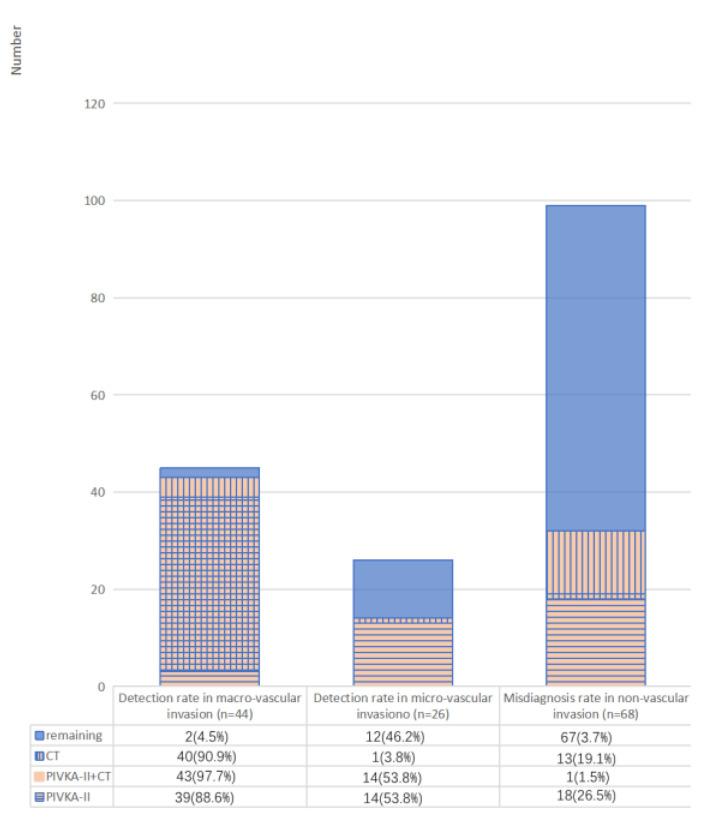
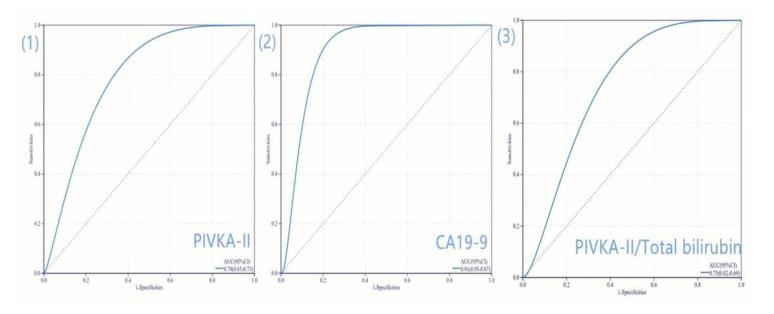
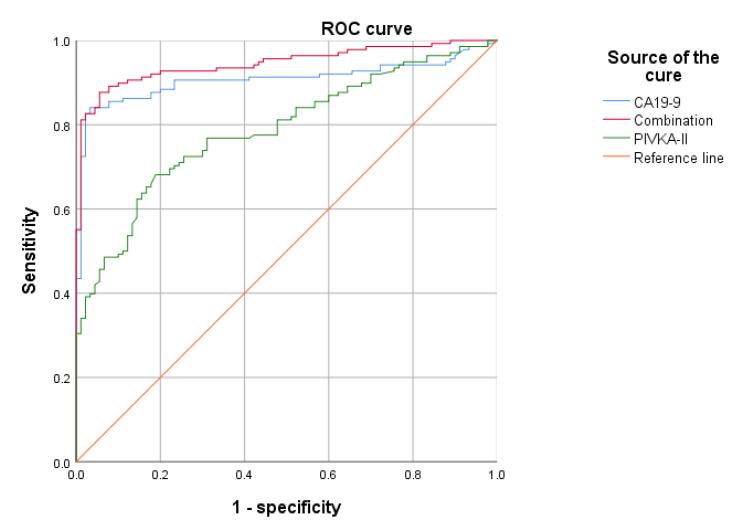
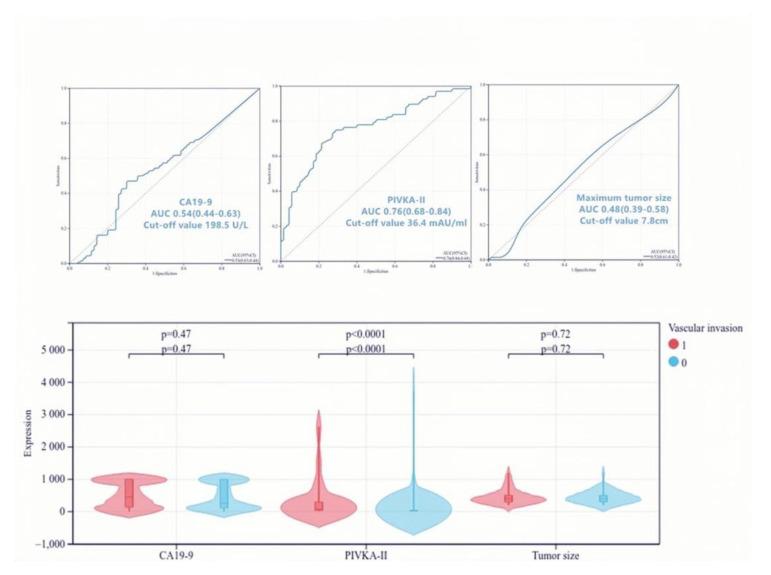
There was a significant difference in levels of serum PIVKA-II between PDAC patients and patients with pancreatic benign lesions ( < 0.001). When the cut-off value was set to 28.9 mAU/mL according to the ROCs, the AUC, sensitivity, and specificity of PIVKA-II were 0.787, 68.1%, and 83.3%, respectively. The combined PIVKA-II and carbohydrate antigen 19-9 (CA19-9) enhanced the diagnostic accuracy, and the AUC, sensitivity, and specificity were 0.945, 87.7%, and 94.4%, respectively. PIVKA-II > 36.4 mAU/mL were independent predictive factors of vascular invasion in PDAC ( < 0.001).
CONCLUSION
PIVKA-II was a potential diagnostic biomarker to differentiate PDAC from pancreatic benign lesions. PIVKA-II was complementary to CA19-9, and the combination enhanced the differential diagnostic performance. PIVKA-II > 36.4 mAU/mL was an independent predictive factor of vascular invasion in PDAC.
背景
胰腺导管腺癌(PDAC)是一种预后较差的高度恶性胃肠道肿瘤。血清生物标志物糖类抗原19-9(CA19-9)是唯一已确立的用于PDAC的生物标志物,但疗效欠佳。本研究旨在确定异常凝血酶原(PIVKA-II)区分PDAC与胰腺良性病变以及术前预测血管侵犯的能力。
方法
纳入2017年至2020年接受胰腺手术的患者。我们检测了维生素K缺乏诱导蛋白II(PIVKA-II)、CA19-9及其联合检测的鉴别诊断能力,并对138例PDAC患者评估了PIVKA-II对PDAC血管侵犯的预测价值。
方法
纳入2017年至2020年接受胰腺手术的138例PDAC患者和90例胰腺良性病变患者。记录其临床病理特征。
结果
PDAC患者与胰腺良性病变患者血清PIVKA-II水平存在显著差异(<0.001)。根据ROC曲线,当临界值设定为28.9 mAU/mL时,PIVKA-II的曲线下面积(AUC)、灵敏度和特异度分别为0.787、68.1%和83.3%。PIVKA-II与糖类抗原19-9(CA19-9)联合检测提高了诊断准确性,AUC、灵敏度和特异度分别为0.945、87.7%和94.4%。PIVKA-II>36.4 mAU/mL是PDAC血管侵犯的独立预测因素(<0.001)。
结论
PIVKA-II是区分PDAC与胰腺良性病变的潜在诊断生物标志物。PIVKA-II与CA19-9具有互补性,联合检测可提高鉴别诊断性能。PIVKA-II>36.4 mAU/mL是PDAC血管侵犯的独立预测因素。


 Zotero 插件