
利用从摩洛哥坚果土壤中分离出的细菌菌株,将摩洛哥坚果种子废弃物转化为聚羟基丁酸酯用于生产
Valorization of Waste from Argan Seeds for Polyhydroxybutyrate Production Using Bacterial Strains Isolated from Argan Soils.
作者信息
Aragosa Amina, Specchia Valeria, Frigione Mariaenrica
机构信息
Department of Biological and Environmental Sciences and Technologies, University of Salento, 73100 Lecce, Italy.
School of Science and Engineering, Al Akhawayn University, Ifrane 53000, Morocco.
出版信息
Polymers (Basel). 2023 Apr 21;15(8):1972. doi: 10.3390/polym15081972.
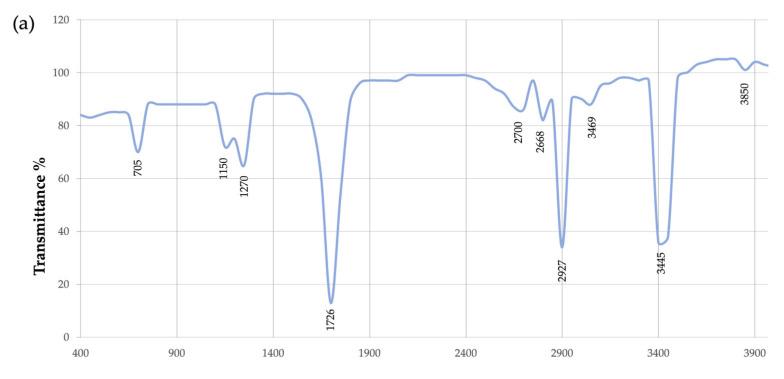
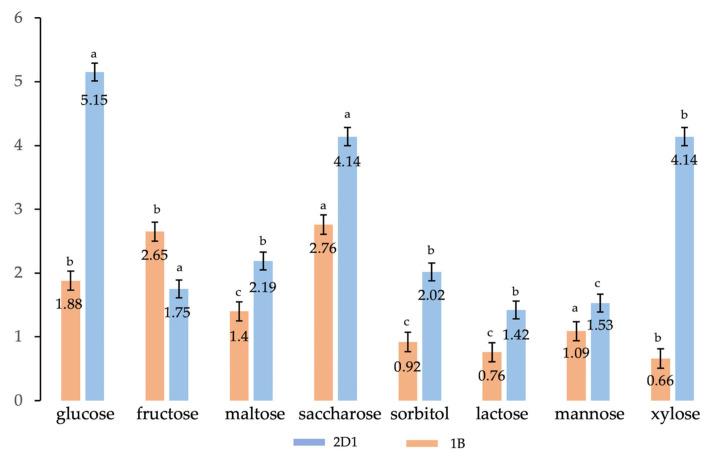
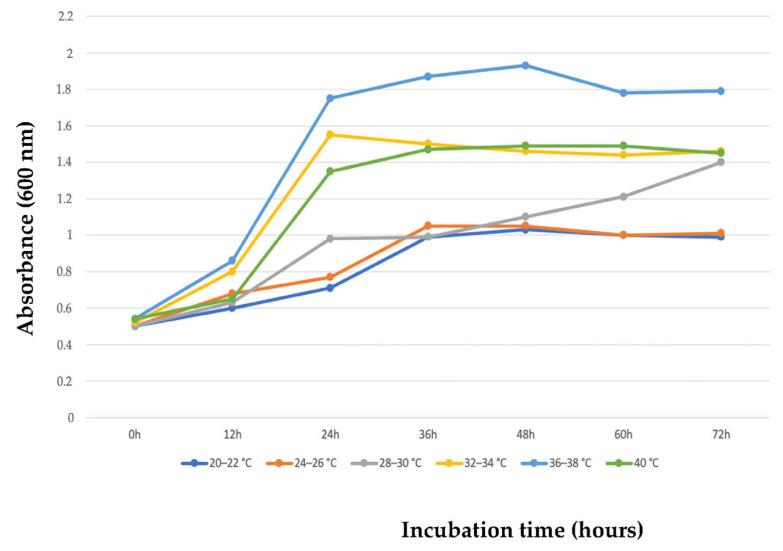
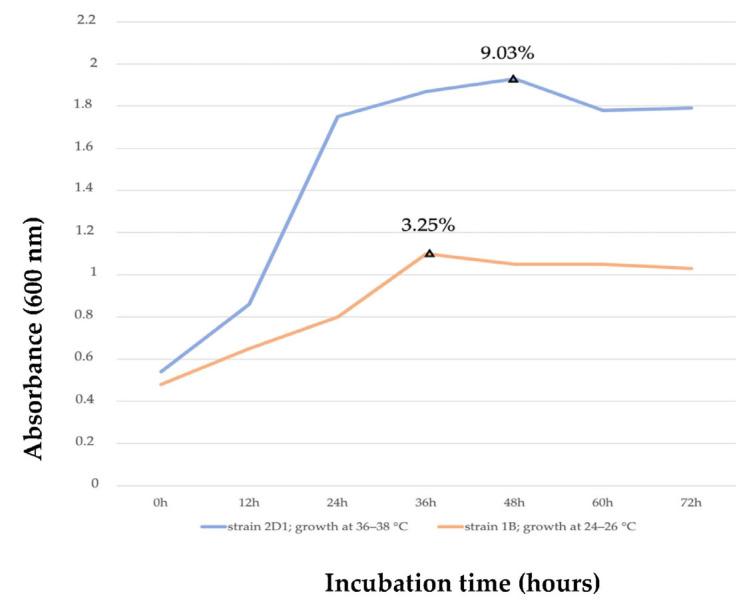
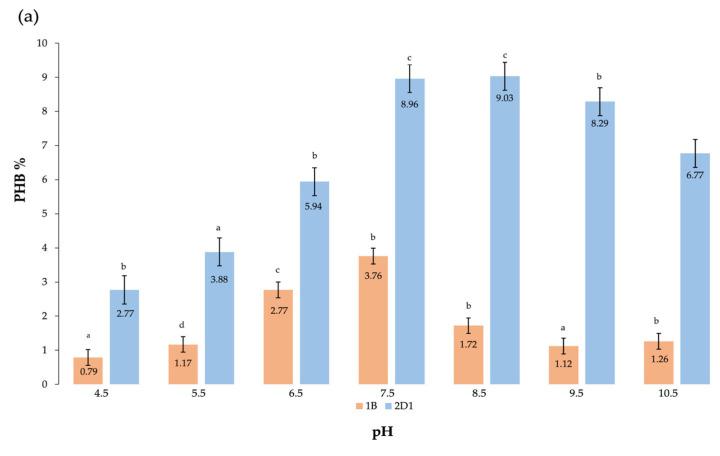
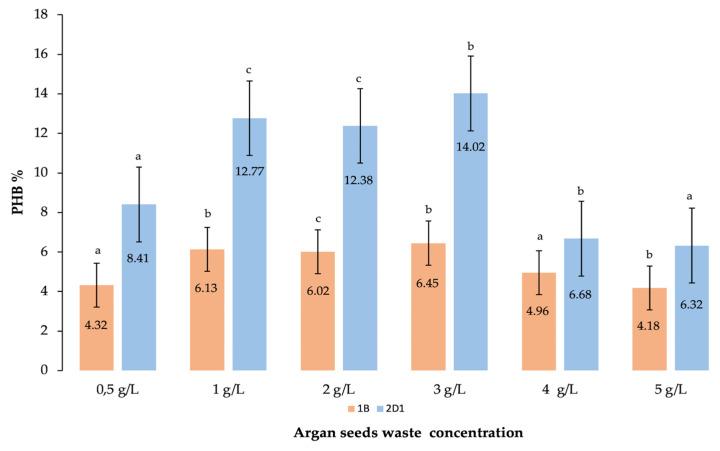
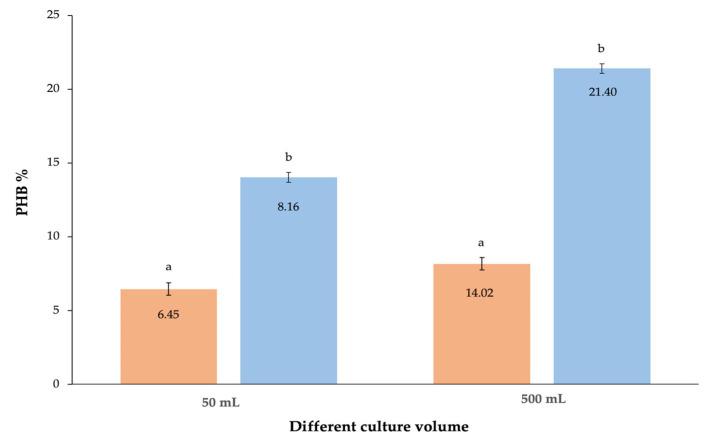
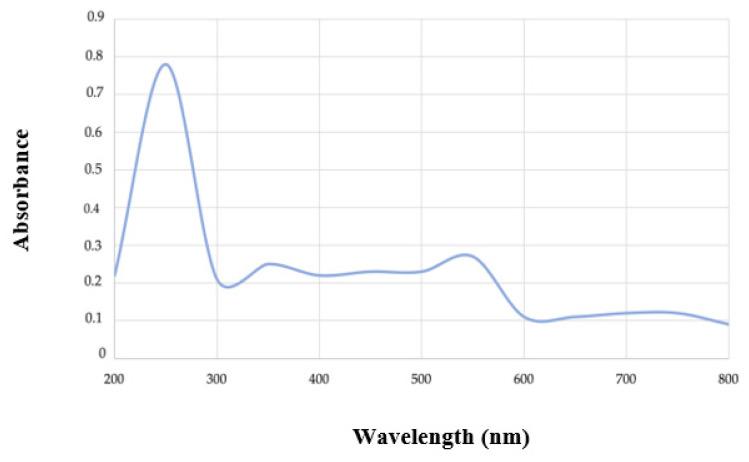
The aim of this work was to study the valorization of argan seed pulp, a waste material obtained from argan oil extraction, for the biosynthesis of polyhydroxybutyrate (PHB). A new species that showed the metabolic capacity for the conversion of argan waste into the bio-based polymer was isolated from an argan crop located in Teroudant, a southwestern region of Morocco, where the arid soil is exploited for goat grazing. The PHB accumulation efficiency of this new species was compared to the previously identified species 1B belonging to the genus Sphingomonas, and results were reported as dry cell weight residual biomass and PHB final yield measured. Temperature, incubation time, pH, NaCl concentration, nitrogen sources, residue concentrations, and culture medium volumes were analyzed with the aim of obtaining a maximum accumulation of PHB. UV-visible spectrophotometry and FTIR analysis confirmed that PHB was present in the material extracted from the bacterial culture. The results of this wide investigation indicated that the new isolated species 2D1 had a higher efficiency in PHB production compared to the previously identified strain 1B, which was isolated from a contaminated argan soil in Teroudant. PHB final yield of the two bacterial species, i.e., the new isolated and 1B, cultivated under optimal culture conditions, in 500 mL MSM enriched with 3% argan waste, were 21.40% (5.91 ± 0.16 g/L) and 8.16% (1.92 ± 0.23 g/L), respectively. For the new isolated strain, the result of the UV-visible spectrum indicates the absorbance at 248 nm, while the FTIR spectrum showed peaks at 1726 cm and 1270 cm: these characteristic peaks indicated the presence of PHB in the extract. The data from the species 1B UV-visible and FTIR spectra were previously reported and were used in this study for a correlation analysis. Furthermore, additional peaks, uncharacteristic of standard PHB, suggest the presence of impurities (e.g., cell debris, solvent residues, biomass residues) that persisted after extraction. Therefore, a further enhancement of the sample purification during extraction is recommended for more accuracy in the chemical characterization. If 470,000 tons of argan fruit waste can be produced annually, and 3% of waste is consumed in 500 mL culture by 2D1 to produce 5.91 g/L (21.40%) of the bio-based polymer PHB, it can be estimated that the amount of putative PHB that can be extracted annually from the total argan fruit waste is about 2300 tons.
这项工作的目的是研究从阿甘油提取过程中产生的废料——阿甘油种子果肉用于聚羟基丁酸酯(PHB)生物合成的价值。从位于摩洛哥西南部地区特鲁丹特的一片阿甘油作物中分离出了一个新物种,该物种具有将阿甘油废料转化为生物基聚合物的代谢能力,当地干旱土壤用于放牧山羊。将这个新物种的PHB积累效率与先前鉴定的属于鞘氨醇单胞菌属的1B物种进行了比较,并将结果报告为干细胞重量、残余生物量和测得的PHB最终产量。对温度、培养时间、pH值、氯化钠浓度、氮源、废料浓度和培养基体积进行了分析,目的是实现PHB的最大积累。紫外可见分光光度法和傅里叶变换红外光谱(FTIR)分析证实,从细菌培养物中提取的物质中存在PHB。这项广泛研究的结果表明,新分离出的2D1物种在PHB生产方面比先前从特鲁丹特受污染的阿甘油土壤中分离出的1B菌株具有更高的效率。在500毫升富含3%阿甘油废料的改良无机盐培养基(MSM)中,在最佳培养条件下培养的这两种细菌物种,即新分离出的物种和1B的PHB最终产量分别为21.40%(5.91±0.16克/升)和8.16%(1.92±0.23克/升)。对于新分离出的菌株,紫外可见光谱的结果表明在248纳米处有吸光度,而FTIR光谱在1726厘米和1270厘米处显示出峰值:这些特征峰表明提取物中存在PHB。1B物种的紫外可见光谱和FTIR光谱数据先前已有报道,并在本研究中用于相关性分析。此外,标准PHB所没有的其他峰表明在提取后仍存在杂质(如细胞碎片、溶剂残留、生物量残留)。因此,建议在提取过程中进一步加强样品纯化,以提高化学表征的准确性。如果每年可产生47万吨阿甘油果实废料,并且2D1在500毫升培养物中消耗3%的废料来生产5.91克/升(21.40%)的生物基聚合物PHB,那么可以估计,每年从阿甘油果实废料总量中可提取的假定PHB量约为2300吨。

 Zotero 插件