
利用无人机高光谱成像评估麦田茎锈病。
Evaluation of Stem Rust Disease in Wheat Fields by Drone Hyperspectral Imaging.
机构信息
Bioproducts and Biosystems Engineering Department, University of Minnesota, 1390 Eckles Ave, St. Paul, MN 55108, USA.
U.S. Department of Agriculture, Agricultural Research Service, Cereal Disease Lab, 1551 Lindig Avenue, St. Paul, MN 55108, USA.
出版信息
Sensors (Basel). 2023 Apr 21;23(8):4154. doi: 10.3390/s23084154.
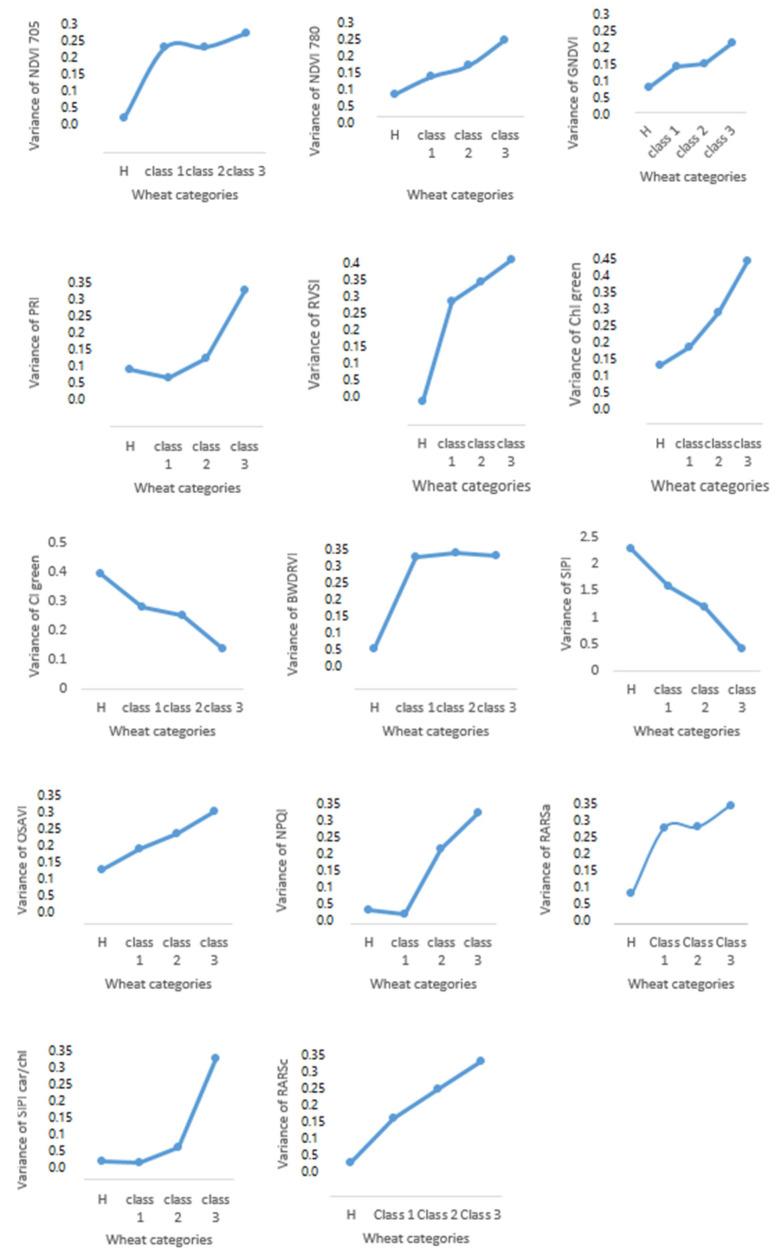
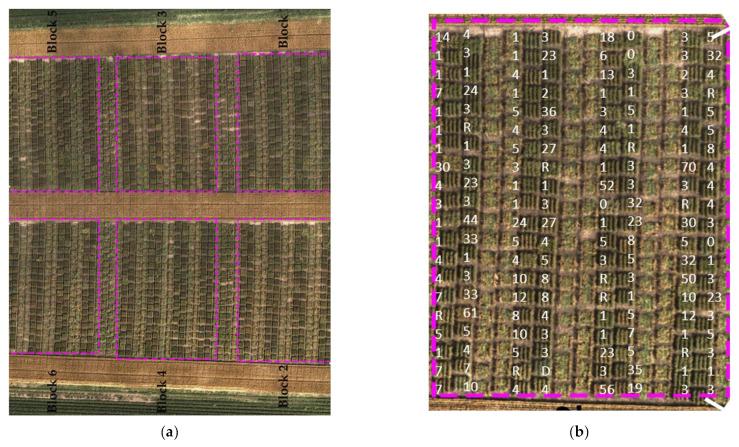
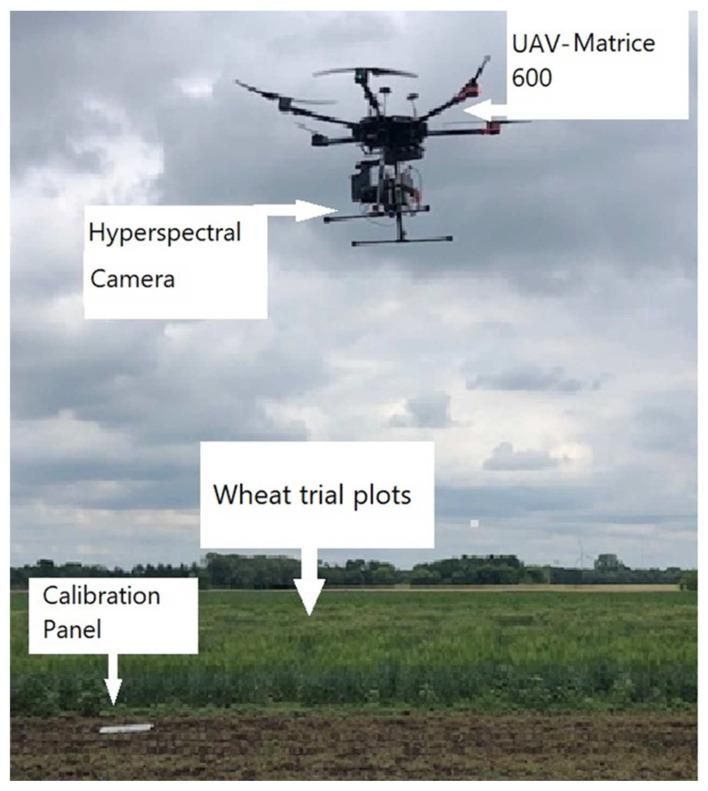
Detecting plant disease severity could help growers and researchers study how the disease impacts cereal crops to make timely decisions. Advanced technology is needed to protect cereals that feed the increasing population using fewer chemicals; this may lead to reduced labor usage and cost in the field. Accurate detection of wheat stem rust, an emerging threat to wheat production, could inform growers to make management decisions and assist plant breeders in making line selections. A hyperspectral camera mounted on an unmanned aerial vehicle (UAV) was utilized in this study to evaluate the severity of wheat stem rust disease in a disease trial containing 960 plots. Quadratic discriminant analysis (QDA) and random forest classifier (RFC), decision tree classification, and support vector machine (SVM) were applied to select the wavelengths and spectral vegetation indices (SVIs). The trial plots were divided into four levels based on ground truth disease severities: class 0 (healthy, severity 0), class 1 (mildly diseased, severity 1-15), class 2 (moderately diseased, severity 16-34), and class 3 (severely diseased, highest severity observed). The RFC method achieved the highest overall classification accuracy (85%). For the spectral vegetation indices (SVIs), the highest classification rate was recorded by RFC, and the accuracy was 76%. The Green NDVI (GNDVI), Photochemical Reflectance Index (PRI), Red-Edge Vegetation Stress Index (RVS1), and Chlorophyll Green (Chl green) were selected from 14 SVIs. In addition, binary classification of mildly diseased vs. non-diseased was also conducted using the classifiers and achieved 88% classification accuracy. This highlighted that hyperspectral imaging was sensitive enough to discriminate between low levels of stem rust disease vs. no disease. The results of this study demonstrated that drone hyperspectral imaging can discriminate stem rust disease levels so that breeders can select disease-resistant varieties more efficiently. The detection of low disease severity capability of drone hyperspectral imaging can help farmers identify early disease outbreaks and enable more timely management of their fields. Based on this study, it is also possible to build a new inexpensive multispectral sensor to diagnose wheat stem rust disease accurately.
检测植物病害严重程度可以帮助种植者和研究人员研究疾病对谷物作物的影响,以便及时做出决策。需要先进的技术来保护谷物,以在减少化学物质使用的情况下养活不断增长的人口;这可能导致田间劳动力使用和成本的减少。准确检测小麦条锈病(一种对小麦生产的新威胁)可以告知种植者做出管理决策,并帮助植物育种者进行品系选择。本研究利用安装在无人机 (UAV) 上的高光谱相机评估了包含 960 个地块的病害试验中小麦条锈病的严重程度。二次判别分析 (QDA) 和随机森林分类器 (RFC)、决策树分类和支持向量机 (SVM) 用于选择波长和光谱植被指数 (SVIs)。根据地面真实病害严重程度,将试验地块分为四个等级:0 级(健康,严重程度 0)、1 级(轻度患病,严重程度 1-15)、2 级(中度患病,严重程度 16-34)和 3 级(严重患病,观察到的最高严重程度)。RFC 方法实现了最高的总体分类准确性(85%)。对于光谱植被指数 (SVIs),RFC 记录了最高的分类率,准确率为 76%。从 14 个 SVIs 中选择了绿色归一化植被指数 (GNDVI)、光化学反射指数 (PRI)、红边植被应激指数 (RVS1) 和叶绿素绿色 (Chl green)。此外,还使用分类器对轻度患病与非患病进行了二元分类,分类准确率达到 88%。这表明高光谱成像足够敏感,可以区分低水平的条锈病与无病。本研究结果表明,无人机高光谱成像可以区分条锈病水平,从而使育种者能够更有效地选择抗病品种。无人机高光谱成像对低病害严重程度的检测能力可以帮助农民及早发现病害爆发,并能够更及时地管理他们的田地。基于这项研究,也有可能构建一种新的廉价多光谱传感器来准确诊断小麦条锈病。


 Zotero 插件