
低收入和中等收入国家孕产妇疫苗接种与推广的卫生系统决定因素:一项定性系统评价
Health Systems Determinants of Delivery and Uptake of Maternal Vaccines in Low- and Middle-Income Countries: A Qualitative Systematic Review.
作者信息
Davies Bronte, Olivier Jill, Amponsah-Dacosta Edina
机构信息
Health Policy and Systems Division, School of Public Health and Family Medicine, Faculty of Health Sciences, University of Cape Town, Observatory, Cape Town 7925, South Africa.
Vaccines for Africa Initiative, Institute of Infectious Diseases and Molecular Medicine, Faculty of Health Sciences, University of Cape Town, Observatory, Cape Town 7925, South Africa.
出版信息
Vaccines (Basel). 2023 Apr 19;11(4):869. doi: 10.3390/vaccines11040869.
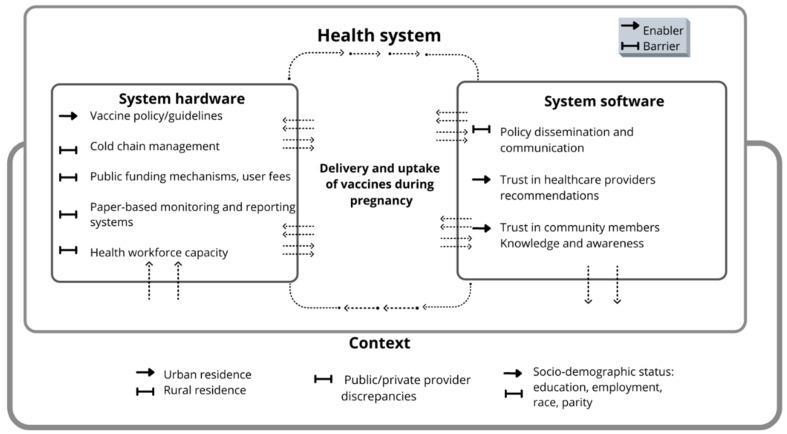
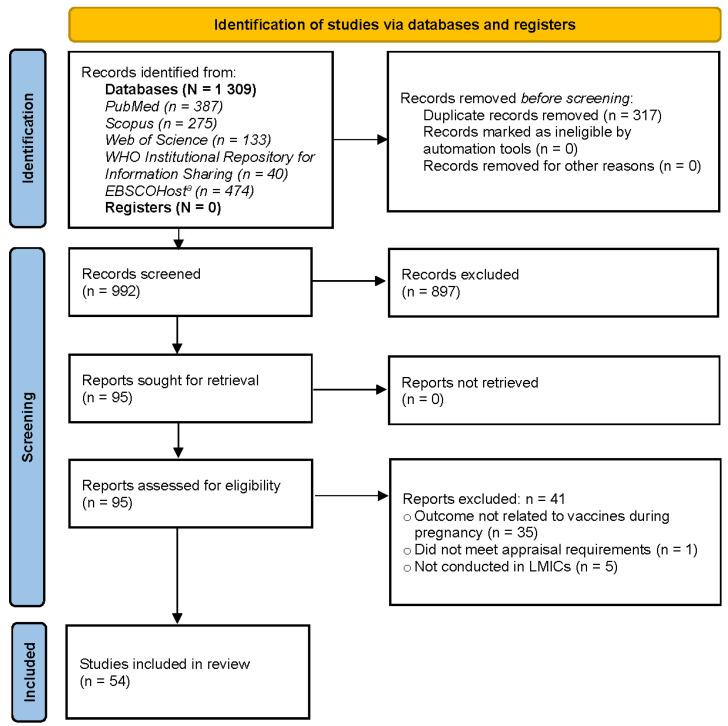
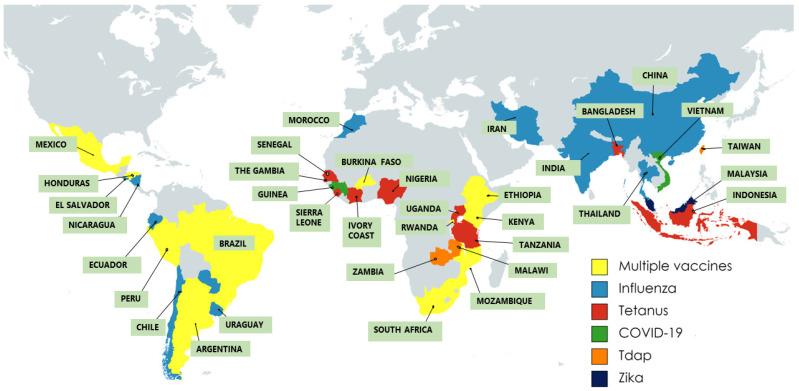
Maternal vaccination is considered a key component of the antenatal care package for improving maternal and child health. Low- and middle-income countries (LMICs) fall short of global targets to prevent maternal and neonatal deaths, with a disproportionate burden of vaccine-preventable diseases. Strategies towards ending preventable maternal mortality necessitate a health systems approach to adequately respond to this burden. This review explores the health systems determinants of delivery and uptake of essential maternal vaccines in LMICs. We conducted a qualitative systematic review of articles on maternal vaccination in LMICs, published between 2009 and 2023 in line with the Preferred Reporting Items for Systematic Reviews and Meta-Analysis guidelines. Thematic analysis was conducted to identify key themes in the literature, interpreted within a conceptual framing that explores the systems determinants influencing maternal vaccines. Our search yielded 1309 records, of which 54 were included, covering 34 LMICs. Most of the included studies were from South America (28/54) and included pregnant women as the primary study population (34/54). The studies explored influenza (25/54) and tetanus toxoid (20/54) vaccines predominantly. The findings suggest that systems hardware (lack of clear policy guidelines, ineffective cold-chain management, limited reporting and monitoring systems) are barriers to vaccine delivery. Systems software (healthcare provider recommendations, increased trust, higher levels of maternal education) are enablers to maternal vaccine uptake. Findings show that formulation, dissemination and communication of context-specific policies and guidelines on maternal vaccines should be a priority for decision-makers in LMICs.
孕产妇疫苗接种被视为改善母婴健康的产前保健套餐的关键组成部分。低收入和中等收入国家(LMICs)未达到预防孕产妇和新生儿死亡的全球目标,且疫苗可预防疾病的负担不成比例。实现消除可预防的孕产妇死亡的战略需要采取卫生系统方法来充分应对这一负担。本综述探讨了低收入和中等收入国家基本孕产妇疫苗的交付和接种的卫生系统决定因素。我们根据系统评价和Meta分析的首选报告项目指南,对2009年至2023年期间发表的关于低收入和中等收入国家孕产妇疫苗接种的文章进行了定性系统评价。进行了主题分析,以确定文献中的关键主题,并在一个概念框架内进行解释,该框架探讨了影响孕产妇疫苗的系统决定因素。我们的检索产生了1309条记录,其中54条被纳入,涵盖34个低收入和中等收入国家。大多数纳入研究来自南美洲(28/54),并将孕妇作为主要研究人群(34/54)。这些研究主要探讨了流感疫苗(25/54)和破伤风类毒素疫苗(20/54)。研究结果表明,系统硬件(缺乏明确的政策指南、冷链管理无效、报告和监测系统有限)是疫苗交付的障碍。系统软件(医疗保健提供者的建议、信任度增加、孕产妇教育水平提高)是孕产妇疫苗接种的促进因素。研究结果表明,制定、传播和宣传针对具体情况的孕产妇疫苗政策和指南应是低收入和中等收入国家决策者的优先事项。
 Zotero 插件