
毛钩藤碱对NCI-H1299肺癌细胞系的抑制作用及机制
Inhibitory effect and mechanism of hirsuteine on NCI‑H1299 lung cancer cell lines.
作者信息
Yun Xuelin, Qin Hailong, Du Bin, Peng Yu, Liu Yuling, Yang Bixian
机构信息
College of Pharmacy, Guizhou University of Traditional Chinese Medicine, Guiyang, Guizhou 550025, P.R. China.
College of Food and Pharmacy Engineering, Guiyang University, Guiyang, Guizhou 550005, P.R. China.
出版信息
Oncol Lett. 2023 Apr 5;25(5):202. doi: 10.3892/ol.2023.13788. eCollection 2023 May.
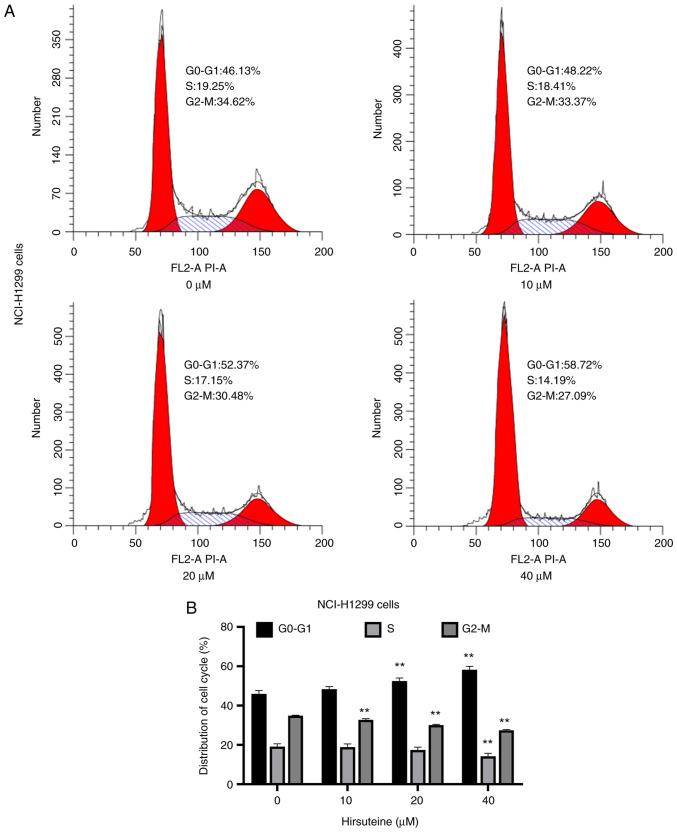
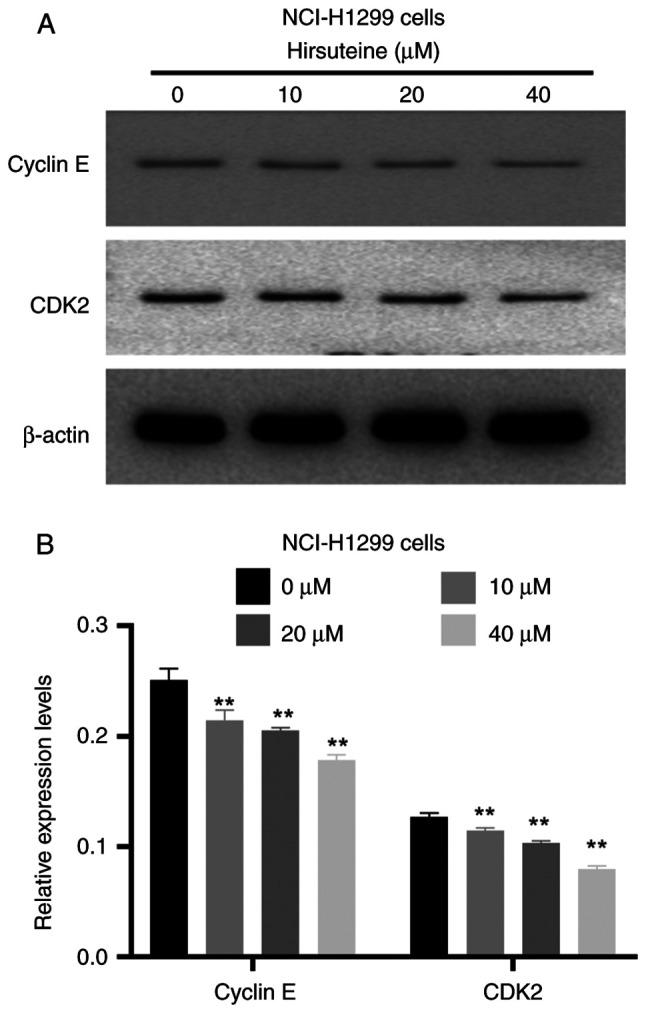
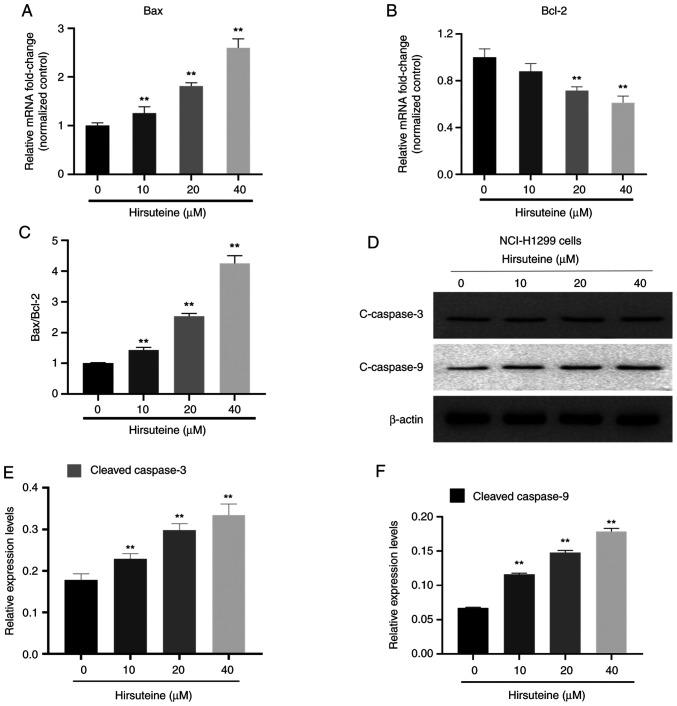
Traditionally, the bark of (UR) has been employed for the treatment of hypertension, cancer, convulsions, haemorrhage, autoimmune disorders and other ailments. The primary aim of the present study was to explore the antiproliferative activity of hirsuteine (HTE) isolated from UR over a range of concentrations in human NSCLC NCI-H1299 cells and to explore the mechanisms underlying its therapeutic efficacy. The effects of HTE on cell viability were examined using Cell Counting Kit-8 (CCK-8) and colony formation assays, while apoptosis was assessed by flow cytometry. Cell cycle progression was additionally evaluated via propidium iodide staining, while reverse transcription-quantitative PCR and western blotting methods were employed to assess the protein levels and genes related to apoptosis and progression of the cell cycle, respectively. NCI-H1299 cell proliferation was markedly suppressed by HTE in a time- and dose-dependent manner. However, clear changes in cell morphology were also induced, resulting in G0-G1 phase cell cycle arrest, which was associated with cyclin E and CDK2 downregulation. HTE additionally induced robust NSCLC NCI-H1299 cell apoptosis, downregulation of Bcl-2 and upregulation of cytoplasmic cytochrome C, Bax, Apaf1, cleaved caspase-3 and cleaved caspase-9, which together drove the observed apoptotic cell death. HTE could effectively suppress human NSCLC NCI-H1299 cell growth by inducing apoptotic death in a dose-dependent fashion , therefore elucidating the mechanism by which this phytomedicine acts as a potent anticancer compound that warrants study as a treatment for human NSCLC patients.
传统上,(UR)的树皮已被用于治疗高血压、癌症、惊厥、出血、自身免疫性疾病和其他疾病。本研究的主要目的是探讨从UR中分离出的hirsuteine(HTE)在一系列浓度下对人非小细胞肺癌NCI-H1299细胞的抗增殖活性,并探讨其治疗效果的潜在机制。使用细胞计数试剂盒-8(CCK-8)和集落形成试验检测HTE对细胞活力的影响,同时通过流式细胞术评估细胞凋亡。另外通过碘化丙啶染色评估细胞周期进程,而分别采用逆转录定量PCR和蛋白质印迹法评估与细胞凋亡和细胞周期进程相关的蛋白质水平和基因。HTE以时间和剂量依赖性方式显著抑制NCI-H1299细胞增殖。然而,细胞形态也发生了明显变化,导致G0-G1期细胞周期停滞,这与细胞周期蛋白E和CDK2下调有关。HTE还诱导了强烈的非小细胞肺癌NCI-H1299细胞凋亡、Bcl-2下调以及细胞质细胞色素C、Bax、Apaf1、裂解的caspase-3和裂解的caspase-9上调,这些共同导致了观察到的凋亡细胞死亡。HTE可以通过以剂量依赖性方式诱导凋亡死亡来有效抑制人非小细胞肺癌NCI-H1299细胞生长,因此阐明了这种植物药作为一种有效的抗癌化合物发挥作用的机制,值得作为人类非小细胞肺癌患者的治疗方法进行研究。



 Zotero 插件