
适体-药物偶联物在癌症治疗中的最新进展。
Recent progress of aptamer‒drug conjugates in cancer therapy.
作者信息
He Jiaxuan, Duan Qiao, Ran Chunyan, Fu Ting, Liu Yuan, Tan Weihong
机构信息
The Cancer Hospital of the University of Chinese Academy of Sciences (Zhejiang Cancer Hospital), The Key Laboratory of Zhejiang Province for Aptamers and Theranostics, Hangzhou Institute of Medicine (HIM), Chinese Academy of Sciences, Hangzhou 310022, China.
Institute of Molecular Medicine (IMM), Renji Hospital, Shanghai Jiao Tong University School of Medicine, and College of Chemistry and Chemical Engineering, Shanghai Jiao Tong University, Shanghai 200240, China.
出版信息
Acta Pharm Sin B. 2023 Apr;13(4):1358-1370. doi: 10.1016/j.apsb.2023.01.017. Epub 2023 Jan 26.
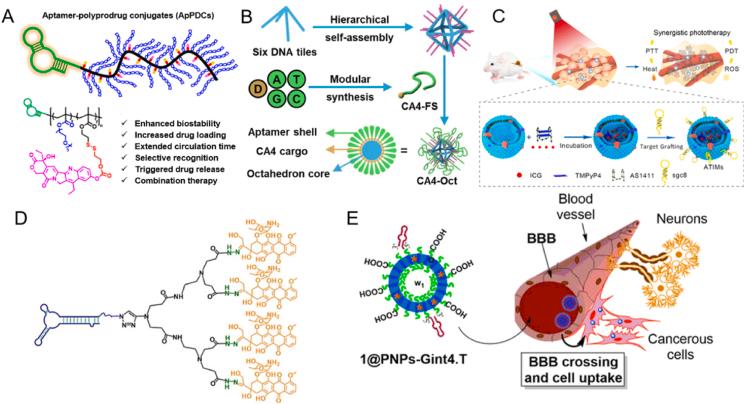
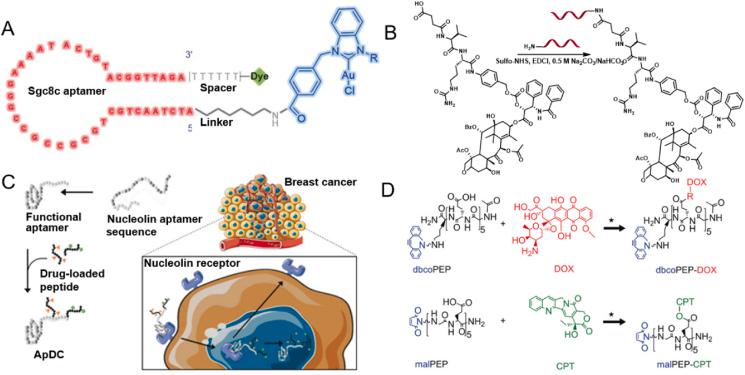
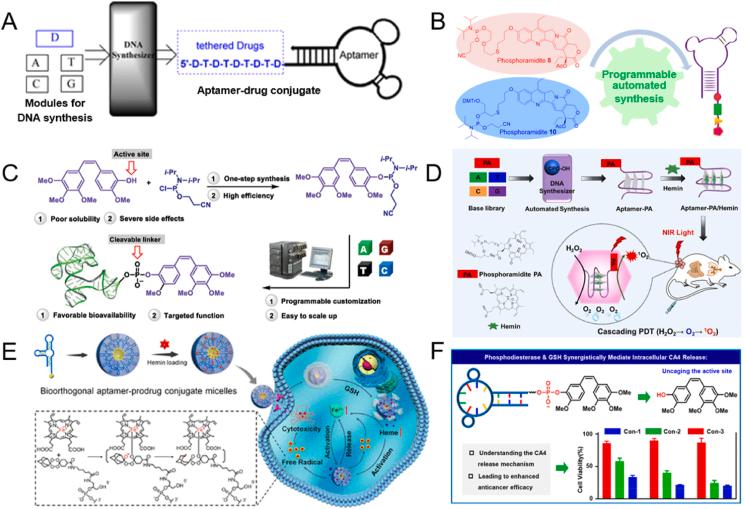
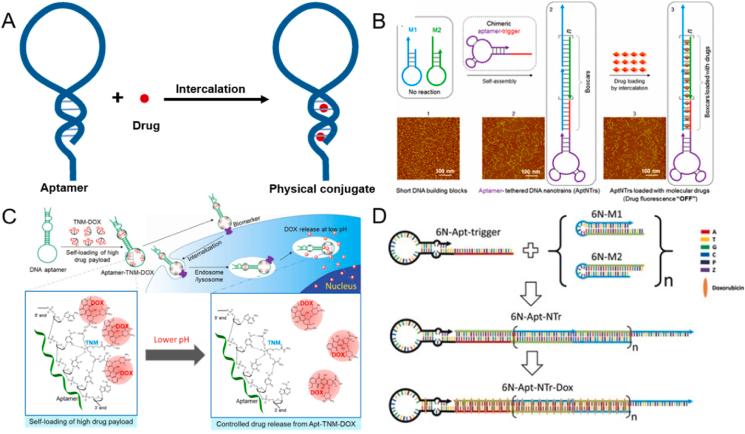
Aptamers are single-stranded DNA or RNA sequences that can specifically bind with the target protein or molecule specific secondary structures. Compared to antibody-drug conjugates (ADC), aptamer‒drug conjugate (ApDC) is also an efficient, targeted drug for cancer therapy with a smaller size, higher chemical stability, lower immunogenicity, faster tissue penetration, and facile engineering. Despite all these advantages, several key factors have delayed the clinical translation of ApDC, such as off-target effects and potential safety issues. In this review, we highlight the most recent progress in the development of ApDC and discuss solutions to the problems noted above.
适配体是能够与靶蛋白或具有特定二级结构的分子特异性结合的单链DNA或RNA序列。与抗体-药物偶联物(ADC)相比,适配体-药物偶联物(ApDC)也是一种用于癌症治疗的高效靶向药物,具有更小的尺寸、更高的化学稳定性、更低的免疫原性、更快的组织穿透力以及易于工程化的特点。尽管有这些优点,但仍有几个关键因素阻碍了ApDC的临床转化,如脱靶效应和潜在的安全问题。在本综述中,我们重点介绍了ApDC开发的最新进展,并讨论了上述问题的解决方案。



 Zotero 插件