
自我测量血压远程监测项目:实用操作指南。
Self-Measured Blood Pressure Telemonitoring Programs: A Pragmatic How-to Guide.
机构信息
The Health Federation of Philadelphia, Philadelphia, Pennsylvania, USA.
Clinical Affairs Division, National Association of Community Health Centers, Bethesda, Maryland, USA.
出版信息
Am J Hypertens. 2023 Jul 14;36(8):417-427. doi: 10.1093/ajh/hpad040.
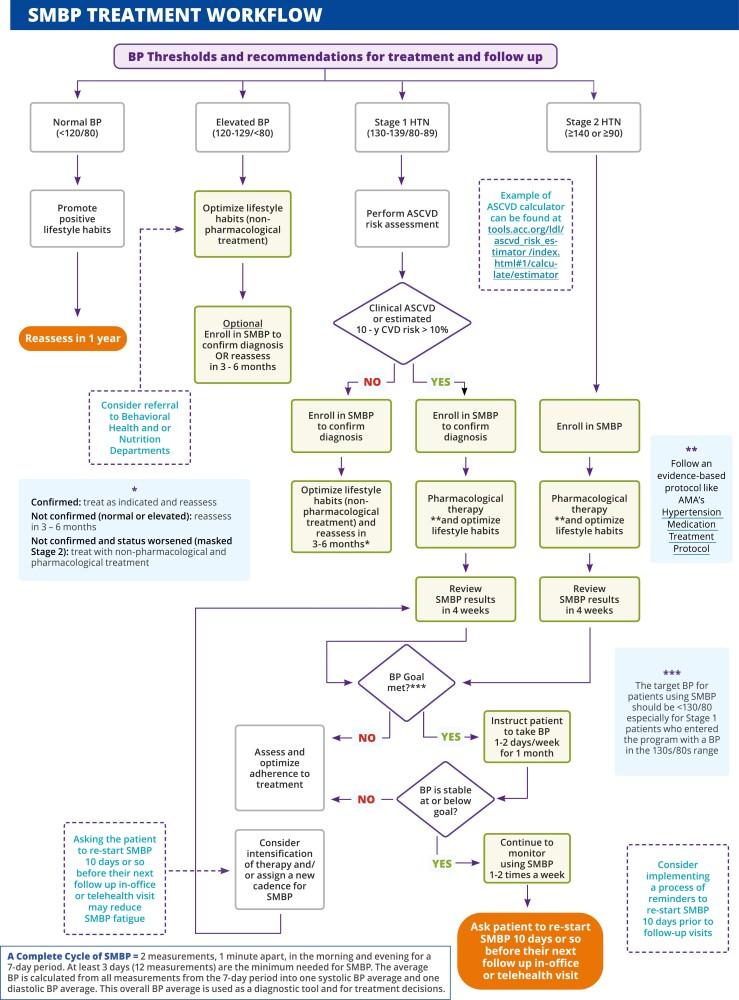
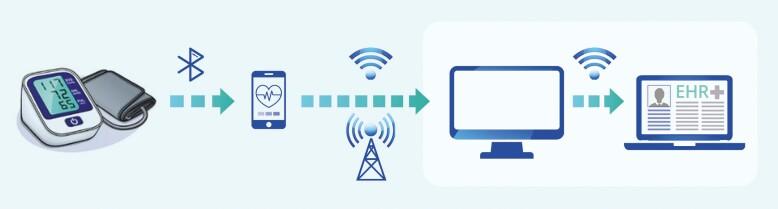
Self-measured blood pressure (SMBP) telemonitoring is the process of securely storing and tele-transmitting reliably measured, patient self-performed blood pressure (BP) measurements to healthcare teams, while ensuring that these data are viewable and clinically actionable for the purposes of improving hypertension diagnosis and management. SMBP telemonitoring is a vital component of an overall hypertension control strategy. Herein, we present a pragmatic guide for implementing SMBP in clinical practice and provide a comprehensive list of resources to assist with implementation. Initial steps include defining program goals and scope, selecting the target population, staffing, choosing appropriate (clinically validated) BP devices with proper cuff sizes, and selecting a telemonitoring platform. Adherence to recommended data transmission, security, and data privacy requirements is essential. Clinical workflow implementation involves patient enrollment and training, review of telemonitored data, and initiating or titrating medications in a protocolized fashion based upon this information. Utilizing a team-based care structure is preferred and calculation of average BP for hypertension diagnosis and management is important to align with clinical best practice recommendations. Many stakeholders in the United States are engaged in overcoming challenges to SMBP program adoption. Major barriers include affordability, clinician and program reimbursement, availability of technological elements, challenges with interoperability, and time/workload constraints. Nevertheless, it is anticipated that uptake of SMBP telemonitoring, still at a nascent stage in many parts of the world, will continue to grow, propagated by increased clinician familiarity, broader platform availability, improvements in interoperability, and reductions in costs that occur with scale, competition, and technological innovation.
自我测量血压 (SMBP) 远程监测是指将可靠测量的、患者自行进行的血压 (BP) 测量值安全存储并远程传输到医疗保健团队,同时确保这些数据可供查看并可用于临床,以改善高血压的诊断和管理。SMBP 远程监测是整体高血压控制策略的重要组成部分。本文介绍了在临床实践中实施 SMBP 的实用指南,并提供了全面的资源列表以协助实施。初始步骤包括定义项目目标和范围、选择目标人群、人员配备、选择具有适当袖口尺寸的经过临床验证的合适血压设备以及选择远程监测平台。遵守推荐的数据传输、安全性和数据隐私要求至关重要。临床工作流程的实施包括患者登记和培训、远程监测数据的审查以及根据这些信息以协议化的方式启动或滴定药物。采用基于团队的护理结构是首选,并且计算平均血压以用于高血压的诊断和管理对于与临床最佳实践建议保持一致非常重要。美国的许多利益相关者都在努力克服 SMBP 项目采用的挑战。主要障碍包括可负担性、临床医生和项目报销、技术元素的可用性、互操作性挑战以及时间/工作量限制。然而,预计 SMBP 远程监测的采用率将继续增长,因为临床医生的熟悉程度提高、更广泛的平台可用性、互操作性的改进以及随着规模扩大、竞争加剧和技术创新而降低成本,这些因素在全球许多地区仍处于起步阶段。
 Zotero 插件