
尼古丁受体部分激动剂用于戒烟。
Nicotine receptor partial agonists for smoking cessation.
机构信息
Nuffield Department of Primary Care Health Sciences, University of Oxford, Oxford, UK.
School of Social and Community Medicine, University of Bristol, Bristol, UK.
出版信息
Cochrane Database Syst Rev. 2023 May 5;5(5):CD006103. doi: 10.1002/14651858.CD006103.pub8.
BACKGROUND
Nicotine receptor partial agonists may help people to stop smoking by a combination of maintaining moderate levels of dopamine to counteract withdrawal symptoms (acting as an agonist) and reducing smoking satisfaction (acting as an antagonist). This is an update of a Cochrane Review first published in 2007.
OBJECTIVES
To assess the effectiveness of nicotine receptor partial agonists, including varenicline and cytisine, for smoking cessation.
SEARCH METHODS
We searched the Cochrane Tobacco Addiction Group's Specialised Register in April 2022 for trials, using relevant terms in the title or abstract, or as keywords. The register is compiled from searches of CENTRAL, MEDLINE, Embase, and PsycINFO. SELECTION CRITERIA: We included randomised controlled trials that compared the treatment drug with placebo, another smoking cessation drug, e-cigarettes, or no medication. We excluded trials that did not report a minimum follow-up period of six months from baseline.
DATA COLLECTION AND ANALYSIS
We followed standard Cochrane methods. Our main outcome was abstinence from smoking at longest follow-up using the most rigorous definition of abstinence, preferring biochemically validated rates where reported. We pooled risk ratios (RRs), using the Mantel-Haenszel fixed-effect model. We also reported the number of people reporting serious adverse events (SAEs).
MAIN RESULTS
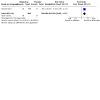
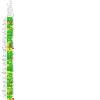
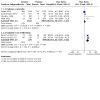
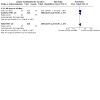
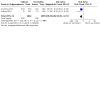
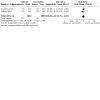
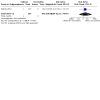
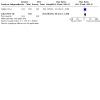
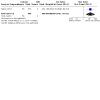
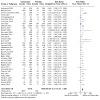
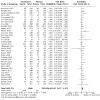
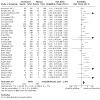
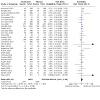
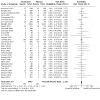
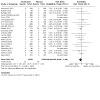
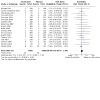
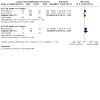
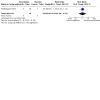
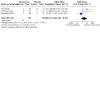
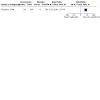
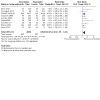
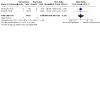
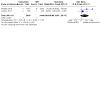
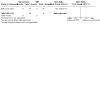
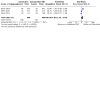
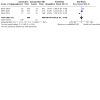
We included 75 trials of 45,049 people; 45 were new for this update. We rated 22 at low risk of bias, 18 at high risk, and 35 at unclear risk. We found moderate-certainty evidence (limited by heterogeneity) that cytisine helps more people to quit smoking than placebo (RR 1.30, 95% confidence interval (CI) 1.15 to 1.47; I = 83%; 4 studies, 4623 participants), and no evidence of a difference in the number reporting SAEs (RR 1.04, 95% CI 0.78 to 1.37; I = 0%; 3 studies, 3781 participants; low-certainty evidence). SAE evidence was limited by imprecision. We found no data on neuropsychiatric or cardiac SAEs. We found high-certainty evidence that varenicline helps more people to quit than placebo (RR 2.32, 95% CI 2.15 to 2.51; I = 60%, 41 studies, 17,395 participants), and moderate-certainty evidence that people taking varenicline are more likely to report SAEs than those not taking it (RR 1.23, 95% CI 1.01 to 1.48; I = 0%; 26 studies, 14,356 participants). While point estimates suggested increased risk of cardiac SAEs (RR 1.20, 95% CI 0.79 to 1.84; I = 0%; 18 studies, 7151 participants; low-certainty evidence), and decreased risk of neuropsychiatric SAEs (RR 0.89, 95% CI 0.61 to 1.29; I = 0%; 22 studies, 7846 participants; low-certainty evidence), in both cases evidence was limited by imprecision, and confidence intervals were compatible with both benefit and harm. Pooled results from studies that randomised people to receive cytisine or varenicline showed that more people in the varenicline arm quit smoking (RR 0.83, 95% CI 0.66 to 1.05; I = 0%; 2 studies, 2131 participants; moderate-certainty evidence) and reported SAEs (RR 0.67, 95% CI 0.44 to 1.03; I = 45%; 2 studies, 2017 participants; low-certainty evidence). However, the evidence was limited by imprecision, and confidence intervals incorporated the potential for benefit from either cytisine or varenicline. We found no data on neuropsychiatric or cardiac SAEs. We found high-certainty evidence that varenicline helps more people to quit than bupropion (RR 1.36, 95% CI 1.25 to 1.49; I = 0%; 9 studies, 7560 participants), and no clear evidence of difference in rates of SAEs (RR 0.89, 95% CI 0.61 to 1.31; I = 0%; 5 studies, 5317 participants), neuropsychiatric SAEs (RR 1.05, 95% CI 0.16 to 7.04; I = 10%; 2 studies, 866 participants), or cardiac SAEs (RR 3.17, 95% CI 0.33 to 30.18; I = 0%; 2 studies, 866 participants). Evidence of harms was of low certainty, limited by imprecision. We found high-certainty evidence that varenicline helps more people to quit than a single form of nicotine replacement therapy (NRT) (RR 1.25, 95% CI 1.14 to 1.37; I = 28%; 11 studies, 7572 participants), and low-certainty evidence, limited by imprecision, of fewer reported SAEs (RR 0.70, 95% CI 0.50 to 0.99; I = 24%; 6 studies, 6535 participants). We found no data on neuropsychiatric or cardiac SAEs. We found no clear evidence of a difference in quit rates between varenicline and dual-form NRT (RR 1.02, 95% CI 0.87 to 1.20; I = 0%; 5 studies, 2344 participants; low-certainty evidence, downgraded because of imprecision). While pooled point estimates suggested increased risk of SAEs (RR 2.15, 95% CI 0.49 to 9.46; I = 0%; 4 studies, 1852 participants) and neuropsychiatric SAEs (RR 4.69, 95% CI 0.23 to 96.50; I not estimable as events only in 1 study; 2 studies, 764 participants), and reduced risk of cardiac SAEs (RR 0.32, 95% CI 0.01 to 7.88; I not estimable as events only in 1 study; 2 studies, 819 participants), in all three cases evidence was of low certainty and confidence intervals were very wide, encompassing both substantial harm and benefit.
AUTHORS' CONCLUSIONS: Cytisine and varenicline both help more people to quit smoking than placebo or no medication. Varenicline is more effective at helping people to quit smoking than bupropion, or a single form of NRT, and may be as or more effective than dual-form NRT. People taking varenicline are probably more likely to experience SAEs than those not taking it, and while there may be increased risk of cardiac SAEs and decreased risk of neuropsychiatric SAEs, evidence was compatible with both benefit and harm. Cytisine may lead to fewer people reporting SAEs than varenicline. Based on studies that directly compared cytisine and varenicline, there may be a benefit from varenicline for quitting smoking, however further evidence could strengthen this finding or demonstrate a benefit from cytisine. Future trials should test the effectiveness and safety of cytisine compared with varenicline and other pharmacotherapies, and should also test variations in dose and duration. There is limited benefit to be gained from more trials testing the effect of standard-dose varenicline compared with placebo for smoking cessation. Further trials on varenicline should test variations in dose and duration, and compare varenicline with e-cigarettes for smoking cessation.
背景
尼古丁受体部分激动剂可能通过维持适度的多巴胺水平以对抗戒断症状(作为激动剂发挥作用)和降低吸烟满意度(作为拮抗剂发挥作用)来帮助人们戒烟。这是一篇更新的 Cochrane 综述,最初发表于 2007 年。
目的
评估尼古丁受体部分激动剂(包括伐尼克兰和烟碱)在戒烟方面的有效性。
检索方法
我们于 2022 年 4 月在 Cochrane 烟草成瘾组的专题目录中检索了试验,使用标题或摘要中的相关术语,或作为关键词。该注册处是从 CENTRAL、MEDLINE、Embase 和 PsycINFO 中搜索编制而成的。
纳入标准
我们纳入了比较治疗药物与安慰剂、其他戒烟药物、电子烟或无药物治疗的随机对照试验。我们排除了未报告从基线开始至少 6 个月随访的试验。
数据收集与分析
我们遵循了标准的 Cochrane 方法。我们的主要结局是使用最严格的戒烟定义(偏好报告生物验证率的情况),报告最长随访时间最长的无吸烟情况。我们使用 Mantel-Haenszel 固定效应模型汇总风险比(RR)。我们还报告了报告严重不良事件(SAE)的人数。
主要结果
我们纳入了 75 项试验,涉及 45049 人;其中 45 项为本次更新的新试验。我们将 22 项评为低偏倚风险,18 项评为高偏倚风险,35 项评为不确定偏倚风险。我们发现有中等确定性证据(受异质性限制),表明烟碱对安慰剂更有助于戒烟(RR 1.30,95%置信区间(CI)1.15 至 1.47;I = 83%;4 项研究,4623 名参与者),且报告 SAE 的人数无差异(RR 1.04,95%CI 0.78 至 1.37;I = 0%;3 项研究,3781 名参与者;低确定性证据)。SAE 证据受到不精确性的限制。我们没有关于神经精神或心脏 SAE 的数据。我们发现有高确定性证据表明伐尼克兰比安慰剂更有助于戒烟(RR 2.32,95%CI 2.15 至 2.51;I = 60%;41 项研究,17395 名参与者),且有中等确定性证据表明服用伐尼克兰的人比不服用的人更有可能报告 SAE(RR 1.23,95%CI 1.01 至 1.48;I = 0%;26 项研究,14356 名参与者)。虽然点估计表明心脏 SAE 的风险增加(RR 1.20,95%CI 0.79 至 1.84;I = 0%;18 项研究,7151 名参与者;低确定性证据),且神经精神 SAE 的风险降低(RR 0.89,95%CI 0.61 至 1.29;I = 0%;22 项研究,7846 名参与者;低确定性证据),但在两种情况下,证据都受到不精确性的限制,置信区间都包含了既有益又有害的可能性。对随机分配接受烟碱或伐尼克兰的人的研究进行汇总分析结果表明,服用伐尼克兰的人更有可能戒烟(RR 0.83,95%CI 0.66 至 1.05;I = 0%;2 项研究,2131 名参与者;中等确定性证据)且报告 SAE(RR 0.67,95%CI 0.44 至 1.03;I = 45%;2 项研究,2017 名参与者;低确定性证据)。然而,证据受到不精确性的限制,置信区间包含了从烟碱或伐尼克兰中获益的可能性。我们没有关于神经精神或心脏 SAE 的数据。我们发现有高确定性证据表明伐尼克兰比安非他酮更有助于戒烟(RR 1.36,95%CI 1.25 至 1.49;I = 0%;9 项研究,7560 名参与者),且在报告 SAE 的人数方面没有明显差异(RR 0.89,95%CI 0.61 至 1.31;I = 0%;5 项研究,5317 名参与者),神经精神 SAE(RR 1.05,95%CI 0.16 至 7.04;I = 10%;2 项研究,866 名参与者)或心脏 SAE(RR 3.17,95%CI 0.33 至 30.18;I = 0%;2 项研究,866 名参与者)。危害证据的确定性为低,受到不精确性的限制。我们发现有高确定性证据表明伐尼克兰比单一形式的尼古丁替代疗法(NRT)更有助于戒烟(RR 1.25,95%CI 1.14 至 1.37;I = 28%;11 项研究,7572 名参与者),且低确定性证据表明报告的 SAE 较少(RR 0.70,95%CI 0.50 至 0.99;I = 24%;6 项研究,6535 名参与者)。我们没有关于神经精神或心脏 SAE 的数据。我们没有发现伐尼克兰和双重形式 NRT 之间在戒烟率方面有明显差异的证据(RR 1.02,95%CI 0.87 至 1.20;I = 0%;5 项研究,2344 名参与者;低确定性证据,因不精确性而降级)。虽然汇总的点估计表明 SAE(RR 2.15,95%CI 0.49 至 9.46;I = 0%;4 项研究,1852 名参与者)和神经精神 SAE(RR 4.69,95%CI 0.23 至 96.50;I 不可估计,因为仅在 2 项研究中报告事件;2 项研究,764 名参与者)的风险增加,以及心脏 SAE(RR 0.32,95%CI 0.01 至 7.88;I 不可估计,因为仅在 1 项研究中报告事件;2 项研究,819 名参与者)的风险降低,但在所有三种情况下,证据的确定性都很低,置信区间非常宽,包含了实质性的获益和危害。
作者结论
烟碱和伐尼克兰都比安慰剂或无药物治疗更有助于人们戒烟。伐尼克兰在帮助人们戒烟方面比安非他酮或单一形式的 NRT 更有效,并且可能与双重形式的 NRT 一样有效或更有效。服用伐尼克兰的人可能比不服用的人更容易出现 SAE,而且虽然可能存在心脏 SAE 风险增加和神经精神 SAE 风险降低的情况,但证据与获益和危害兼容。烟碱可能导致报告 SAE 的人数少于伐尼克兰。基于直接比较烟碱和伐尼克兰的研究,伐尼克兰可能对戒烟有好处,但进一步的证据可以加强这一发现,或者证明烟碱的好处。未来的试验应测试烟碱与伐尼克兰相比以及与其他药物治疗相比的有效性和安全性,还应测试剂量和持续时间的变化。进一步的试验测试标准剂量伐尼克兰与安慰剂相比对戒烟的效果并没有太大的获益。进一步的伐尼克兰试验应测试剂量和持续时间,并比较伐尼克兰与电子烟对戒烟的效果。





































 Zotero 插件