
严重精神疾病患者社区精神卫生保健的当前见解:一项范围综述
Current insights of community mental healthcare for people with severe mental illness: A scoping review.
作者信息
van Genk Caroline, Roeg Diana, van Vugt Maaike, van Weeghel Jaap, Van Regenmortel Tine
机构信息
School of Social and Behavioral Sciences, Tranzo Scientific Center for Care and Wellbeing, Tilburg University, Tilburg, Netherlands.
Kwintes Housing and Rehabilitation Services, Zeist, Netherlands.
出版信息
Front Psychiatry. 2023 Apr 18;14:1156235. doi: 10.3389/fpsyt.2023.1156235. eCollection 2023.
BACKGROUND
For the last four decades, there has been a shift in mental healthcare toward more rehabilitation and following a more humanistic and comprehensive vision on recovery for persons with severe mental illness (SMI). Consequently, many community-based mental healthcare programs and services have been developed internationally. Currently, community mental healthcare is still under development, with a focus on further inclusion of persons with enduring mental health problems. In this review, we aim to provide a comprehensive overview of existing and upcoming community mental healthcare approaches to discover the current vision on the ingredients of community mental healthcare.
METHODS
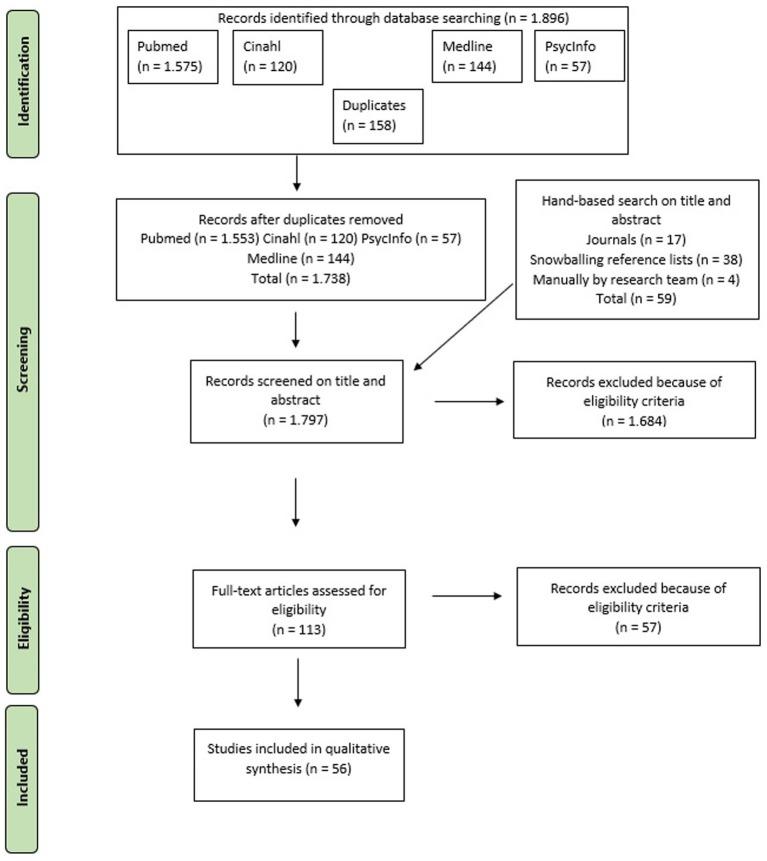
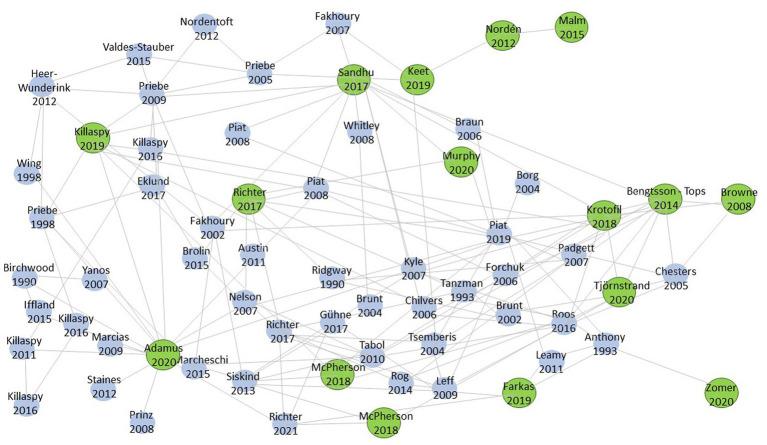
We conducted a scoping review by systematically searching four databases, supplemented with the results of Research Rabbit, a hand-search in reference lists and 10 volumes of two leading journals. We included studies on adults with SMI focusing on stimulating independent living, integrated care, recovery, and social inclusion published in English between January 2011 and December 2022 in peer-reviewed journals.
RESULTS
The search resulted in 56 papers that met the inclusion criteria. Thematic analysis revealed ingredients in 12 areas: multidisciplinary teams; collaboration within and outside the organization; attention to several aspects of health; supporting full citizenship; attention to the recovery of daily life; collaboration with the social network; tailored support; well-trained staff; using digital technologies; housing and living environment; sustainable policies and funding; and reciprocity in relationships.
CONCLUSION
We found 12 areas of ingredients, including some innovative topics about reciprocity and sustainable policies and funding. There is much attention to individual ingredients for good community-based mental healthcare, but very little is known about their integration and implementation in contemporary, fragmented mental healthcare services. For future studies, we recommend more empirical research on community mental healthcare, as well as further investigation(s) from the social service perspective, and solid research on general terminology about SMI and outpatient support.
背景
在过去的四十年里,精神卫生保健发生了转变,朝着更多的康复方向发展,并遵循更具人文关怀和全面的严重精神疾病(SMI)患者康复愿景。因此,国际上已经开发了许多基于社区的精神卫生保健项目和服务。目前,社区精神卫生保健仍在发展中,重点是进一步纳入患有持久性心理健康问题的人群。在本综述中,我们旨在全面概述现有的和即将出现的社区精神卫生保健方法,以发现当前对社区精神卫生保健要素的看法。
方法
我们通过系统搜索四个数据库进行了一项范围综述,并辅以Research Rabbit的结果、参考文献列表中的手工搜索以及两种领先期刊的10卷文献。我们纳入了2011年1月至2022年12月期间发表在同行评审期刊上的关于成年SMI患者的研究,这些研究侧重于促进独立生活、综合护理、康复和社会包容。
结果
搜索结果产生了56篇符合纳入标准的论文。主题分析揭示了12个领域的要素:多学科团队;组织内部和外部的协作;对健康多个方面的关注;支持完全公民权;关注日常生活的恢复;与社交网络的协作;量身定制的支持;训练有素的工作人员;使用数字技术;住房和生活环境;可持续政策和资金;以及关系中的互惠性。
结论
我们发现了12个要素领域,包括一些关于互惠性以及可持续政策和资金的创新主题。对于良好的社区精神卫生保健,人们对各个要素给予了很多关注,但对于它们在当代分散的精神卫生保健服务中的整合和实施却知之甚少。对于未来的研究,我们建议对社区精神卫生保健进行更多的实证研究,以及从社会服务角度进行进一步调查,并对关于SMI和门诊支持的通用术语进行扎实的研究。
 Zotero 插件