
宿主和真菌因素在……从共生菌向病原菌转变中的作用
The Role of Host and Fungal Factors in the Commensal-to-Pathogen Transition of .
作者信息
Jacobsen Ilse D
机构信息
Research Group Microbial Immunology, Leibniz Institute for Natural Product Research and Infection Biology, Jena, Germany.
Institute of Microbiology, Friedrich Schiller University, Jena, Germany.
出版信息
Curr Clin Microbiol Rep. 2023;10(2):55-65. doi: 10.1007/s40588-023-00190-w. Epub 2023 Mar 31.
PURPOSE OF REVIEW
The fungus has evolved to live in close association with warm-blooded hosts and is found frequently on mucosal surfaces of healthy humans. As an opportunistic pathogen, can also cause mucosal and disseminated infections (candidiasis). This review describes the features that differentiate the fungus in the commensal pathogenic state and the main factors underlying commensal-to-pathogen transition.
RECENT FINDINGS
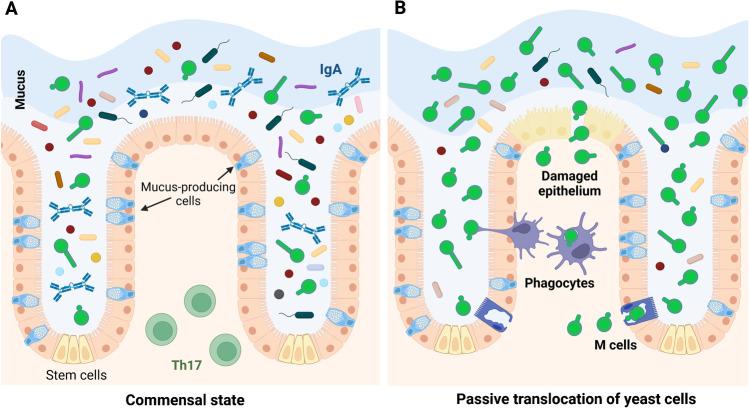
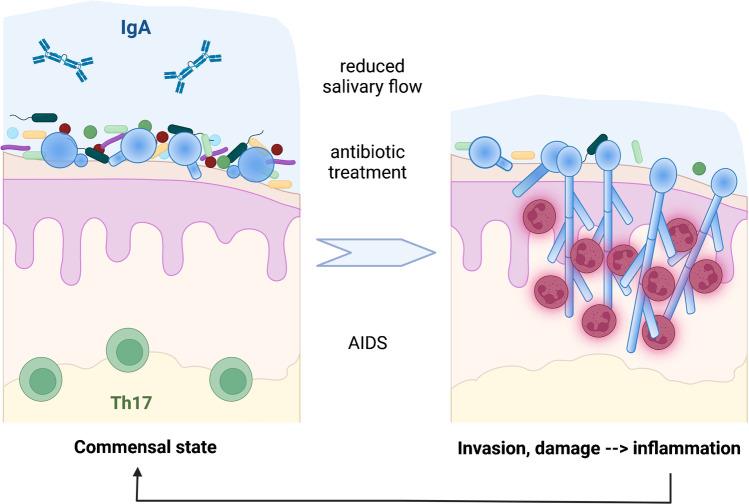
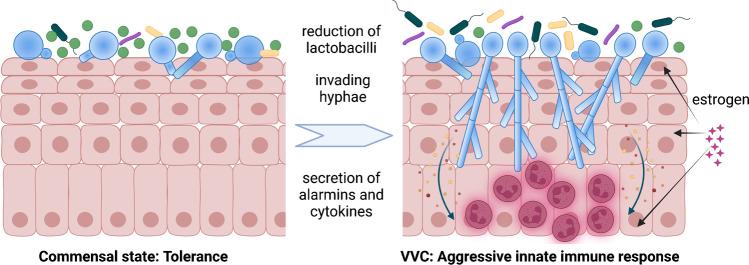
Adhesion, invasion, and tissue damage are critical steps in the infection process. Especially invasion and damage require transcriptional and morphological changes that differentiate in the pathogenic from the commensal state. While the commensal-to-pathogen transition has some conserved causes and features in the oral cavity, the female urogenital tract, and the gut, site-specific differences have been identified in recent years.
SUMMARY
This review highlights how specific factors in the different mucosal niches affect development of candidiasis. Recent evidence suggests that colonization of the gut is not only a risk factor for systemic candidiasis but might also provide beneficial effects to the host.
综述目的
这种真菌已进化到与温血宿主密切共生,且在健康人的黏膜表面频繁发现。作为一种机会致病菌,它也可引起黏膜感染和播散性感染(念珠菌病)。本综述描述了区分处于共生和致病状态的该真菌的特征以及共生向致病转变的主要潜在因素。
最新发现
黏附、侵袭和组织损伤是感染过程中的关键步骤。尤其是侵袭和损伤需要转录和形态学变化,这些变化使处于致病状态的真菌有别于共生状态的真菌。虽然从共生向致病的转变在口腔、女性泌尿生殖道和肠道有一些共同的原因和特征,但近年来已发现了部位特异性差异。
总结
本综述强调了不同黏膜微环境中的特定因素如何影响念珠菌病的发展。最近的证据表明,肠道定植不仅是系统性念珠菌病的一个危险因素,而且可能对宿主也有有益影响。
 Zotero 插件