
基于孟德尔随机化和遗传相关分析的子宫内膜异位症及其合并症关系的研究进展。
Insights from Mendelian randomization and genetic correlation analyses into the relationship between endometriosis and its comorbidities.
机构信息
The Institute for Molecular Bioscience, The University of Queensland, Brisbane, QLD, Australia.
出版信息
Hum Reprod Update. 2023 Sep 5;29(5):655-674. doi: 10.1093/humupd/dmad009.
BACKGROUND
Endometriosis remains a poorly understood disease, despite its high prevalence and debilitating symptoms. The overlap in symptoms and the increased risk of multiple other traits in women with endometriosis is becoming increasingly apparent through epidemiological data. Genetic studies offer a method of investigating these comorbid relationships through the assessment of causal relationships with Mendelian randomization (MR), as well as identification of shared genetic variants and genes involved across traits. This has the capacity to identify risk factors for endometriosis as well as provide insight into the aetiology of disease.
OBJECTIVE AND RATIONALE
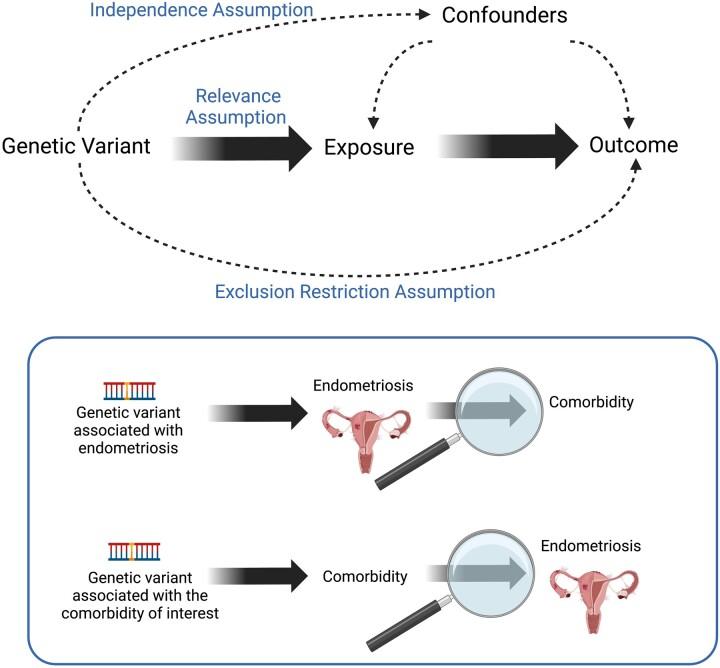
We aim to review the current literature assessing the relationship between endometriosis and other traits using genomic data, primarily through the methods of MR and genetic correlation. We critically examine the limitations of these studies in accordance with the assumptions of the utilized methods.
SEARCH METHODS
The PubMed database was used to search for peer-reviewed original research articles using the terms 'Mendelian randomization endometriosis' and '"genetic correlation" endometriosis'. Additionally, a Google Scholar search using the terms '"endometriosis" "mendelian randomization" "genetic correlation"' was performed. All relevant publications (n = 21) published up until 7 October 2022 were included in this review. Upon compilation of all traits with published MR and/or genetic correlation with endometriosis, additional epidemiological and genetic information on their comorbidity with endometriosis was sourced by searching for the trait in conjunction with 'endometriosis' on Google Scholar.
OUTCOMES
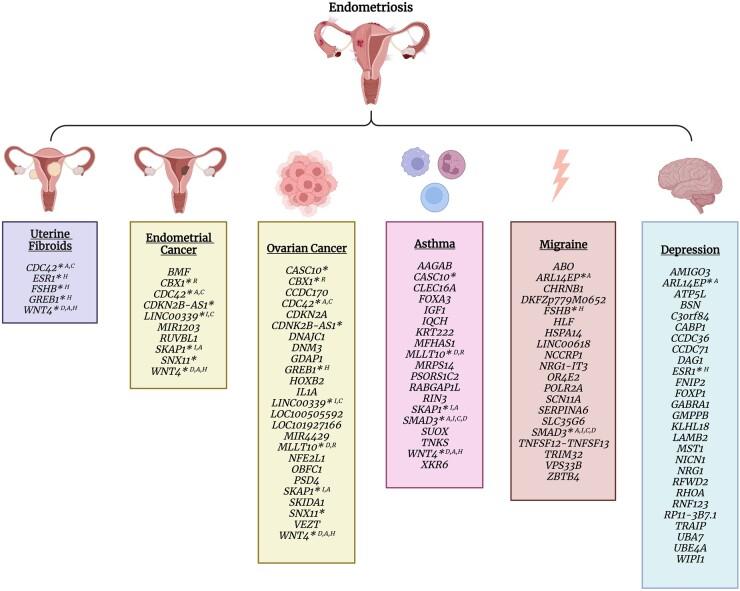
The association between endometriosis and multiple pain, gynaecological, cancer, inflammatory, gastrointestinal, psychological, and anthropometric traits has been assessed using MR analysis and genetic correlation analysis. Genetic correlation analyses provide evidence that genetic factors contributing to endometriosis are shared with multiple traits: migraine, uterine fibroids, subtypes of ovarian cancer, melanoma, asthma, gastro-oesophageal reflux disease, gastritis/duodenitis, and depression, suggesting the involvement of multiple biological mechanisms in endometriosis. The assessment of causality with MR has revealed several potential causes (e.g. depression) and outcomes (e.g. ovarian cancer and uterine fibroids) of a genetic predisposition to endometriosis; however, interpretation of these results requires consideration of potential violations of the MR assumptions.
WIDER IMPLICATIONS
Genomic studies have demonstrated that there is a molecular basis for the co-occurrence of endometriosis with other traits. Dissection of this overlap has identified shared genes and pathways, which provide insight into the biology of endometriosis. Thoughtful MR studies are necessary to ascertain causality of the comorbidities of endometriosis. Given the significant diagnostic delay of endometriosis of 7-11 years, determining risk factors is necessary to aid diagnosis and reduce the disease burden. Identification of traits for which endometriosis is a risk factor is important for holistic treatment and counselling of the patient. The use of genomic data to disentangle the overlap of endometriosis with other traits has provided insights into the aetiology of endometriosis.
背景
尽管子宫内膜异位症的患病率很高,且症状严重,但这种疾病仍然难以理解。通过流行病学数据,越来越明显的是,子宫内膜异位症患者的症状重叠以及其他多种特征的风险增加。遗传研究提供了一种通过孟德尔随机化(MR)评估这些共病关系的方法,以及识别跨特征涉及的共同遗传变异和基因。这有能力确定子宫内膜异位症的风险因素,并深入了解疾病的病因。
目的和理由
我们旨在通过使用基因组数据(主要通过 MR 和遗传相关分析),综述当前评估子宫内膜异位症与其他特征之间关系的文献。我们根据所使用方法的假设,批判性地检查了这些研究的局限性。
搜索方法
使用术语“孟德尔随机化子宫内膜异位症”和“遗传相关性子宫内膜异位症”,在 PubMed 数据库中搜索同行评审的原始研究文章。此外,还在 Google Scholar 上使用术语“子宫内膜异位症”“孟德尔随机化”“遗传相关性”进行了搜索。本综述纳入了截至 2022 年 10 月 7 日发表的所有相关出版物(n=21)。在编译了所有具有发表的 MR 和/或与子宫内膜异位症遗传相关性的特征后,通过在 Google Scholar 上搜索特征与“子宫内膜异位症”相结合,获取了它们与子宫内膜异位症共病的额外流行病学和遗传信息。
结果
使用 MR 分析和遗传相关分析评估了子宫内膜异位症与多种疼痛、妇科、癌症、炎症、胃肠道、心理和人体测量特征之间的关联。遗传相关分析提供了证据,表明导致子宫内膜异位症的遗传因素与多种特征共享:偏头痛、子宫肌瘤、卵巢癌亚型、黑色素瘤、哮喘、胃食管反流病、胃炎/十二指肠炎和抑郁症,表明子宫内膜异位症涉及多种生物学机制。MR 评估因果关系表明,遗传易感性可能导致子宫内膜异位症的一些潜在原因(如抑郁症)和结果(如卵巢癌和子宫肌瘤);然而,解释这些结果需要考虑 MR 假设的潜在违反情况。
更广泛的影响
基因组研究表明,子宫内膜异位症与其他特征的同时发生有分子基础。对这种重叠的剖析确定了共享的基因和途径,为子宫内膜异位症的生物学提供了深入了解。有必要进行深思熟虑的 MR 研究,以确定子宫内膜异位症共病的因果关系。鉴于子宫内膜异位症的诊断延迟长达 7-11 年,确定风险因素对于帮助诊断和减轻疾病负担是必要的。确定子宫内膜异位症的风险特征对于患者的整体治疗和咨询很重要。使用基因组数据来理清子宫内膜异位症与其他特征的重叠情况,为子宫内膜异位症的病因提供了深入了解。




 Zotero 插件