
阐明基孔肯雅病毒的细胞相互作用组可鉴定宿主依赖性因素。
Elucidating cellular interactome of chikungunya virus identifies host dependency factors.
机构信息
Department of Clinical Laboratory Medicine, The First Affiliated Hospital of Shandong First Medical University & Shandong Provincial Qianfoshan Hospital, Jinan, 250013, China; NHC Key Laboratory of Systems Biology of Pathogens, Institute of Pathogen Biology, Chinese Academy of Medical Sciences and Peking Union Medical College, Beijing, 100176, China.
NHC Key Laboratory of Systems Biology of Pathogens, Institute of Pathogen Biology, Chinese Academy of Medical Sciences and Peking Union Medical College, Beijing, 100176, China.
出版信息
Virol Sin. 2023 Aug;38(4):497-507. doi: 10.1016/j.virs.2023.05.007. Epub 2023 May 12.
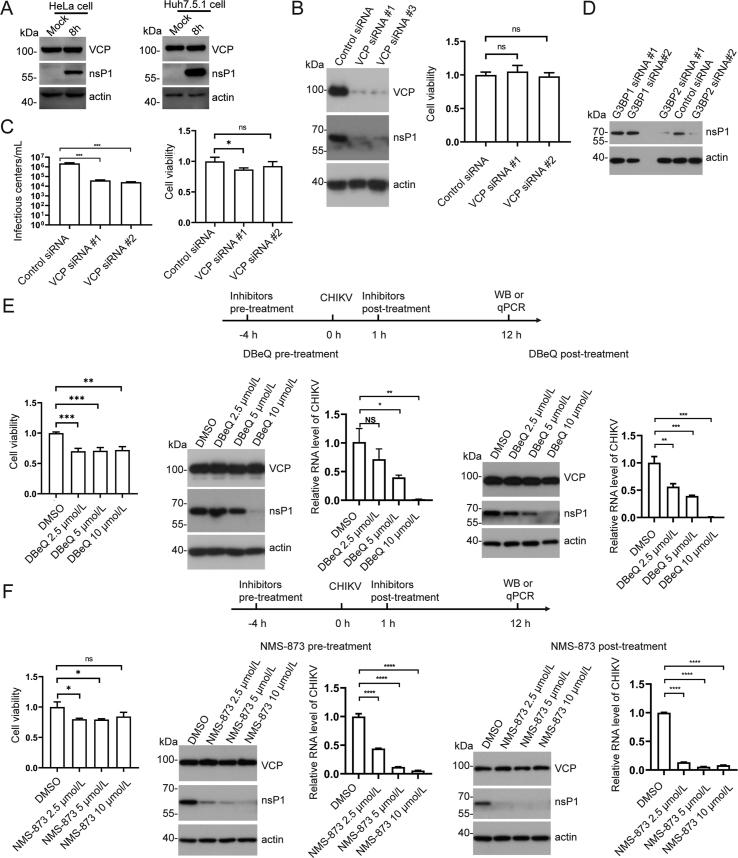
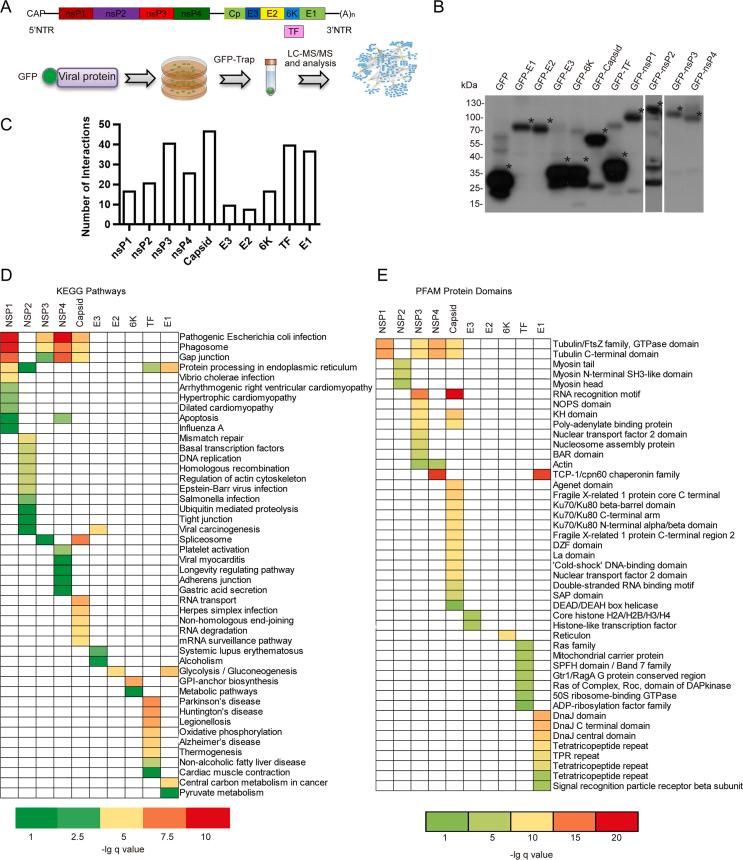
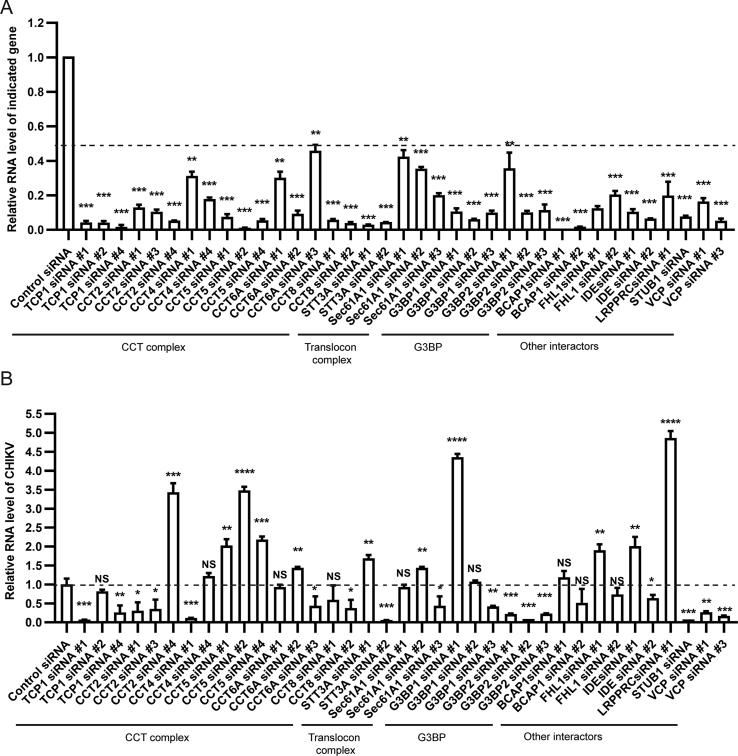
Chikungunya virus (CHIKV) is a re-emerging mosquito-transmitted RNA virus causing joint and muscle pain. To better understand how CHIKV rewires the host cell and usurps host cell functions, we generated a systematic CHIKV-human protein-protein interaction map and revealed several novel connections that will inform further mechanistic studies. One of these novel interactions, between the viral protein E1 and STIP1 homology and U-box containing protein 1 (STUB1), was found to mediate ubiquitination of E1 and degrade E1 through the proteasome. Capsid associated with G3BP1, G3BP2 and AAA+ ATPase valosin-containing protein (VCP). Furthermore, VCP inhibitors blocked CHIKV infection, suggesting VCP could serve as a therapeutic target. Further work is required to fully understand the functional consequences of these interactions. Given that CHIKV proteins are conserved across alphaviruses, many virus-host protein-protein interactions identified in this study might also exist in other alphaviruses. Construction of interactome of CHIKV provides the basis for further studying the function of alphavirus biology.
基孔肯雅热病毒(CHIKV)是一种重新出现的蚊媒传播 RNA 病毒,可引起关节和肌肉疼痛。为了更好地了解 CHIKV 如何重新布线宿主细胞并篡夺宿主细胞功能,我们生成了一个系统的 CHIKV-人蛋白-蛋白相互作用图谱,并揭示了一些新的联系,这些联系将为进一步的机制研究提供信息。其中一个新的相互作用是病毒蛋白 E1 与 STIP1 同源和 U -box 含有蛋白 1(STUB1)之间的相互作用,该相互作用被发现介导 E1 的泛素化,并通过蛋白酶体降解 E1。衣壳与 G3BP1、G3BP2 和 AAA+ATP 酶包含 valosin 的蛋白(VCP)相关。此外,VCP 抑制剂阻断了 CHIKV 感染,表明 VCP 可以作为治疗靶点。需要进一步的工作来充分了解这些相互作用的功能后果。鉴于 CHIKV 蛋白在所有甲病毒中都保守,本研究中鉴定的许多病毒-宿主蛋白-蛋白相互作用也可能存在于其他甲病毒中。CHIKV 相互作用组的构建为进一步研究甲病毒生物学的功能提供了基础。



 Zotero 插件