
口咽癌质子治疗后的生活质量和患者报告结局:一项系统评价
Quality of Life and Patient-Reported Outcomes Following Proton Therapy for Oropharyngeal Carcinoma: A Systematic Review.
作者信息
Yahya Noorazrul, Manan Hanani Abdul
机构信息
Diagnostic Imaging and Radiotherapy, Center for Diagnostic, Therapeutic and Investigative Studies (CODTIS), Faculty of Health Sciences, National University of Malaysia, Jalan Raja Muda Aziz, Kuala Lumpur 50300, Malaysia.
Functional Image Processing Laboratory, Department of Radiology, Universiti Kebangsaan Malaysia Medical Centre, Cheras, Kuala Lumpur 56000, Malaysia.
出版信息
Cancers (Basel). 2023 Apr 12;15(8):2252. doi: 10.3390/cancers15082252.
BACKGROUND
Complex anatomy surrounding the oropharynx makes proton therapy (PT), especially intensity-modulated PT (IMPT), a potentially attractive option due to its ability to reduce the volume of irradiated healthy tissues. Dosimetric improvement may not translate to clinically relevant benefits. As outcome data are emerging, we aimed to evaluate the evidence of the quality of life (QOL) and patient-reported outcomes (PROs) following PT for oropharyngeal carcinoma (OC).
MATERIALS AND METHODS
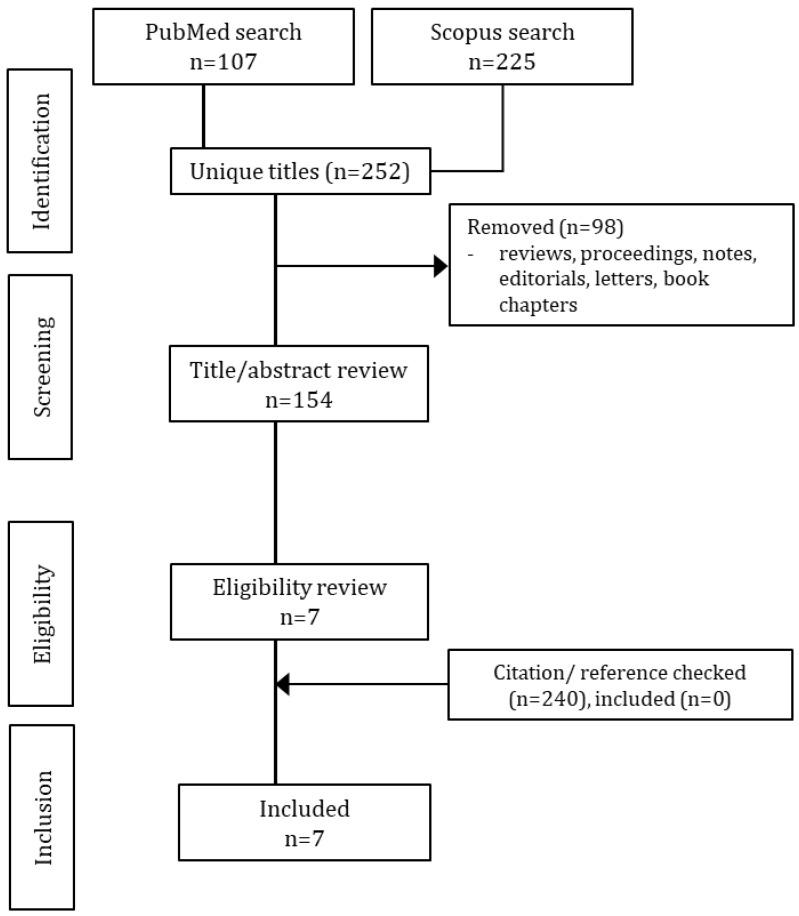
We searched PubMed and Scopus electronic databases (date: 15 February 2023) to identify original studies on QOL and PROs following PT for OC. We employed a fluid strategy in the search strategy by tracking citations of the initially selected studies. Reports were extracted for information on demographics, main results, and clinical and dose factor correlates. Quality assessment was performed using the NIH's Quality Assessment Tool for Observational Cohort and Cross-Sectional Studies. The PRISMA guidelines were followed in the preparation of this report.
RESULTS
Seven reports were selected, including one from a recently published paper captured from citation tracking. Five compared PT and photon-based therapy, although none were randomized controlled trials. Most endpoints with significant differences favored PT, including xerostomia, cough, need for nutritional supplements, dysgeusia, food taste, appetite, and general symptoms. However, some endpoints favored photon-based therapy (sexual symptoms) or showed no significant difference (e.g., fatigue, pain, sleep, mouth sores). The PROs and QOL improve following PT but do not appear to return to baseline.
CONCLUSION
Evidence suggests that PT causes less QOL and PRO deterioration than photon-based therapy. Biases due to the non-randomized study design remain obstacles to a firm conclusion. Whether or not PT is cost-effective should be the subject of further investigation.
背景
口咽周围复杂的解剖结构使得质子治疗(PT),尤其是调强质子治疗(IMPT)成为一个潜在的有吸引力的选择,因为它能够减少受照射健康组织的体积。剂量学上的改善可能无法转化为临床相关益处。随着结果数据的出现,我们旨在评估口咽癌(OC)质子治疗后生活质量(QOL)和患者报告结局(PROs)的证据。
材料与方法
我们检索了PubMed和Scopus电子数据库(日期:2023年2月15日),以识别关于OC质子治疗后QOL和PROs的原始研究。我们在检索策略中采用了灵活的方法,通过追踪最初选定研究的参考文献。提取报告中的人口统计学信息、主要结果以及临床和剂量因素相关性。使用美国国立卫生研究院的观察性队列和横断面研究质量评估工具进行质量评估。本报告的撰写遵循PRISMA指南。
结果
共选择了7份报告,其中1份来自通过参考文献追踪获取的最近发表的论文。5份报告比较了质子治疗和基于光子的治疗,尽管没有一项是随机对照试验。大多数有显著差异的终点指标有利于质子治疗,包括口干、咳嗽、营养补充剂需求、味觉障碍、食物味道、食欲和一般症状。然而,一些终点指标有利于基于光子的治疗(性症状)或无显著差异(如疲劳、疼痛、睡眠、口腔溃疡)。质子治疗后PROs和QOL有所改善,但似乎未恢复到基线水平。
结论
证据表明,与基于光子的治疗相比,质子治疗导致的QOL和PROs恶化程度较小。非随机研究设计导致的偏倚仍然是得出确凿结论的障碍。质子治疗是否具有成本效益应是进一步研究的主题。

 Zotero 插件