
使用CDX修饰的壳聚糖纳米颗粒将基因靶向递送至大脑。
Targeted gene delivery to the brain using CDX-modified chitosan nanoparticles.
作者信息
Sepasi Tina, Bani Farhad, Rahbarghazi Reza, Ebrahimi-Kalan Abbas, Sadeghi Mohammad-Reza, Alamolhoda Seyedeh Zahra, Zarebkohan Amir, Ghadiri Tahereh, Gao Huile
机构信息
Department of Medical Nanotechnology, Advanced Faculty of Medical Sciences, Tabriz University of Medical Sciences, Tabriz, Iran.
Drug Applied Research Center, Tabriz University of Medical Sciences, Tabriz, Iran.
出版信息
Bioimpacts. 2023;13(2):133-144. doi: 10.34172/bi.2022.23876. Epub 2022 May 28.
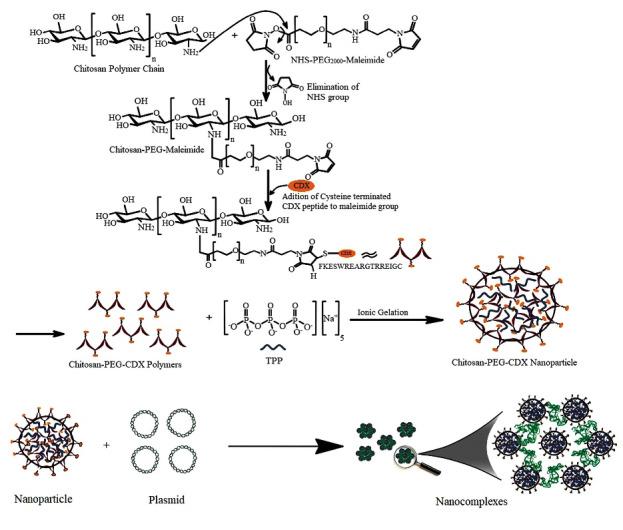
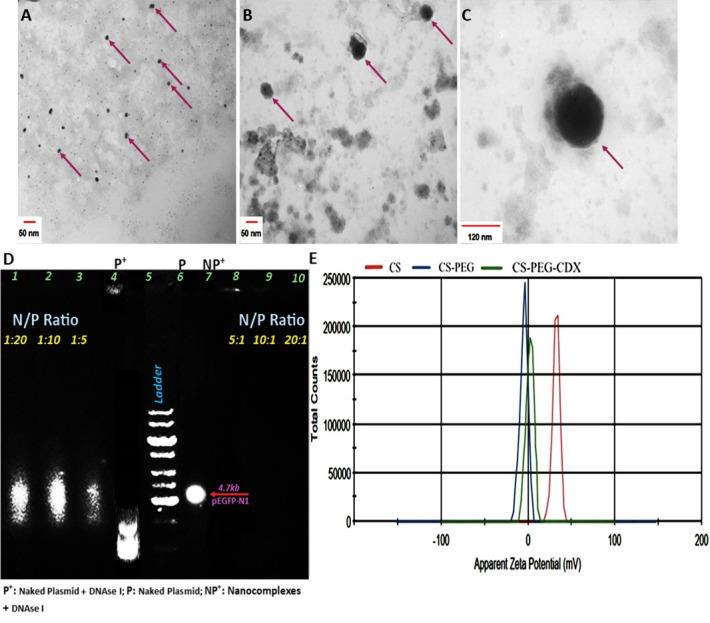
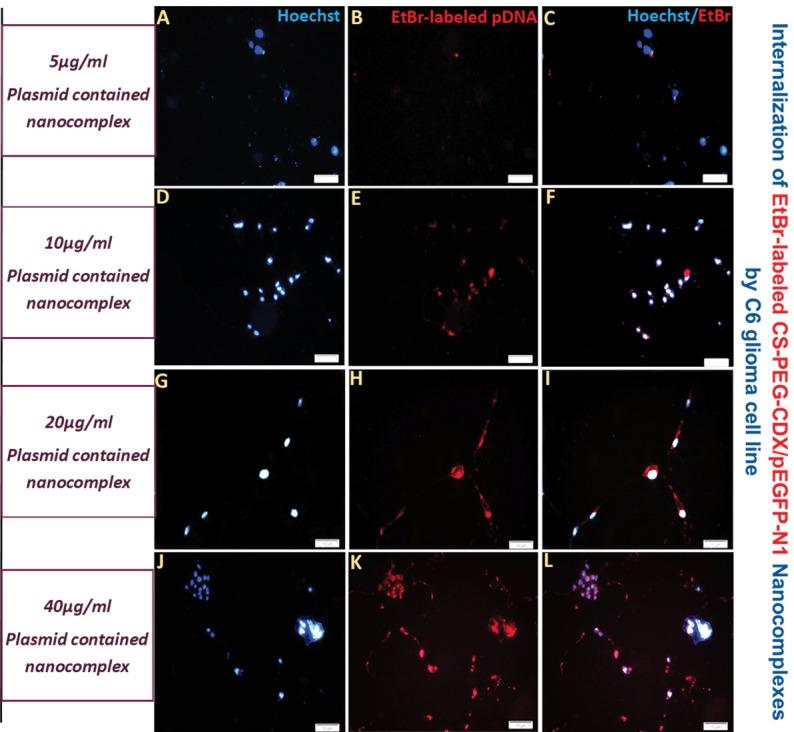
Blood-brain barrier with strictly controlled activity participates in a coordinated transfer of bioactive molecules from the blood to the brain. Among different delivery approaches, gene delivery is touted as a promising strategy for the treatment of several nervous system disorders. The transfer of exogenous genetic elements is limited by the paucity of suitable carriers. As a correlate, designing high-efficiency biocarriers for gene delivery is challenging. This study aimed to deliver pEGFP-N1 plasmid into the brain parenchyma using CDX-modified chitosan (CS) nanoparticles (NPs). Herein, we attached CDX, a 16 amino acids peptide, to the CS polymer using bifunctional polyethylene glycol (PEG) formulated with sodium tripolyphosphate (TPP), by ionic gelation method. Developed NPs and their nanocomplexes with pEGFP-N1 (CS-PEG-CDX/pEGFP) were characterized using DLS, NMR, FTIR, and TEM analyses. For assays, a rat C6 glioma cell line was used for cell internalization efficiency. The biodistribution and brain localization of nanocomplexes were studied in a mouse model after intraperitoneal injection using imaging and fluorescent microscopy. Our results showed that CS-PEG-CDX/pEGFP NPs were uptaken by glioma cells in a dose-dependent manner. imaging revealed successful entry into the brain parenchyma indicated with the expression of green fluorescent protein (GFP) as a reporter protein. However, the biodistribution of developed NPs was also evident in other organs especially the spleen, liver, heart, and kidneys. Based on our results, CS-PEG-CDX NPs can provide a safe and effective nanocarrier for brain gene delivery into the central nervous system (CNS).
具有严格控制活性的血脑屏障参与生物活性分子从血液到大脑的协调转运。在不同的递送方法中,基因递送被认为是治疗几种神经系统疾病的有前景的策略。外源性遗传元件的转移受到合适载体匮乏的限制。相应地,设计用于基因递送的高效生物载体具有挑战性。本研究旨在使用CDX修饰的壳聚糖(CS)纳米颗粒(NPs)将pEGFP-N1质粒递送至脑实质。在此,我们通过离子凝胶法,使用与三聚磷酸钠(TPP)配制的双功能聚乙二醇(PEG),将一种16个氨基酸的肽CDX连接到CS聚合物上。使用动态光散射(DLS)、核磁共振(NMR)、傅里叶变换红外光谱(FTIR)和透射电子显微镜(TEM)分析对所制备的NPs及其与pEGFP-N1的纳米复合物(CS-PEG-CDX/pEGFP)进行表征。对于实验,使用大鼠C6胶质瘤细胞系来检测细胞内化效率。在腹腔注射后,使用成像和荧光显微镜在小鼠模型中研究纳米复合物的生物分布和脑定位。我们的结果表明,CS-PEG-CDX/pEGFP NPs以剂量依赖的方式被胶质瘤细胞摄取。成像显示成功进入脑实质,以绿色荧光蛋白(GFP)作为报告蛋白的表达为指标。然而,所制备的NPs在其他器官尤其是脾脏、肝脏、心脏和肾脏中的生物分布也很明显。基于我们 的结果,CS-PEG-CDX NPs可为向中枢神经系统(CNS)进行脑基因递送提供一种安全有效的纳米载体。



 Zotero 插件