
婴儿在生命的头一年中使用抗生素与他们粪便中出现抗生素耐药基因有关。
Antibiotic use in infants within the first year of life is associated with the appearance of antibiotic-resistant genes in their feces.
机构信息
Department of Microbiology, Faculty of Pharmacy, University of Ibadan, Ibadan, Oyo, Nigeria.
Department of Microbiology, Faculty of Science, Adeleke University, Ede, Osun State, Nigeria.
出版信息
PeerJ. 2023 May 15;11:e15015. doi: 10.7717/peerj.15015. eCollection 2023.
BACKGROUND
Antibiotic resistance, an increasing challenge, is not only a national threat but also a global threat. Carriage of resistance genes is not limited to adults alone, various microbiota niches present in the body system of children have been found to harbor bacteria carrying resistant genes, especially, their gut microbiota. This study aims to identify selected antibiotic-resistant genes from the fecal samples of infants and the association of antibiotics use with the occurrence of resistant genes in the infant's gut.
METHODS
A total number of 172 metagenomic DNA samples previously extracted from stool samples of 28 Nigerian babies longitudinally within their first year of life were screened for the presence of ESBL genes (SHV, TEM, and CTX-M), PMQR genes (, , , ), ribosomal protection protein tetracycline resistance gene, (RPP) β-lactamase (), macrolide (, , A/E), aminoglycoside modifying enzymes gent (aac(6')/aph(2″)) and genes by PCR. Nineteen (19) of the 28 babies used antibiotics during the study. The association between antibiotic use by the babies within the first year of life and occurrence of resistant genes were analyzed by Spearman rank correlation.
RESULTS
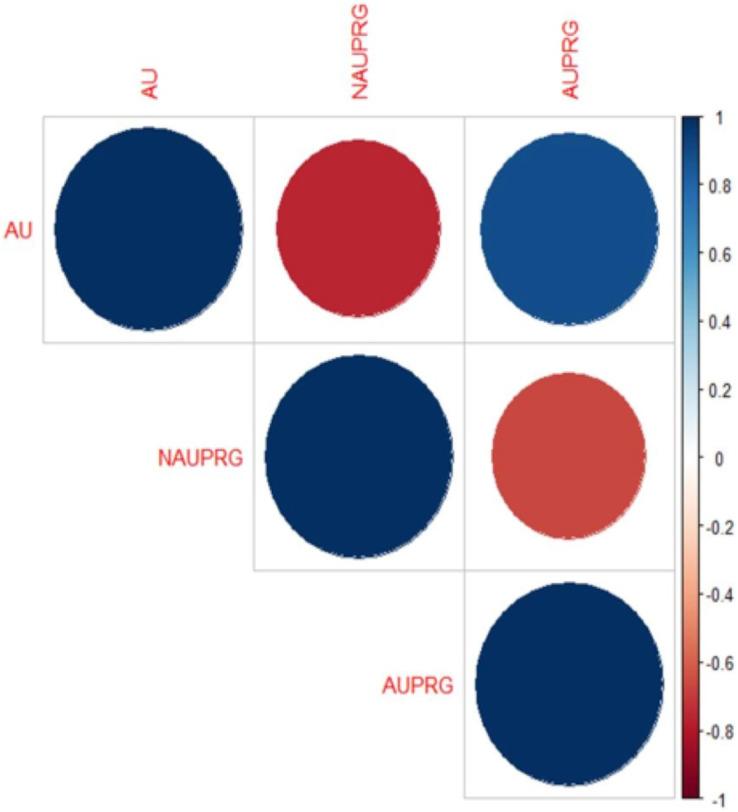
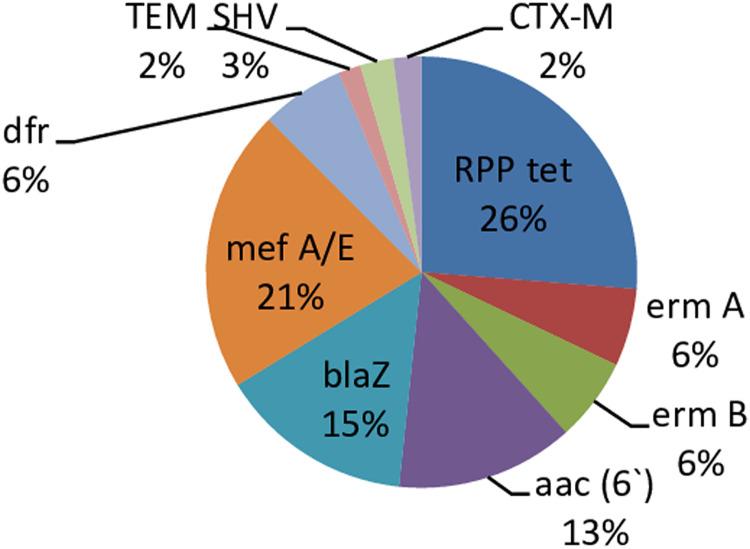
One hundred and twenty-two (122) samples (71%) out of the 172 isolates had antibiotic-resistance genes. PMQR genes were absent in all the samples. Three isolates had TEM gene, nine isolates had SHV gene, six isolates had CTX-M gene and 19 isolates had gene, 31 samples had gene, 29 samples had gene, 27 samples had gene, four samples had gene, 13 samples had gene and 16 samples had gene. The babies whose samples had resistant genes used antibiotics in the same months the samples were collected. Interestingly, the 11 babies whose samples had the A gene all used antibiotics in the same months their samples were collected but none of them used trimethoprim/sulfamethoxazole antibiotic. The overall correlation matrix of the babies showed a strong association between antibiotic use (AU) and antibiotic use presence of resistance genes (AUPRG) with a coefficient of 0.89. Antibiotic-resistant genes are present in the gut of infants and their occurrence is strongly connected with antibiotic use by infants.
背景
抗生素耐药性是一个日益严峻的挑战,不仅对国家构成威胁,对全球也是如此。耐药基因的传播并不仅限于成年人,儿童体内的各种微生物群落也被发现携带有耐药基因的细菌,尤其是肠道微生物群。本研究旨在从婴儿粪便样本中鉴定出选定的抗生素耐药基因,并探讨婴儿肠道中抗生素使用与耐药基因出现的相关性。
方法
总共对 28 名尼日利亚婴儿在其生命的第一年中采集的 172 个宏基因组 DNA 样本进行了检测,以确定是否存在 ESBL 基因(SHV、TEM 和 CTX-M)、PMQR 基因(、、、)、核糖体保护蛋白四环素耐药基因(RPP)β-内酰胺酶()、大环内酯类(、、A/E)、氨基糖苷类修饰酶 gent(aac(6')/aph(2″))和 基因。在研究期间,19 名婴儿使用了抗生素。使用 Spearman 秩相关分析评估婴儿在生命的第一年中使用抗生素与耐药基因出现之间的相关性。
结果
在 172 个分离株中,有 122 个(71%)样本携带抗生素耐药基因。所有样本均未检测到 PMQR 基因。有 3 个分离株携带 TEM 基因,9 个分离株携带 SHV 基因,6 个分离株携带 CTX-M 基因,19 个分离株携带 基因,31 个样本携带 基因,29 个样本携带 基因,27 个样本携带 基因,4 个样本携带 基因,13 个样本携带 基因,16 个样本携带 基因。携带耐药基因的婴儿的样本与收集样本的月份使用了抗生素。有趣的是,11 名携带 A 基因样本的婴儿均在收集样本的同一月份使用了抗生素,但他们都没有使用复方磺胺甲噁唑抗生素。婴儿的总体相关性矩阵显示,抗生素使用(AU)与抗生素使用时耐药基因的存在(AUPRG)之间存在强烈的相关性,相关系数为 0.89。抗生素耐药基因存在于婴儿的肠道中,其出现与婴儿使用抗生素密切相关。
 Zotero 插件