
阿拉伯胶用高碘酸盐氧化时取代二氧六环的形成。
Formation of substituted dioxanes in the oxidation of gum arabic with periodate.
作者信息
Siebe Harmke S, Sardjan Andy S, Maßmann Sarina C, Flapper Jitte, van den Berg Keimpe J, Eisink Niek N H M, Kentgens Arno P M, Feringa Ben L, Kumar Akshay, Browne Wesley R
机构信息
Stratingh Institute for Chemistry, Faculty of Science and Engineering, University of Groningen Nijenborgh 4 9747 AG Groningen The Netherlands
Akzo Nobel Decorative Coatings BV Rijksstraatweg 31 Sassenheim 2171 AJ The Netherlands.
出版信息
Green Chem. 2023 Apr 26;25(10):4058-4066. doi: 10.1039/d2gc04923f. eCollection 2023 May 22.
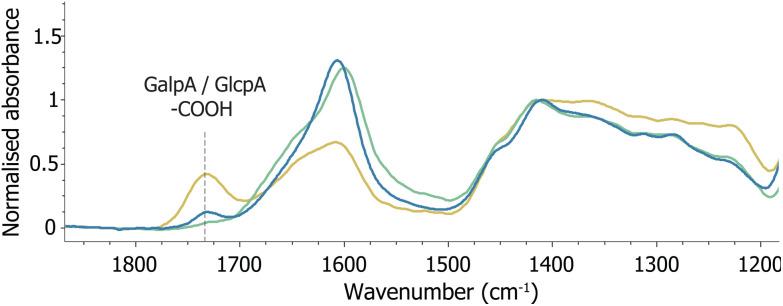
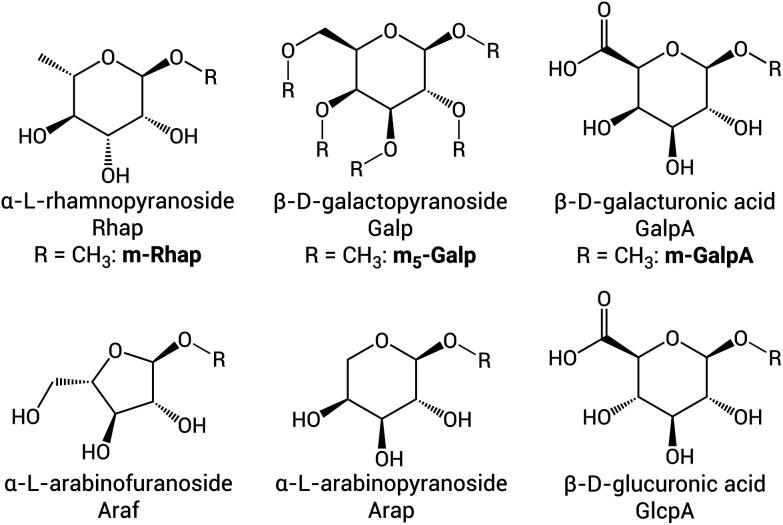
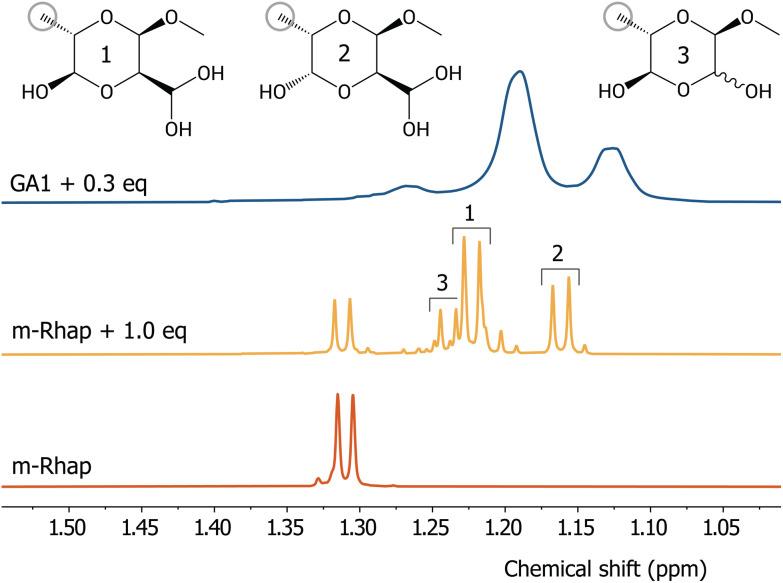
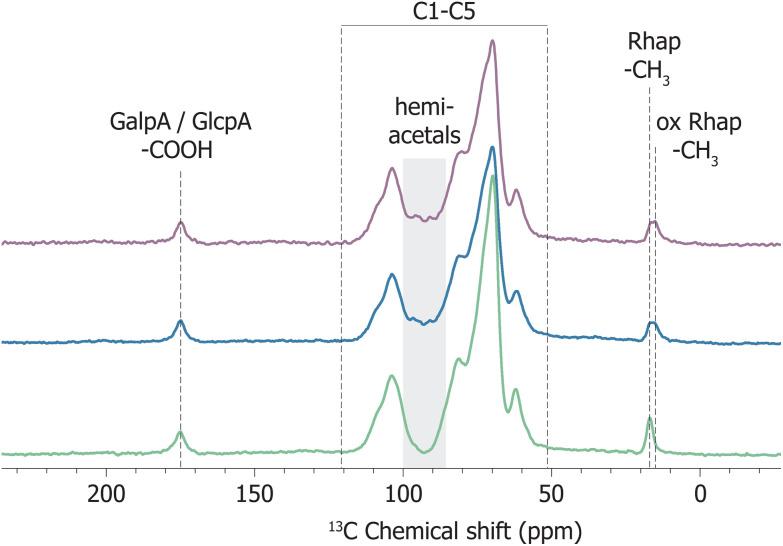
Renewable polysaccharide feedstocks are of interest in bio-based food packaging, coatings and hydrogels. Their physical properties often need to be tuned by chemical modification, by oxidation using periodate, to introduce carboxylic acid, ketone or aldehyde functional groups. The reproducibility required for application on an industrial scale, however, is challenged by uncertainty about the composition of product mixtures obtained and of the precise structural changes that the reaction with periodate induces. Here, we show that despite the structural diversity of gum arabic, primarily rhamnose and arabinose subunits undergo oxidation, whereas (in-chain) galacturonic acids are unreactive towards periodate. Using model sugars, we show that periodate preferentially oxidises the 1,2-diols in the rhamnopyranoside monosaccharides present as terminal groups in the biopolymer. While formally oxidation of vicinal diols results in the formation of two aldehyde groups, only traces of aldehydes are observed in solution, with the main final products obtained being substituted dioxanes, both in solution and in the solid state. The substituted dioxanes form most likely by the intramolecular reaction of one aldehyde with a nearby hydroxyl group, followed by hydration of the remaining aldehyde to form a geminal diol. The absence of significant amounts of aldehyde functional groups in the modified polymer impacts crosslinking strategies currently attempted in the preparation of renewable polysaccharide-based materials.
可再生多糖原料在生物基食品包装、涂层和水凝胶方面备受关注。它们的物理性质通常需要通过化学改性来调整,即使用高碘酸盐进行氧化,以引入羧酸、酮或醛官能团。然而,工业规模应用所需的可重复性受到所获得的产物混合物组成以及与高碘酸盐反应所引起的精确结构变化的不确定性的挑战。在这里,我们表明,尽管阿拉伯胶结构多样,但主要是鼠李糖和阿拉伯糖亚基发生氧化,而(链内)半乳糖醛酸对高碘酸盐无反应。使用模型糖,我们表明高碘酸盐优先氧化生物聚合物中作为末端基团存在的鼠李吡喃糖苷单糖中的1,2 -二醇。虽然邻二醇的形式氧化会导致形成两个醛基,但在溶液中仅观察到痕量的醛,溶液和固态中获得的主要最终产物都是取代的二恶烷。取代的二恶烷最有可能是由一个醛与附近的羟基发生分子内反应形成的,随后剩余的醛水合形成偕二醇。改性聚合物中大量醛官能团的缺失影响了目前在制备可再生多糖基材料时尝试的交联策略。


 Zotero 插件