
巴西FDA批准的抗癌药物的上市许可与定价:一项回顾性分析
Marketing authorisation and pricing of FDA-approved cancer drugs in Brazil: a retrospective analysis.
作者信息
Ivama-Brummell Adriana M, Marciniuk Fernanda L, Wagner Anita K, Osorio-de-Castro Claudia G S, Vogler Sabine, Mossialos Elias, Tavares-de-Andrade Carla L, Naci Huseyin
机构信息
Department of Health Policy, London School of Economics and Political Science, Cowdray House, Houghton Street, London, WC2A 2AE, United Kingdom.
Office of Assessment of Safety and Efficacy, General Office of Medicines, Brazilian Health Regulatory Agency, SIA, Trecho 05, Área Especial 57, Brasília-DF CEP 71.205-050, Brazil.
出版信息
Lancet Reg Health Am. 2023 May 17;22:100506. doi: 10.1016/j.lana.2023.100506. eCollection 2023 Jun.
BACKGROUND
Most cancer drugs enter the US market first. US Food and Drug Administration (FDA) approvals of new cancer drugs may influence regulatory decisions in other settings. The study examined whether characteristics of available evidence at FDA approval influenced time-to-marketing authorisation (MA) in Brazil, and price differences between the two countries.
METHODS
All new FDA-approved cancer drugs from 2010 to 2019 were matched to drugs with MA and prices approved in Brazil by December 2020. Characteristics of main studies, availability of randomised controlled trials (RCTs), overall survival (OS) benefit, added therapeutic benefit, and prices were compared.
FINDINGS
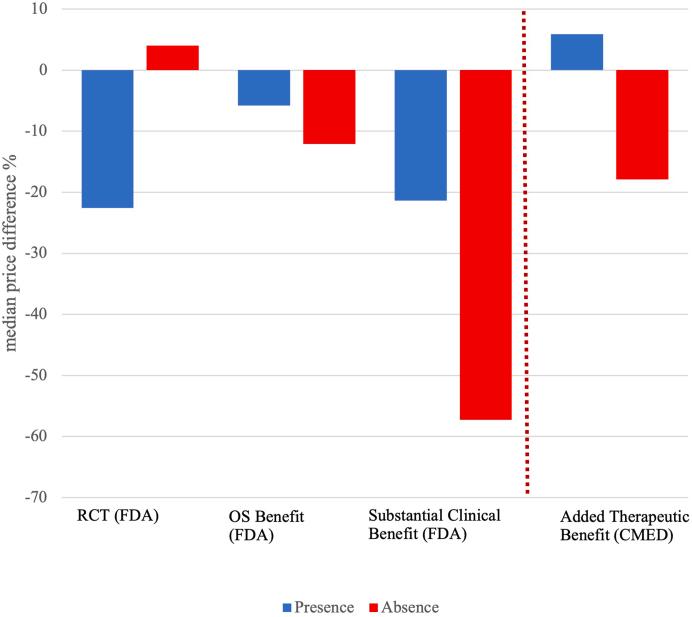
Fifty-six FDA-approved cancer drugs with matching indications received a MA at the Brazilian Health Regulatory Agency (Anvisa) after a median of 522 days following US approval (IQR: 351-932). Earlier authorisation in Brazil was associated with availability of RCT (median: 506 vs 760 days, p = 0.031) and evidence of OS benefit (390 vs 543 days, p = 0.019) at FDA approval. At Brazilian marketing authorisation, a greater proportion of cancer drugs had main RCTs (75% vs 60.7%) and OS benefit (42.9% vs 21.4%) than that in the US. Twenty-eight (50%) drugs did not demonstrate added therapeutic benefit over drugs for the same indication in Brazil. Median approved prices of new cancer drugs were 12.9% lower in Brazil compared to the US (adjusted by Purchasing Power Parity). However, for drugs with added therapeutic benefit median prices were 5.9% higher in Brazil compared to the US, while 17.9% lower for those without added benefit.
INTERPRETATION
High-quality clinical evidence accelerated the availability of cancer medicines in Brazil. The combination of marketing and pricing authorisation in Brazil may favour the approval of cancer drugs with better supporting evidence, and more meaningful clinical benefit albeit with variable degree of success in achieving lower prices compared to the US.
FUNDING
None.
背景
大多数抗癌药物首先进入美国市场。美国食品药品监督管理局(FDA)对新型抗癌药物的批准可能会影响其他地区的监管决策。本研究调查了FDA批准时现有证据的特征是否会影响巴西的上市许可时间,以及两国之间的价格差异。
方法
将2010年至2019年所有FDA批准的新型抗癌药物与截至2020年12月在巴西获得上市许可及价格批准的药物进行匹配。比较主要研究的特征、随机对照试验(RCT)的可用性、总生存期(OS)获益、额外治疗获益和价格。
研究结果
在美国批准后,56种FDA批准的具有匹配适应症的抗癌药物在巴西卫生监管机构(巴西国家卫生监督局)获得上市许可,中位时间为522天(四分位间距:351 - 932天)。巴西更早的上市许可与FDA批准时RCT的可用性(中位时间:506天对760天,p = 0.031)和OS获益证据(390天对543天,p = 0.019)相关。在巴西上市许可时,与美国相比,更大比例的抗癌药物有主要RCT(75%对60.7%)和OS获益(42.9%对21.4%)。28种(50%)药物在巴西未显示出相对于相同适应症药物的额外治疗获益。与美国相比,巴西新型抗癌药物的中位批准价格低12.9%(按购买力平价调整)。然而,对于具有额外治疗获益的药物,巴西的中位价格比美国高5.9%,而对于无额外获益的药物则低17.9%。
解读
高质量的临床证据加速了抗癌药物在巴西的可及性。巴西的上市和定价许可相结合可能有利于批准具有更好支持证据和更有意义临床获益的抗癌药物,尽管在实现比美国更低价格方面的成功程度各不相同。
资金来源
无。

 Zotero 插件