
蓝莓可改善功能性胃肠病患者的腹部症状、整体健康状况和身体机能。
Blueberries Improve Abdominal Symptoms, Well-Being and Functioning in Patients with Functional Gastrointestinal Disorders.
机构信息
Brain-Gut Research Group, Gastroenterology Group Practice, 3011 Bern, Switzerland.
Mech-Sense, Department of Gastroenterology & Hepatology, Aalborg University Hospital, 5000 Aalborg, Denmark.
出版信息
Nutrients. 2023 May 20;15(10):2396. doi: 10.3390/nu15102396.
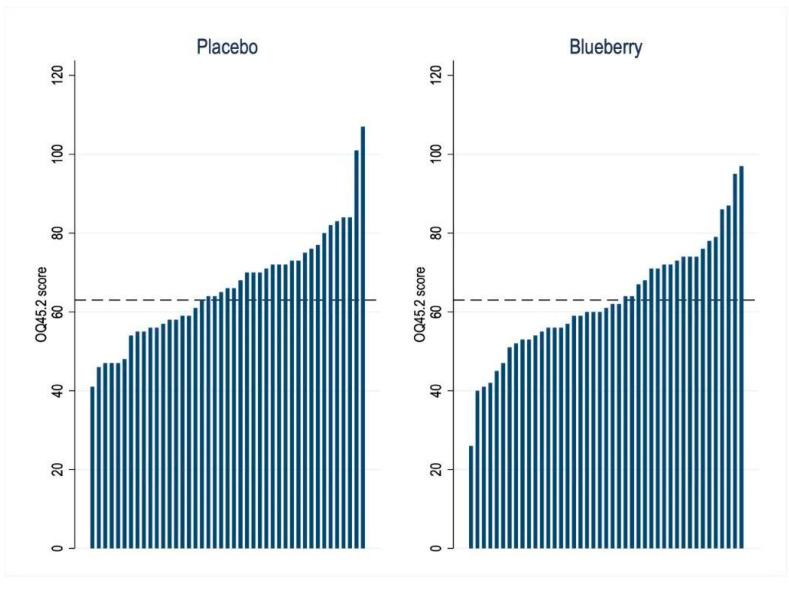
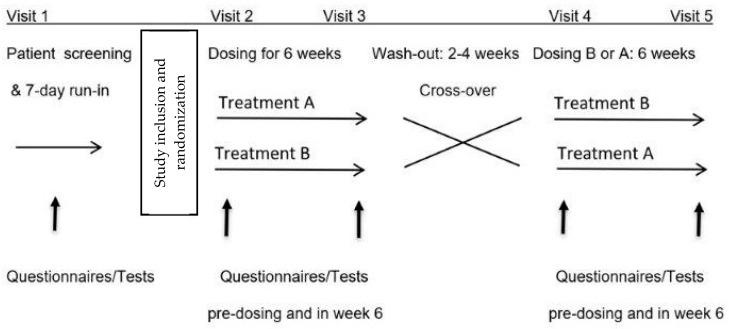
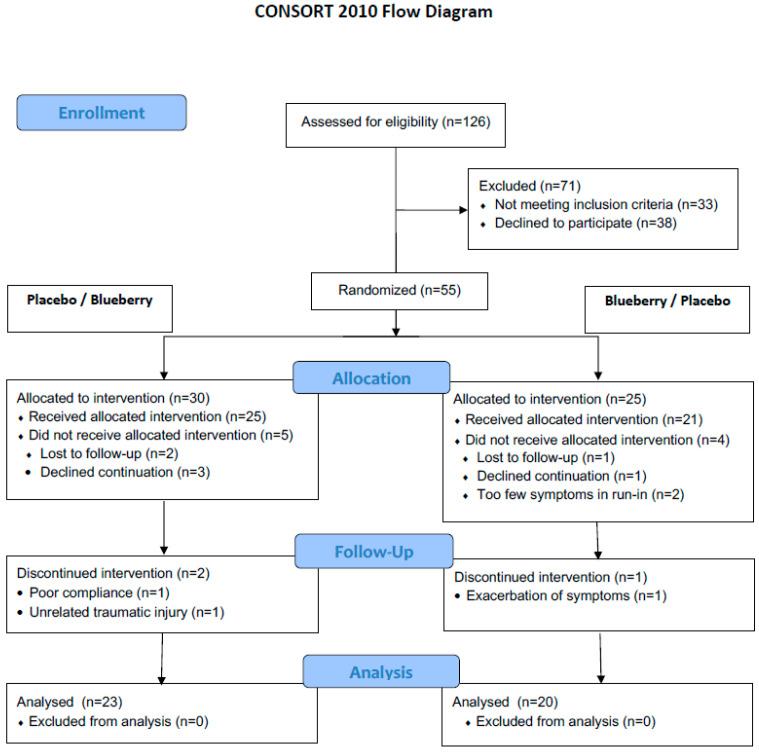
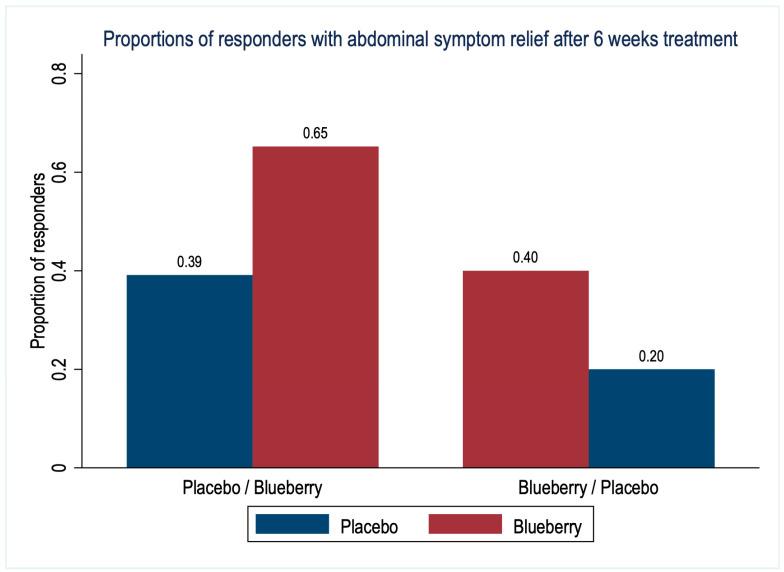
Blueberries beneficially modulate physiologic mechanisms relevant to the pathogenesis of functional gastrointestinal disorders (FGID). Forty-three patients with FGID received freeze-dried blueberries (equivalent to 180 g fresh blueberries) or sugar and energy-matched placebo in a double-blind, randomized, cross-over study. After 6 weeks of treatment, the differences in Gastrointestinal Clinical Rating Scale (GSRS) scores and abdominal symptom relief were compared as primary outcome measures. The quality of life and life functioning ratings (OQ45.2 questionnaire), Bristol stool scales, and fructose breath test results constituted secondary outcome measures. Blueberry treatment resulted in more patients with relevant abdominal symptom relief compared to placebo (53% vs. 30%, = 0.03). Total and pain GSRS scores improved insignificantly (mean treatment differences [95% CI]: -3.4 [-7.4 to 0.6] ( = 0.09) and -1.0 [-2.2 to 0.1] ( = 0.08), respectively). OQ45.2 scores improved during blueberry treatment compared to placebo (treatment difference -3.2 [95% CI: -5.6 to -0], = 0.01). Treatment effect differences for the further measures did not reach statistical significance. Blueberries relieved abdominal symptoms and improved general markers of well-being, quality of life, and life functioning more than placebo in patients with FGID. Consequently, the polyphenol and fiber components of blueberries exert broad beneficial effects separate from the sugars present in both treatments.
蓝莓有益于调节与功能性胃肠疾病(FGID)发病机制相关的生理机制。43 名 FGID 患者接受了冻干蓝莓(相当于 180 克新鲜蓝莓)或糖和能量匹配的安慰剂的双盲、随机、交叉研究。治疗 6 周后,比较胃肠道临床评分量表(GSRS)评分和腹部症状缓解的差异作为主要疗效指标。生活质量和生活功能评分(OQ45.2 问卷)、布里斯托粪便量表和果糖呼气试验结果构成次要疗效指标。与安慰剂相比,蓝莓治疗组有更多患者出现相关腹部症状缓解(53% vs. 30%, = 0.03)。总 GSRS 评分和疼痛 GSRS 评分略有改善(平均治疗差异[95%CI]:-3.4[-7.4 至 0.6]( = 0.09)和-1.0[-2.2 至 0.1]( = 0.08))。与安慰剂相比,蓝莓治疗组 OQ45.2 评分改善(治疗差异-3.2[95%CI:-5.6 至-0], = 0.01)。进一步措施的治疗效果差异未达到统计学意义。在 FGID 患者中,蓝莓比安慰剂更能缓解腹部症状,改善整体幸福感、生活质量和生活功能的一般指标。因此,蓝莓中的多酚和纤维成分除了两种治疗方法中都存在的糖外,还具有广泛的有益作用。
 Zotero 插件