
用于囊性纤维化肺部给药的干粉吸入法
Dry Powder Inhalation for Lung Delivery in Cystic Fibrosis.
作者信息
Han Xiaoxuan, Li Danni, Reyes-Ortega Felisa, Schneider-Futschik Elena K
机构信息
Department of Biochemistry and Pharmacology, School of Biomedical Sciences, Faculty of Medicine, Dentistry and Health Sciences, The University of Melbourne, Parkville, VIC 3010, Australia.
出版信息
Pharmaceutics. 2023 May 13;15(5):1488. doi: 10.3390/pharmaceutics15051488.
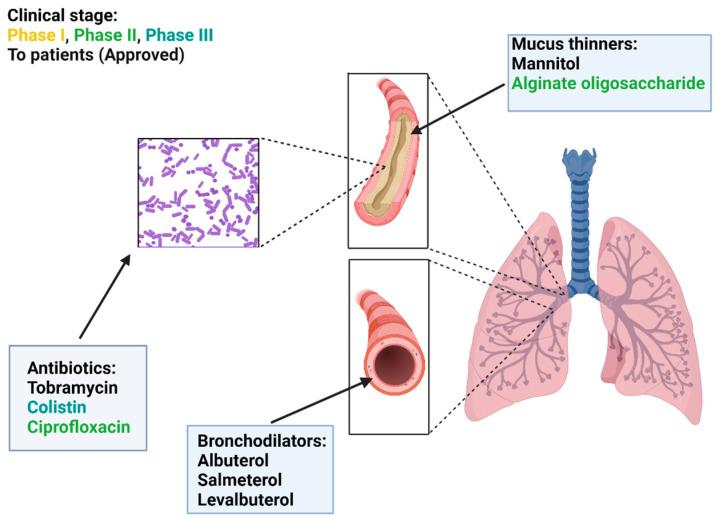
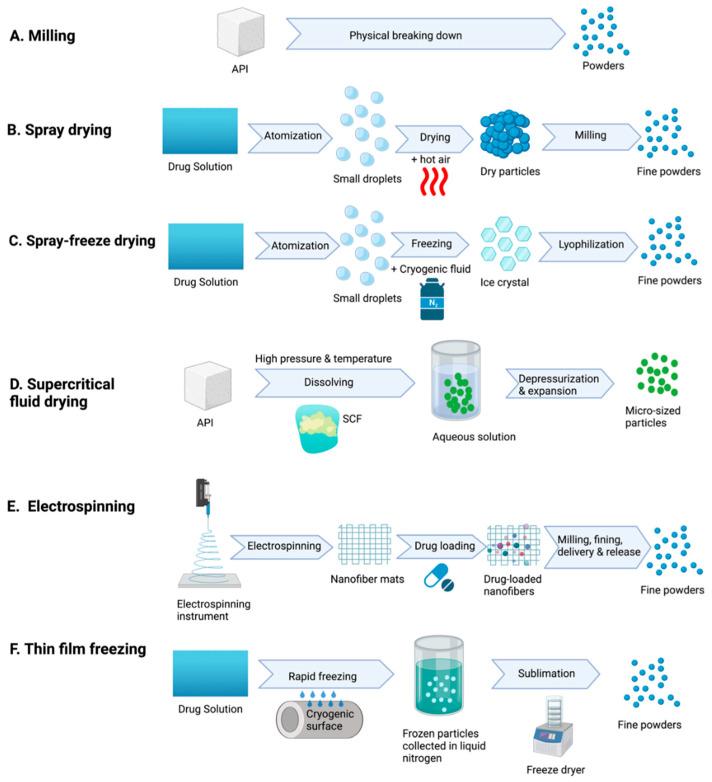
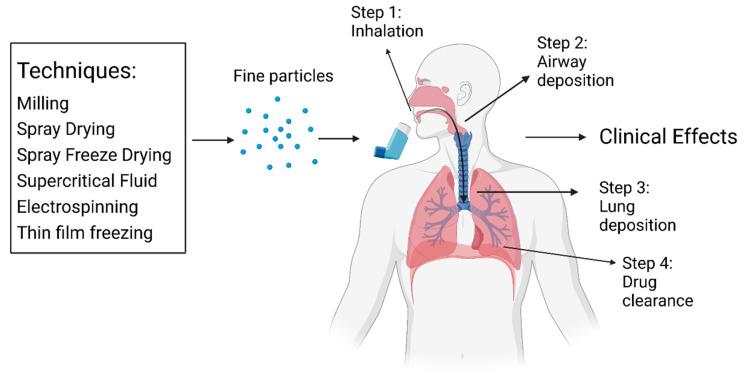
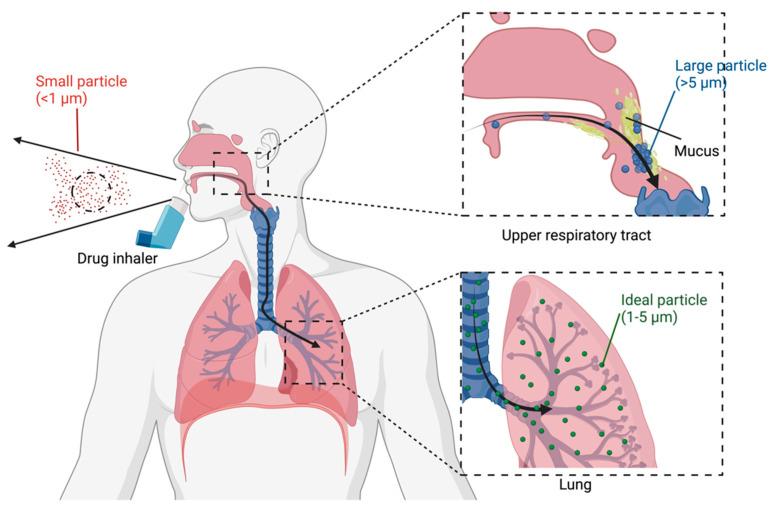
Pulmonary drug delivery has long been used for local and systemic administration of different medications used in acute and chronic respiratory diseases. Certain lung diseases, such as cystic fibrosis, rely heavily on chronic treatments, including targeted lung delivery. Pulmonary drug delivery possesses various physiological advantages compared to other delivery methods and is also convenient for the patient to use. However, the formulation of dry powder for pulmonary delivery proves challenging due to aerodynamic restrictions and the lower tolerance of the lung. The aim of this review is to provide an overview of the respiratory tract structure in patients with cystic fibrosis, including during acute and chronic lung infections and exacerbations. Furthermore, this review discusses the advantages of targeted lung delivery, including the physicochemical properties of dry powder and factors affecting clinical efficacy. Current inhalable drug treatments and drugs currently under development will also be discussed.
肺部给药长期以来一直用于急性和慢性呼吸道疾病中不同药物的局部和全身给药。某些肺部疾病,如囊性纤维化,严重依赖包括靶向肺部给药在内的长期治疗。与其他给药方式相比,肺部给药具有多种生理优势,并且对患者来说使用也很方便。然而,由于空气动力学限制和肺部较低的耐受性,用于肺部给药的干粉制剂颇具挑战性。本综述的目的是概述囊性纤维化患者的呼吸道结构,包括急性和慢性肺部感染及病情加重期间的情况。此外,本综述还讨论了靶向肺部给药的优势,包括干粉的物理化学性质以及影响临床疗效的因素。还将讨论目前的可吸入药物治疗方法以及正在研发的药物。

 Zotero 插件