
生命早期接触丙泊酚不会影响后期的γ-氨基丁酸能抑制、癫痫诱发或社交行为。
Early-life propofol exposure does not affect later-life GABAergic inhibition, seizure induction, or social behavior.
作者信息
Liu Jinyang, Lin Daisy, Yau Alice, Cottrell James E, Kass Ira S
机构信息
Department of Anesthesiology, State University of New York Downstate Health Sciences University, 450 Clarkson Avenue, Brooklyn, NY 11203-2098, USA.
Department of Physiology and Pharmacology, State University of New York Downstate Health Sciences University, 450 Clarkson Avenue, Brooklyn, NY 11203-2098, USA.
出版信息
IBRO Neurosci Rep. 2023 May 15;14:483-493. doi: 10.1016/j.ibneur.2023.05.007. eCollection 2023 Jun.
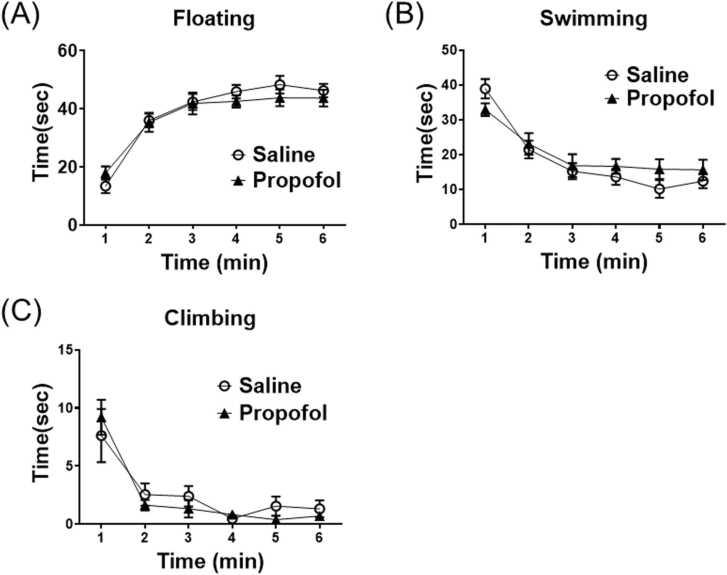
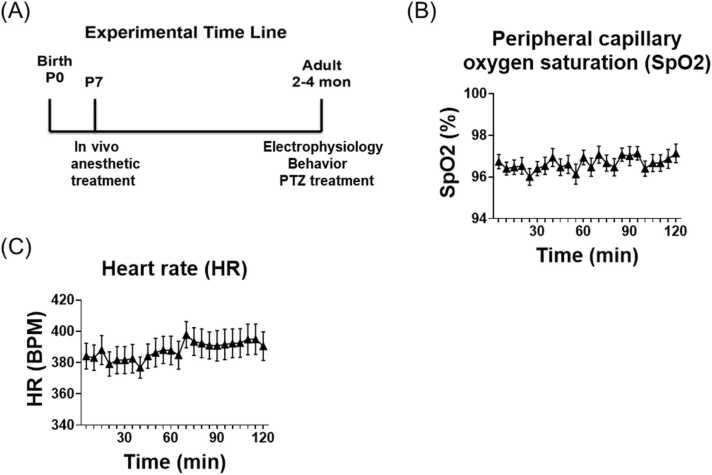
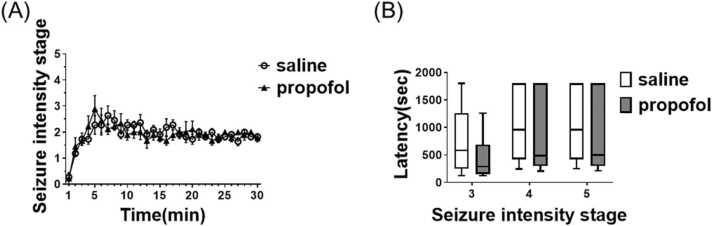
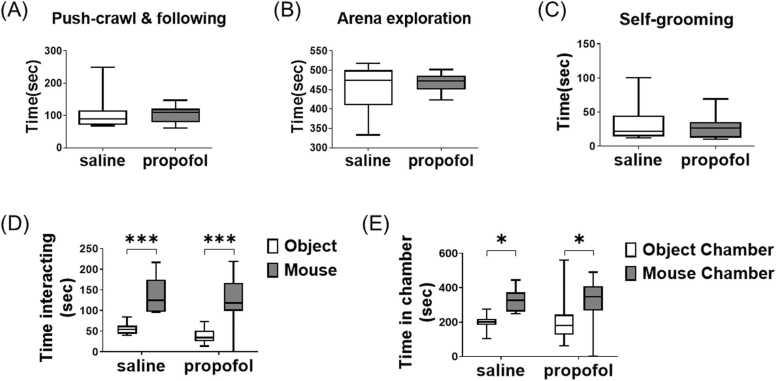
The early developing brain is especially vulnerable to anesthesia, which can result in long lasting functional changes. We examined the effects of early-life propofol on adult excitatory-inhibitory balance and behavior. Postnatal day 7 male mice were exposed to propofol (250 mg/kg i.p.) and anesthesia was maintained for 2 h; control mice were given the same volume of isotonic saline and treated identically. The behavior and electrophysiology experiments were conducted when the mice were adults. We found that a 2-h neonatal propofol exposure did not significantly reduce paired pulse inhibition, alter the effect of muscimol (3 µM) to inhibit field excitatory postsynaptic potentials or alter the effect of bicuculline (100 µM) to increase the population spike in the CA1 region of hippocampal slices from adult mice. Neonatal propofol did not alter the evoked seizure response to pentylenetetrazol in adult mice. Neonatal propofol did not affect anxiety, as measured in the open field apparatus, depression-like behavior, as measured by the forced swim test, or social interactions with novel mice, in either the three-chamber or reciprocal social tests. These results were different from those with neonatal sevoflurane which demonstrated reduced adult GABAergic inhibition, increased seizure susceptibility and reduced social interaction. Even though sevoflurane and propofol both prominently enhance GABA inhibition, they have unique properties that alter the long-term effects of early-life exposure. These results indicate that clinical studies grouping several general anesthetic agents in a single group should be interpreted with great caution when examining long-term effects.
早期发育的大脑对麻醉特别敏感,这可能导致长期的功能变化。我们研究了生命早期丙泊酚对成年小鼠兴奋性-抑制性平衡和行为的影响。出生后第7天的雄性小鼠接受丙泊酚(250mg/kg腹腔注射),麻醉维持2小时;对照小鼠给予相同体积的等渗盐水,并进行相同处理。当小鼠成年后进行行为和电生理实验。我们发现,新生小鼠暴露于丙泊酚2小时并没有显著降低配对脉冲抑制,改变蝇蕈醇(3µM)抑制场兴奋性突触后电位的效果,或改变荷包牡丹碱(100µM)增加成年小鼠海马切片CA1区群体峰电位的效果。新生小鼠丙泊酚暴露并没有改变成年小鼠对戊四氮诱发的癫痫反应。新生小鼠丙泊酚暴露在旷场实验中测量的焦虑、强迫游泳实验中测量的抑郁样行为或三室或互惠社交实验中与陌生小鼠的社交互动方面均无影响。这些结果与新生小鼠七氟醚暴露的结果不同,后者表现为成年期GABA能抑制降低、癫痫易感性增加和社交互动减少。尽管七氟醚和丙泊酚都显著增强GABA抑制作用,但它们具有独特的特性,会改变生命早期暴露的长期影响。这些结果表明,在研究长期影响时,将几种全身麻醉剂归为一组的临床研究应谨慎解释。


 Zotero 插件