
心外膜脂肪组织功能障碍在心血管疾病中的作用:病理生理学、评估和管理概述。
The role of epicardial adipose tissue dysfunction in cardiovascular diseases: an overview of pathophysiology, evaluation, and management.
机构信息
Department of Cardiovascular Center, The First Hospital of Jilin University, Changchun, Jilin, China.
School of Basic Medical Sciences, Changchun University of Chinese Medicine, Changchun, Jilin, China.
出版信息
Front Endocrinol (Lausanne). 2023 May 16;14:1167952. doi: 10.3389/fendo.2023.1167952. eCollection 2023.
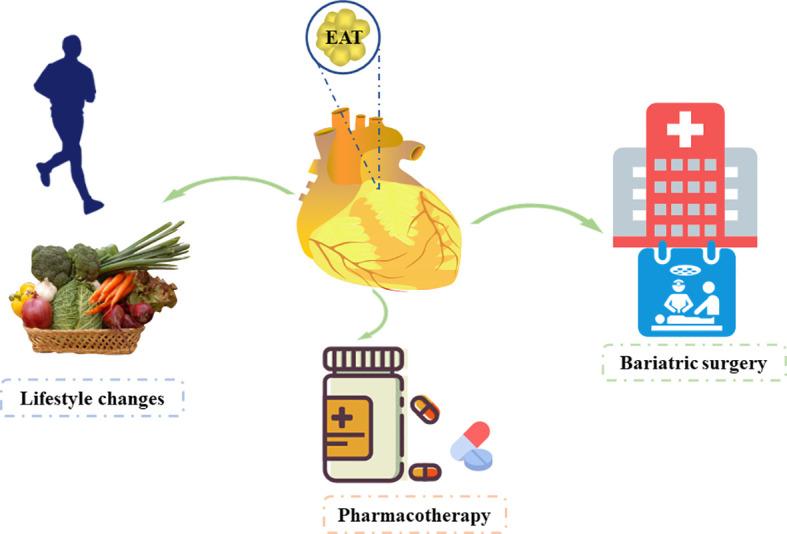
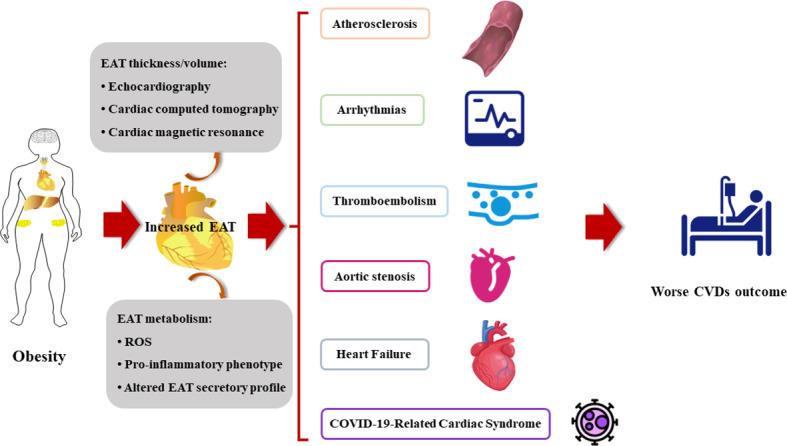
In recent decades, the epicardial adipose tissue (EAT) has been at the forefront of scientific research because of its diverse role in the pathogenesis of cardiovascular diseases (CVDs). EAT lies between the myocardium and the visceral pericardium. The same microcirculation exists both in the epicardial fat and the myocardium. Under physiological circumstances, EAT serves as cushion and protects coronary arteries and myocardium from violent distortion and impact. In addition, EAT acts as an energy lipid source, thermoregulator, and endocrine organ. Under pathological conditions, EAT dysfunction promotes various CVDs progression in several ways. It seems that various secretions of the epicardial fat are responsible for myocardial metabolic disturbances and, finally, leads to CVDs. Therefore, EAT might be an early predictor of CVDs. Furthermore, different non-invasive imaging techniques have been proposed to identify and assess EAT as an important parameter to stratify the CVD risk. We also present the potential therapeutic possibilities aiming at modifying the function of EAT. This paper aims to provide overview of the potential role of EAT in CVDs, discuss different imaging techniques to assess EAT, and provide potential therapeutic options for EAT. Hence, EAT may represent as a potential predictor and a novel therapeutic target for management of CVDs in the future.
在最近几十年,心外膜脂肪组织(EAT)因其在心血管疾病(CVD)发病机制中的多种作用而成为科学研究的前沿。EAT 位于心肌和脏层心包之间。EAT 中的微循环与心肌中的微循环相同。在生理情况下,EAT 作为一种缓冲垫,可以保护冠状动脉和心肌免受剧烈的扭曲和冲击。此外,EAT 还作为一种能量脂质来源、温度调节器官和内分泌器官发挥作用。在病理情况下,EAT 功能障碍通过多种方式促进各种 CVD 的进展。似乎 EAT 的各种分泌物质负责心肌代谢紊乱,最终导致 CVD。因此,EAT 可能是 CVD 的早期预测指标。此外,已经提出了不同的非侵入性成像技术来识别和评估 EAT,将其作为分层 CVD 风险的重要参数。我们还提出了针对 EAT 功能修饰的潜在治疗可能性。本文旨在提供 EAT 在 CVD 中的潜在作用的概述,讨论评估 EAT 的不同成像技术,并提供 EAT 的潜在治疗选择。因此,EAT 可能成为未来 CVD 管理的潜在预测指标和新的治疗靶点。

 Zotero 插件