
在宿主侵染过程中三种疫霉属植物病原菌中转运蛋白基因表达的比较。
A comparison of transporter gene expression in three species of Peronospora plant pathogens during host infection.
机构信息
United States Department of Agriculture, Agricultural Research Service, National Center for Agricultural Utilization Research, Crop Bioprotection Unit, Peoria, Illinois, United States of America.
Kentucky Tobacco Research & Development Center, University of Kentucky, Lexington, Kentucky, United States of America.
出版信息
PLoS One. 2023 Jun 1;18(6):e0285685. doi: 10.1371/journal.pone.0285685. eCollection 2023.
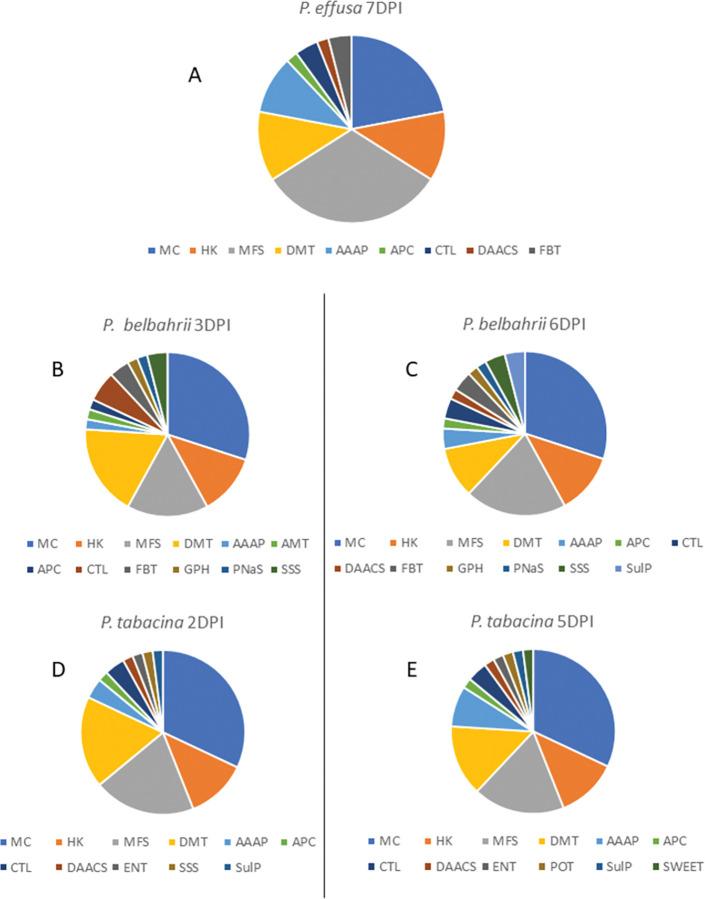
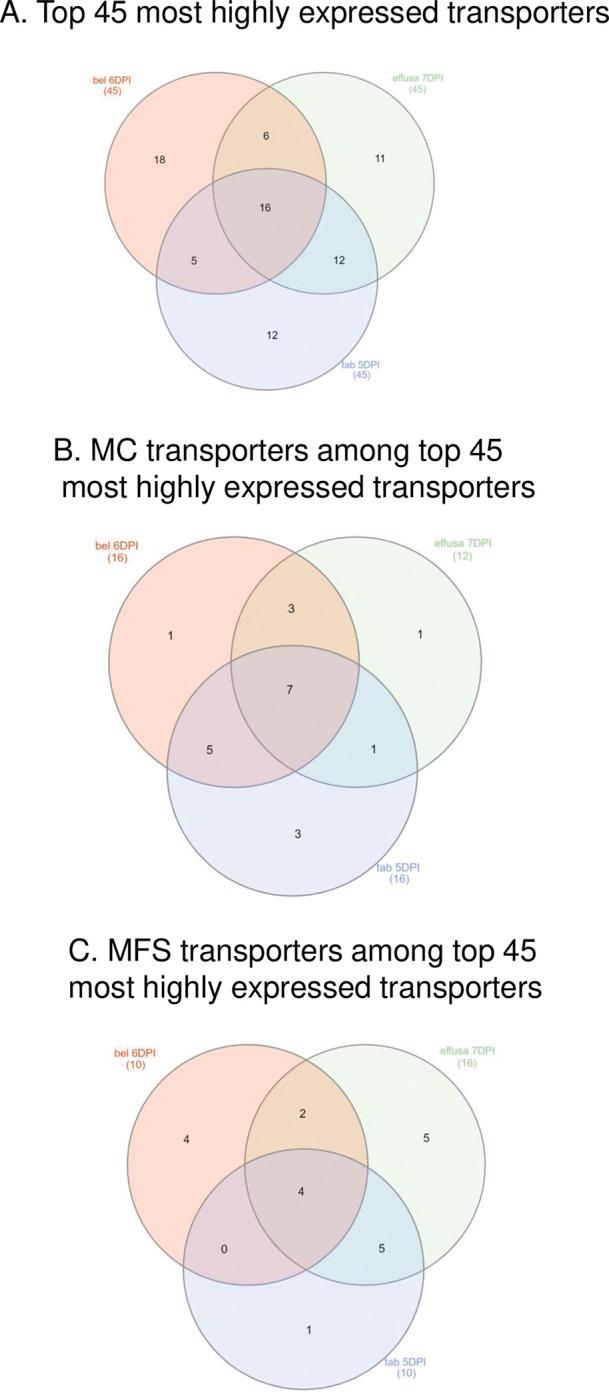
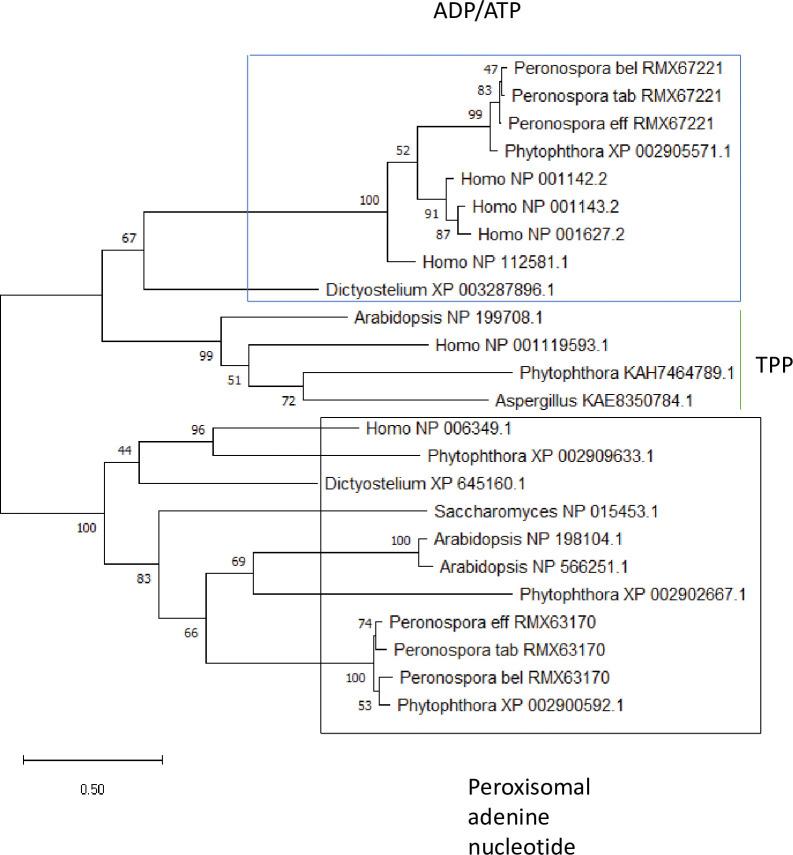
Protein transporters move essential metabolites across membranes in all living organisms. Downy mildew causing plant pathogens are biotrophic oomycetes that transport essential nutrients from their hosts to grow. Little is known about the functions and gene expression levels of membrane transporters produced by downy mildew causing pathogens during infection of their hosts. Approximately 170-190 nonredundant transporter genes were identified in the genomes of Peronospora belbahrii, Peronospora effusa, and Peronospora tabacina, which are specialized pathogens of basil, spinach, and tobacco, respectively. The largest groups of transporter genes in each species belonged to the major facilitator superfamily, mitochondrial carriers (MC), and the drug/metabolite transporter group. Gene expression of putative Peronospora transporters was measured using RNA sequencing data at two time points following inoculation onto leaves of their hosts. There were 16 transporter genes, seven of which were MCs, expressed in each Peronospora species that were among the top 45 most highly expressed transporter genes 5-7 days after inoculation. Gene transcripts encoding the ADP/ATP translocase and the mitochondrial phosphate carrier protein were the most abundant mRNAs detected in each Peronospora species. This study found a number of Peronospora genes that are likely critical for pathogenesis and which might serve as future targets for control of these devastating plant pathogens.
蛋白质转运蛋白在所有生物体中跨膜移动必需代谢物。引起霜霉病的植物病原体是生物营养性卵菌,它们从宿主中转运必需营养物质来生长。关于在感染宿主期间,由霜霉病引起的病原体产生的膜转运蛋白的功能和基因表达水平知之甚少。在专门感染罗勒、菠菜和烟草的病原菌豌豆霜霉病菌、大孢霜霉病菌和烟草霜霉病菌的基因组中,分别鉴定出了约 170-190 个非冗余转运蛋白基因。在每个物种中,转运蛋白基因最大的组属于主要易化因子超家族、线粒体载体(MC)和药物/代谢物转运蛋白组。使用接种到宿主叶片后两个时间点的 RNA 测序数据测量了假定的豌豆霜霉病转运蛋白的基因表达。在接种后 5-7 天,每个豌豆霜霉病物种中都有 16 个转运蛋白基因,其中有 7 个是 MC,被表达为前 45 个表达最高的转运蛋白基因之一。在每个豌豆霜霉病物种中,编码 ADP/ATP 易位酶和线粒体磷酸载体蛋白的基因转录物是检测到的最丰富的 mRNA。本研究发现了一些可能对发病机制至关重要的豌豆霜霉病基因,这些基因可能成为未来控制这些破坏性植物病原体的目标。


 Zotero 插件