
比较基因组学揭示了新西兰临床和环境群体中的 之间的差异。
Comparative genomics uncovered differences between clinical and environmental populations of in New Zealand.
机构信息
The New Zealand Institute for Plant and Food Research Limited, Auckland, New Zealand.
The New Zealand Institute for Plant and Food Research Limited, Palmerston North, New Zealand.
出版信息
Microb Genom. 2023 Jun;9(6). doi: 10.1099/mgen.0.001037.
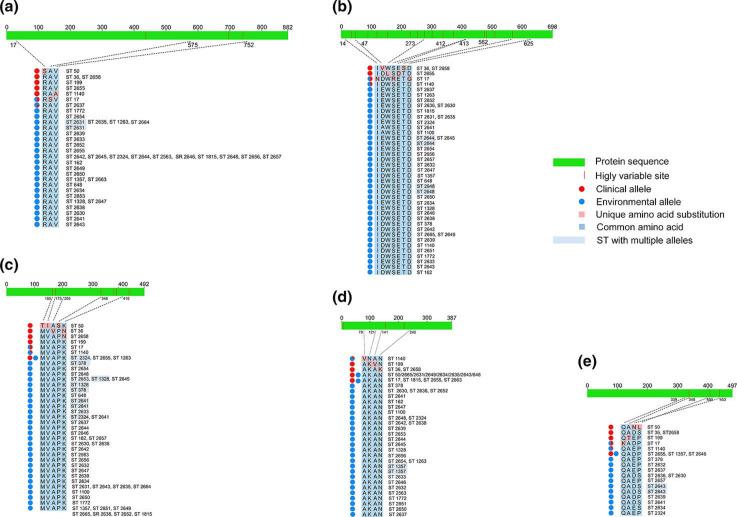
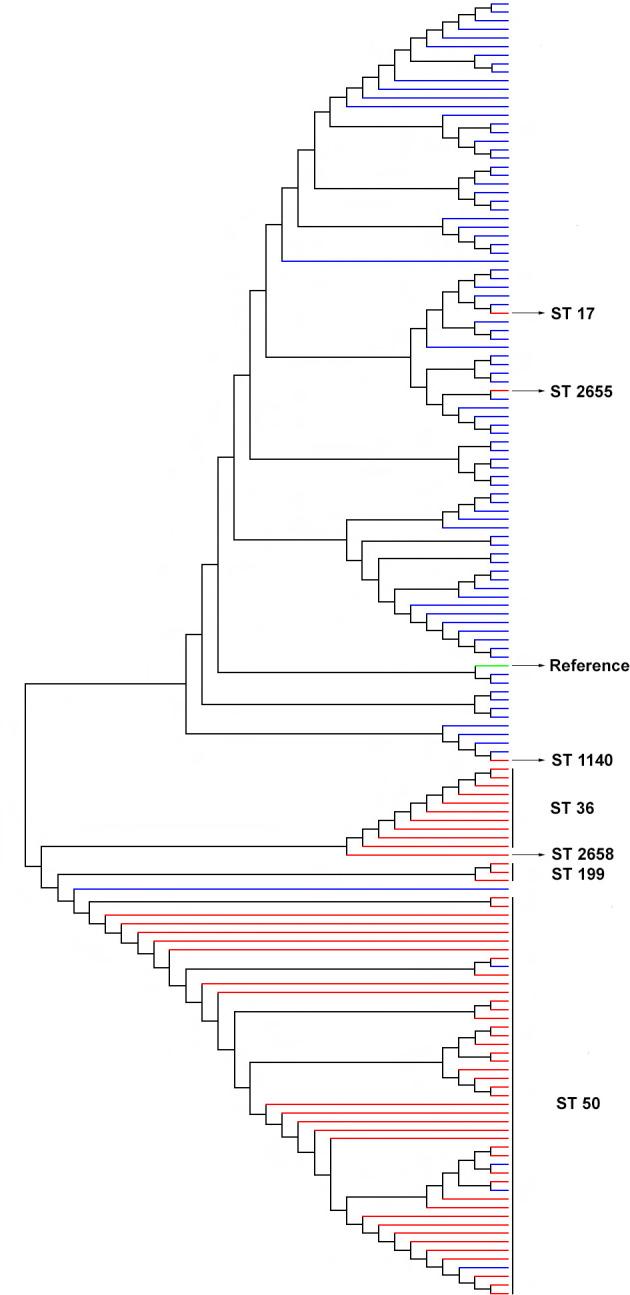
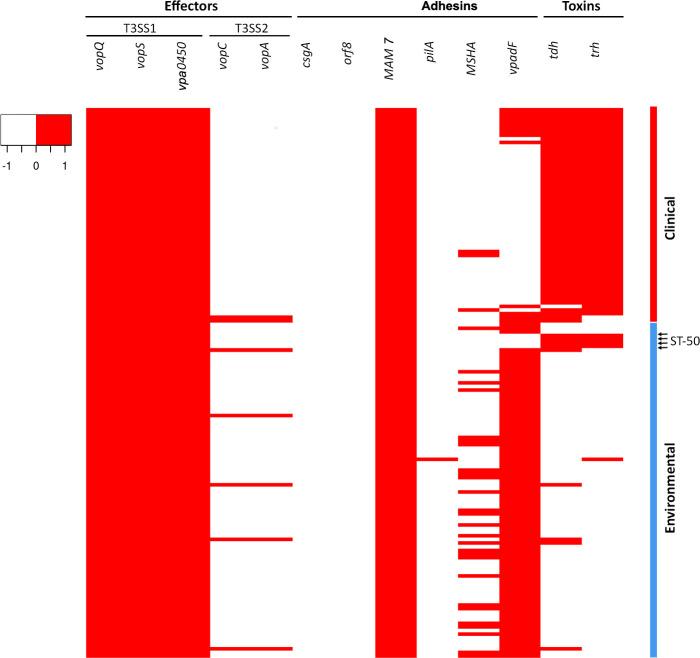
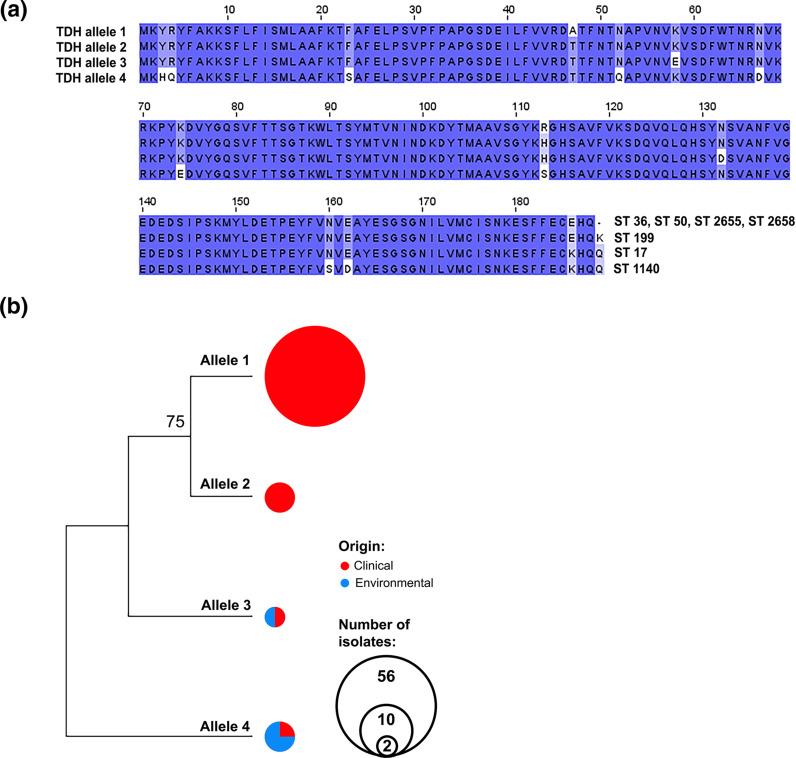
has been identified as an emerging human pathogen worldwide with cases undergoing a global expansion over recent decades in phase with climate change. New Zealand had remained free of outbreaks until 2019, but different outbreaks have been reported consecutively since then. To provide new insights into the recent emergence of cases associated with outbreak clones over recent years, a comparative genomic study was carried out using a selection of clinical (mostly outbreak) and environmental isolates of obtained in New Zealand between 1973 and 2021. Among 151 isolates of clinical (=60) and environmental (=91) origin, 47 sequence types (STs) were identified, including 31 novel STs. The population of environmental isolates generated 30 novel STs, whereas only 1 novel ST (ST2658) was identified among the population of clinical isolates. The novel clinical ST was a single-locus variant of the pandemic ST36 strain, indicating further evolution of this pandemic strain. The environmental isolates exhibited a significant genetic heterogeneity compared to the clinical isolates. The whole-genome phylogeny separated the population of clinical isolates from their environmental counterparts, clearly indicating their distant genetic relatedness. In addition to differences in ancestral profiles and genetic relatedness, these two groups of isolates exhibited a profound difference in their virulence profiles. While the entire population of clinical isolates harboured the thermostable direct haemolysin () and/or the thermostable-related haemolysin (), only a few isolates of environmental origin possessed the same virulence genes. In contrast to and , adhesin-encoding genes, and MSHA, showed a significantly (<0.001) greater association with the environmental isolates compared to the clinical isolates. The effectors, VopQ, VPA0450 and VopS, which belong to T3SS1, were ubiquitous, being present in each isolate regardless of its origin. The effectors VopC and VopA, which belong to T3SS2, were rarely detected in any of the examined isolates. Our data indicate that the clinical and environmental isolates of from New Zealand differ in their population structures, ancestral profiles, genetic relatedness and virulence profiles. In addition, we identified numerous unique non-synonymous single-nucleotide polymorphisms (nsSNPs) in adhesins and effectors, exclusively associated with the clinical isolates tested, which may suggest a possible role of these mutations in the overall virulence of the clinical isolates.
已被确定为一种在全球范围内出现的人类病原体,近年来随着气候变化,病例数量呈全球性扩张。新西兰在 2019 年之前一直没有爆发,但自那时以来,已连续报告了不同的爆发。为了深入了解近年来与爆发克隆相关的病例的最新出现情况,对 1973 年至 2021 年间在新西兰获得的临床(主要是爆发)和环境分离株进行了比较基因组研究。在 151 株临床(=60)和环境(=91)来源的分离株中,鉴定出 47 个序列型(ST),包括 31 个新的 ST。环境分离株群体产生了 30 个新的 ST,而在临床分离株群体中仅鉴定出 1 个新的 ST(ST2658)。新的临床 ST 是流行 ST36 菌株的单基因座变体,表明该流行菌株进一步进化。与临床分离株相比,环境分离株表现出显著的遗传异质性。全基因组系统发育树将临床分离株群体与其环境对应物分开,清楚地表明它们的遗传亲缘关系遥远。除了祖先特征和遗传关系的差异外,这两组分离株的毒力特征也存在明显差异。虽然所有临床分离株均携带耐热直接溶血素()和/或耐热相关溶血素(),但只有少数环境来源的分离株具有相同的毒力基因。与和不同,黏附素编码基因和 MSHA 与环境分离株的相关性显著(<0.001)高于与临床分离株的相关性。效应蛋白 VopQ、VPA0450 和 VopS 属于 T3SS1,在每个分离株中都存在,无论其来源如何。效应蛋白 VopC 和 VopA 属于 T3SS2,在检测到的任何分离株中都很少检测到。我们的数据表明,新西兰的临床和环境分离株在其群体结构、祖先特征、遗传关系和毒力特征方面存在差异。此外,我们在测试的临床分离株中发现了大量独特的非 synonymous 单核苷酸多态性(nsSNP),这些多态性仅与临床分离株相关,这可能表明这些突变可能在临床分离株的整体毒力中起作用。

 Zotero 插件