
孟加拉国与奶牛亚临床乳腺炎相关的[物种名称]的分子鉴定、抗菌药物耐药性及毒力基因分析。 (注:原文中“ spp.”部分因未明确具体物种,只能如此翻译,实际应用中需根据具体所指物种替换)
Molecular identification, antimicrobial resistance and virulence gene profiling of spp. associated with bovine sub-clinical mastitis in Bangladesh.
作者信息
Fazal Md Abul, Rana Eaftekhar Ahmed, Akter Sazeda, Alim Mohammad Abdul, Barua Himel, Ahad Abdul
机构信息
Department of Microbiology and Veterinary Public Health, Chattogram Veterinary and Animal Sciences University, Khulsi, Chattogram-4225, Bangladesh.
Department of Medicine and Surgery Chattogram Veterinary and Animal Sciences University, Khulsi, Chattogram-4225, Bangladesh.
出版信息
Vet Anim Sci. 2023 May 24;21:100297. doi: 10.1016/j.vas.2023.100297. eCollection 2023 Sep.
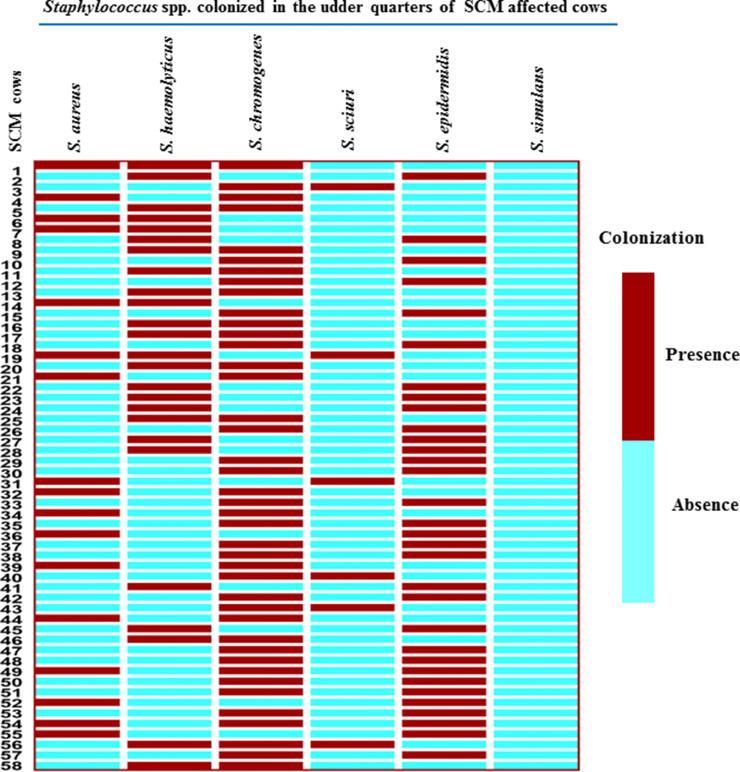
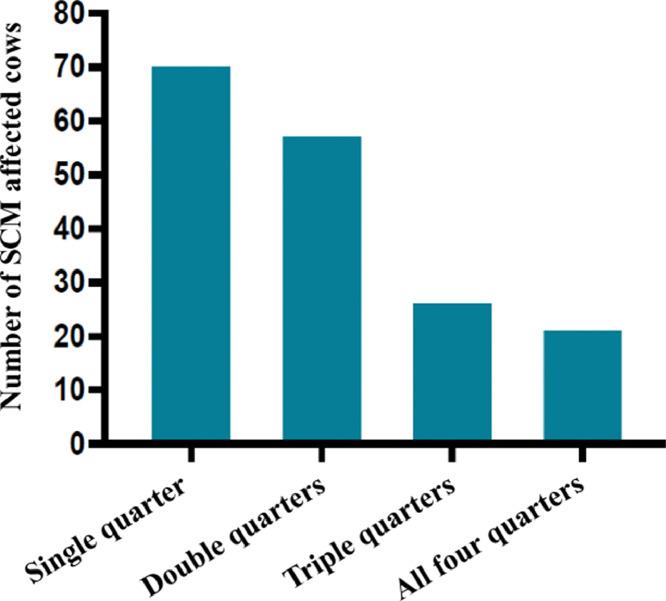
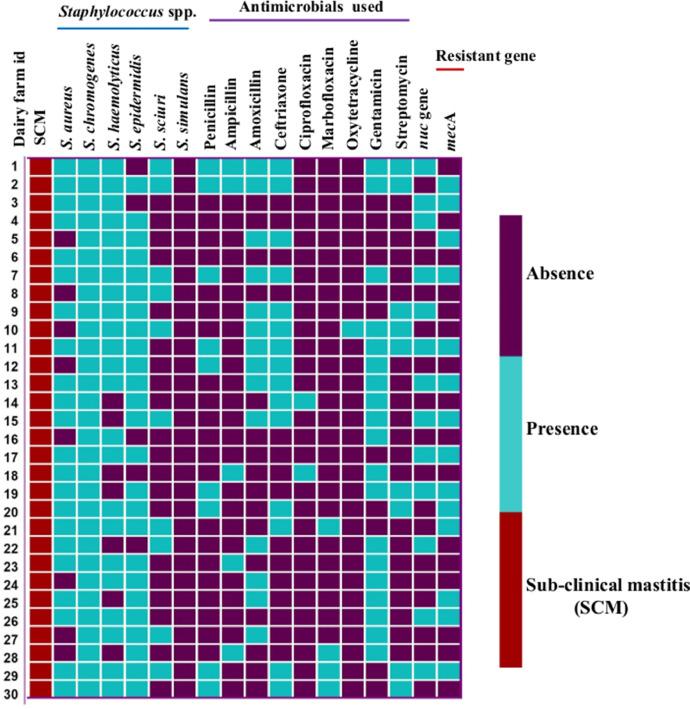
This study was conducted to investigate the diversity and antimicrobial resistance profiling of species causing sub-clinical mastitis (SCM) in dairy herds in Bangladesh as well as putative risk factors associated with the infections. Individual quarter milk samples were collected from a total of 284 lactating cows from 30 dairy farms were screened by means of California mastitis test; 178 (62.7%) of them had at least of quarter affected by SCM. After conventional microbiological isolation procedures, PCR tests were used for species identification and detection of antimicrobial resistance and virulence genes. (65.7%) was the most predominant species followed by, (20.2%), (19.1%), (15.7%), and (5.6%). High levels of antimicrobial resistance to ampicillin and amoxicillin/clavulanic acid were observed in (82.1% and 75%) and (80% and 70%), while resistance to cefepime was markedly higher in (95.7%), (94.1%) and (97.2%). Multidrug resistance isolates were identified in all five species. The A gene was detected in (32.1%) and (5.98%). In addition, 20% and 17.7% carried the cytotoxin () gene, while 14.3% harbored the toxic shock syndrome toxin () gene. Multivariable logistic regression analysis identified "Old aged" (OR [CI]: 3.5 [1-12.4]); "Early stage of lactation" (OR [CI]: 3.4 [1.2-9.7]) and, "Firm udder condition" (OR [CI]: 4.2 [1.2-14.6]) as risk factors associated with SCM caused by , and , respectively. Moreover, "Use of antimicrobials" (OR [CI]: 10.4 [3.4-32.1] and "History of previous clinical mastitis" (OR [CI]: 4.9 [1.2-19.7] for the carriage of methicillin-resistant spp.
本研究旨在调查孟加拉国奶牛场引起亚临床型乳房炎(SCM)的病原菌多样性及抗菌药物耐药性特征,以及与感染相关的假定风险因素。从30个奶牛场的284头泌乳奶牛个体的每个乳区采集乳样,通过加利福尼亚乳房炎检测法进行筛查;其中178头(62.7%)至少有一个乳区受到SCM影响。经过常规微生物分离程序后,采用PCR检测进行菌种鉴定以及抗菌药物耐药性和毒力基因的检测。(65.7%)是最主要的菌种,其次是(20.2%)、(19.1%)、(15.7%)和(5.6%)。观察到对氨苄西林和阿莫西林/克拉维酸的高水平抗菌药物耐药性在(82.1%和75%)以及(80%和70%)中出现,而对头孢吡肟的耐药性在(95.7%)、(94.1%)和(97.2%)中明显更高。在所有五个菌种中均鉴定出多重耐药菌株。A基因在(32.1%)和(5.98%)中被检测到。此外,20%和17.7%携带细胞毒素()基因,而14.3%携带中毒性休克综合征毒素()基因。多变量逻辑回归分析确定“老龄”(OR[CI]:3.5[1 - 12.4]);“泌乳早期”(OR[CI]:3.4[1.2 - 9.7])和“乳房坚实状况”(OR[CI]:4.2[1.2 - 14.6])分别是与由、和引起的SCM相关的风险因素。此外,“使用抗菌药物”(OR[CI]:10.4[3.4 - 32.1])和“既往临床乳房炎病史”(OR[CI]:4.9[1.2 - 19.7])是耐甲氧西林菌种携带的相关因素。

 Zotero 插件