
平行适应低海拔与 Heliosperma pusillum(石竹科)增强的可塑性相关。
Parallel adaptation to lower altitudes is associated with enhanced plasticity in Heliosperma pusillum (Caryophyllaceae).
机构信息
Department of Botany and Biodiversity Research, University of Vienna, Rennweg 14, A-1030, Vienna, Austria.
Vienna Graduate School of Population Genetics, Vienna, Austria.
出版信息
Plant J. 2023 Sep;115(6):1619-1632. doi: 10.1111/tpj.16342. Epub 2023 Jun 21.
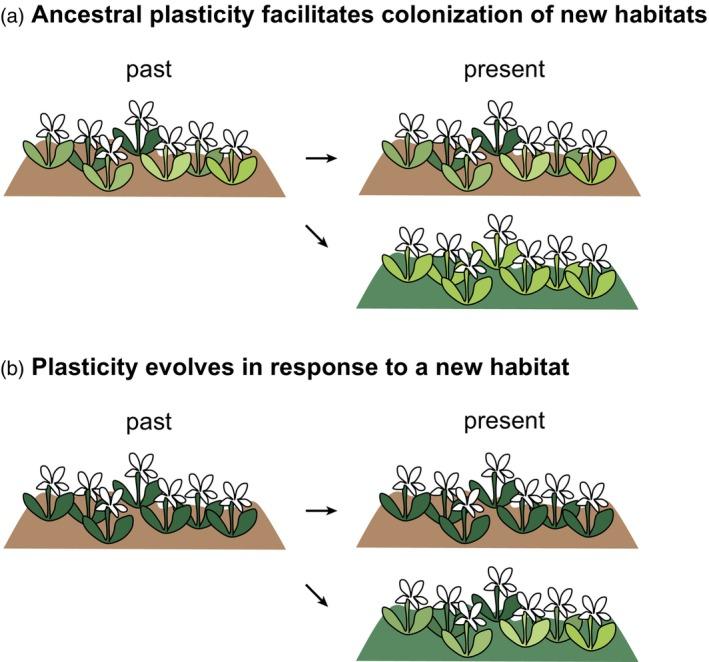
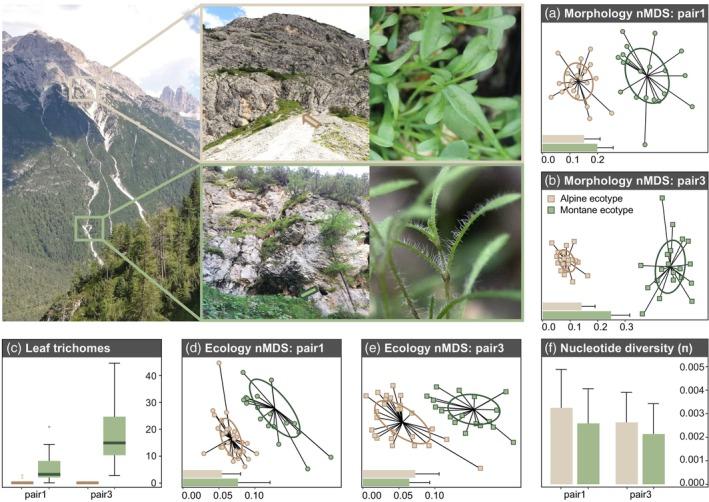
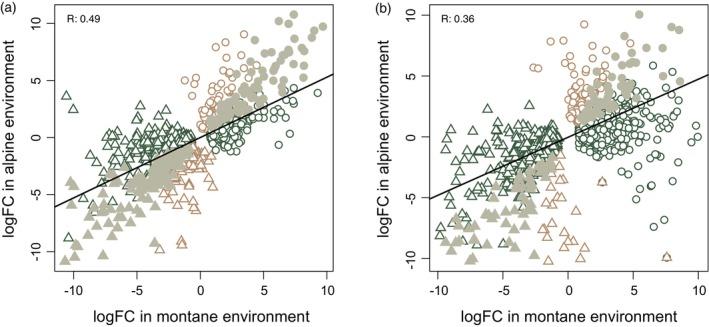
High levels of phenotypic plasticity are thought to be inherently costly in stable or extreme environments, but enhanced plasticity may evolve as a response to new environments and foster novel phenotypes. Heliosperma pusillum forms glabrous alpine and pubescent montane ecotypes that diverged recurrently and polytopically (parallel evolution) and can serve as evolutionary replicates. The specific alpine and montane localities are characterized by distinct temperature conditions, available moisture, and light. Noteworthy, the ecotypes show a home-site fitness advantage in reciprocal transplantations. To disentangle the relative contribution of constitutive versus plastic gene expression to altitudinal divergence, we analyze the transcriptomic profiles of two parallely evolved ecotype pairs, grown in reciprocal transplantations at native altitudinal sites. In this incipient stage of divergence, only a minor proportion of genes appear constitutively differentially expressed between the ecotypes in both pairs, regardless of the growing environment. Both derived, montane populations bear comparatively higher plasticity of gene expression than the alpine populations. Genes that change expression plastically or constitutively underlie similar ecologically relevant pathways, related to response to drought and trichome formation. Other relevant processes, such as photosynthesis, rely mainly on plastic changes. The enhanced plasticity consistently observed in the montane ecotype likely evolved as a response to the newly colonized, drier, and warmer niche. We report a striking parallelism of directional changes in gene expression plasticity. Thus, plasticity appears to be a key mechanism shaping the initial stages of phenotypic evolution, likely fostering adaptation to novel environments.
高水平的表型可塑性被认为在稳定或极端环境中固有地具有成本,但增强的可塑性可能会作为对新环境的反应而进化,并促进新的表型。Heliosperma pusillum 形成无毛的高山和多毛的山地生态型,这些生态型反复和多地点(平行进化)分化,可以作为进化的重复。特定的高山和山地生境的特点是不同的温度条件、可用的水分和光照。值得注意的是,生态型在互惠移植中表现出本地生境的适应性优势。为了厘清组成型与可塑性基因表达对海拔差异的相对贡献,我们分析了在原生海拔地点进行互惠移植的两个平行进化的生态型对中,转录组谱。在这种初始的分化阶段,无论生长环境如何,在这两个对中,只有一小部分基因在生态型之间表现出组成型差异表达。两个衍生的山地种群的基因表达可塑性都比高山种群高。在可塑性或组成型表达变化的基因,其基础是相似的与干旱和毛状体形成相关的生态相关途径。其他相关过程,如光合作用,主要依赖于可塑性变化。在山地生态型中观察到的增强的可塑性可能是对新殖民化的、干燥和温暖的小生境的反应而进化的。我们报告了基因表达可塑性的方向变化的惊人平行性。因此,可塑性似乎是塑造表型进化初始阶段的关键机制,可能促进对新环境的适应。



 Zotero 插件