
探讨脉搏传输时间作为睡眠效率生物标志物的潜力,通过与心率和心率变异性的比较分析。
Exploring the Potential of Pulse Transit Time as a Biomarker for Sleep Efficiency through a Comparison Analysis with Heart Rate and Heart Rate Variability.
机构信息
Department of Medicine, University of Connecticut School of Medicine, Farmington, CT 06030, USA.
Department of Biomedical Engineering, University of Connecticut, Storrs, CT 06269, USA.
出版信息
Sensors (Basel). 2023 May 27;23(11):5112. doi: 10.3390/s23115112.
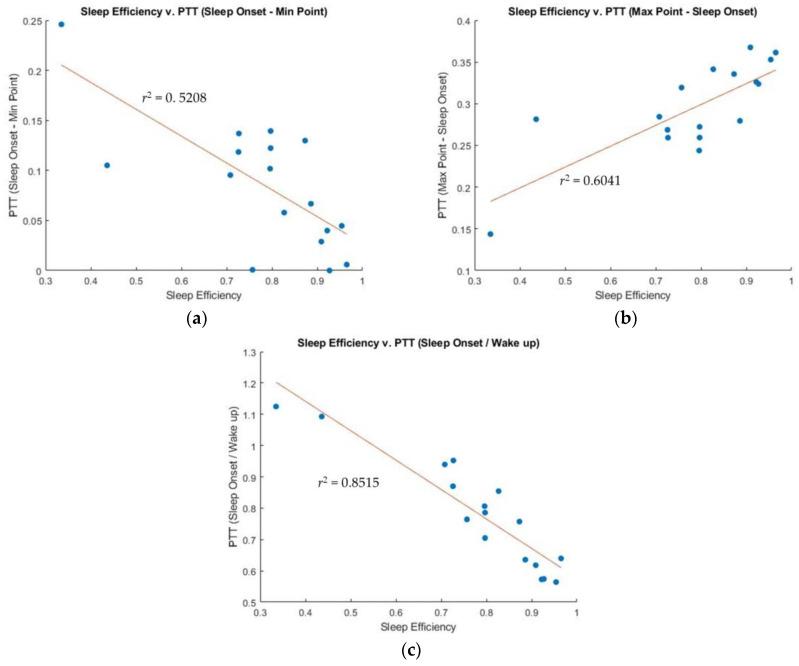
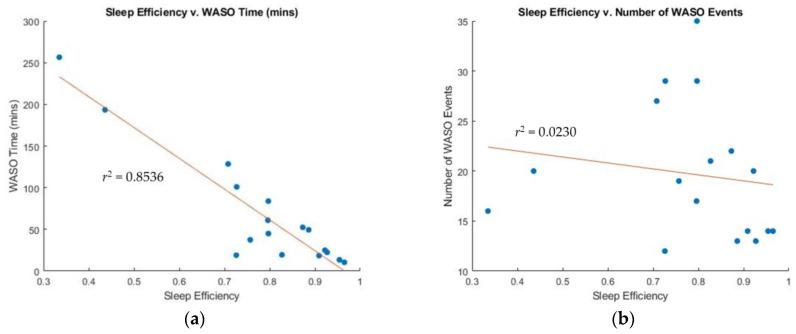
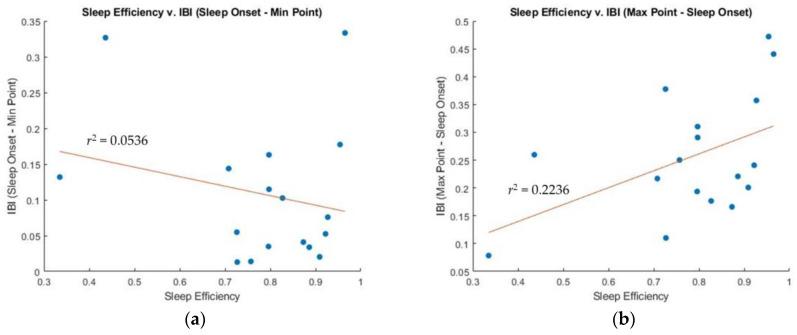
The relationship between sleep dynamics and blood pressure (BP) changes is well established. Moreover, sleep efficiency and wakefulness during sleep (WASO) events have a significant impact on BP dipping. Despite this knowledge, there is limited research on the measurement of sleep dynamics and continuous blood pressure (CBP). This study aims to explore the relationship between sleep efficiency and cardiovascular function indicators such as pulse transit time (PTT), as a biomarker of CBP, and heart rate variability (HRV), measured using wearable sensors. The results of the study conducted on 20 participants at the UConn Health Sleep Disorders Center suggest a strong linear relationship between sleep efficiency and changes in PTT (r = 0.8515) and HRV during sleep (r = 5886). The findings of this study contribute to our understanding of the relationship between sleep dynamics, CBP, and cardiovascular health.
睡眠动态与血压(BP)变化之间的关系已得到充分证实。此外,睡眠效率和睡眠期间的清醒(WASO)事件对 BP 下降有重大影响。尽管有这些知识,但关于睡眠动态和连续血压(CBP)的测量研究有限。本研究旨在探索睡眠效率与心血管功能指标之间的关系,例如脉搏传输时间(PTT),作为 CBP 的生物标志物,以及使用可穿戴传感器测量的心率变异性(HRV)。在康涅狄格大学健康睡眠障碍中心对 20 名参与者进行的研究结果表明,睡眠效率与 PTT 的变化之间存在很强的线性关系(r = 0.8515)和睡眠期间 HRV 的变化(r = 0.5886)。本研究的结果有助于我们了解睡眠动态、CBP 和心血管健康之间的关系。

 Zotero 插件