
通过生物信息学方法鉴定HER2阳性乳腺癌脑转移中的关键基因。
Identification of key genes in HER2-positive breast cancer with brain metastasis via bioinformatics methods.
作者信息
Yang Ziguo, Sun Rencheng, Qu Gengbao, Wang Feng, Yin Ziyi, Zhang Tie, Wang Pilin, Li Shaoxiang, Lin Shuye
机构信息
Department of Breast Surgery, Beijing Tiantan Hospital, Capital Medical University, Beijing, China.
Department of Surgical Oncology, Weifang Hospital of Traditional Chinese Medicine, Weifang, China.
出版信息
Transl Cancer Res. 2023 May 31;12(5):1112-1127. doi: 10.21037/tcr-22-2715. Epub 2023 May 11.
BACKGROUND
Brain metastasis (BM) represents one of the most common advanced disease states in breast cancer (BC), especially in human epidermal growth factor receptor 2 (HER2)-positive BC, and is associated with poor survival outcomes.
METHODS
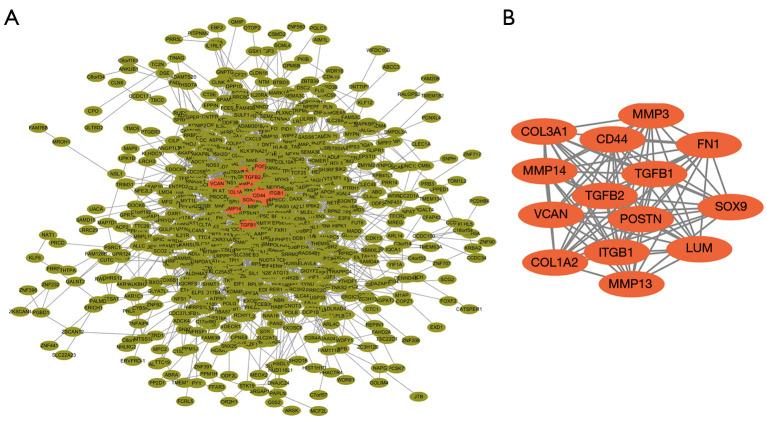
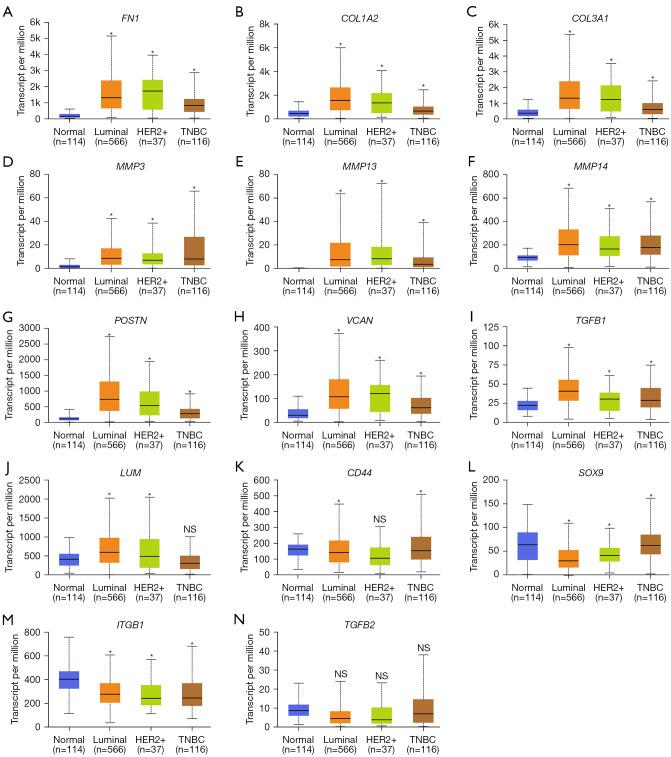
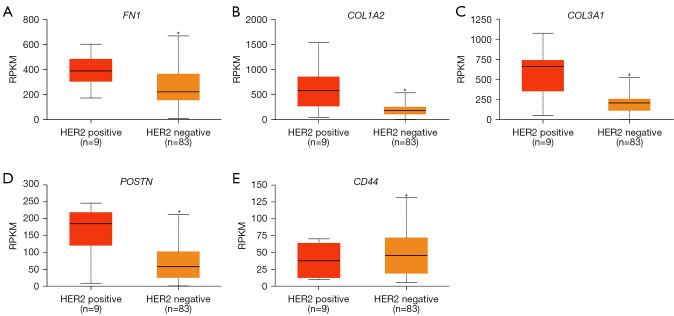
In this study, in-depth analysis of the microarray data from the GSE43837 dataset with 19 BM samples of HER2-positive BC patients and 19 HER2-positive nonmetastatic primary BC samples was conducted. The differentially expressed genes (DEGs) between BM and primary BC samples were identified and function enrichment analysis of the DEGs was conducted to identify potential biological functions. The hub genes were identified by constructing the protein-protein interaction (PPI) network using STRING and Cytoscape. UALCAN and Kaplan-Meier plotter online tools were used to verify the clinical roles of the hub DEGs in HER2-positive BC with BM (BCBM).
RESULTS
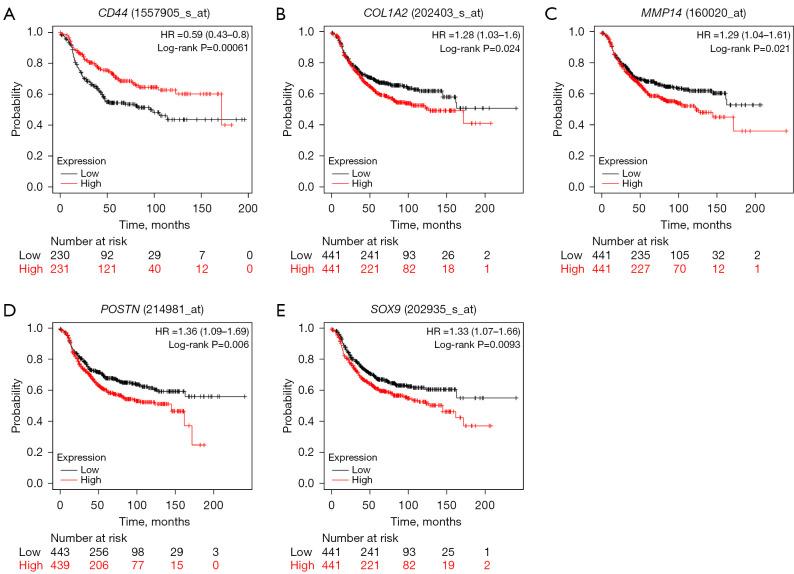
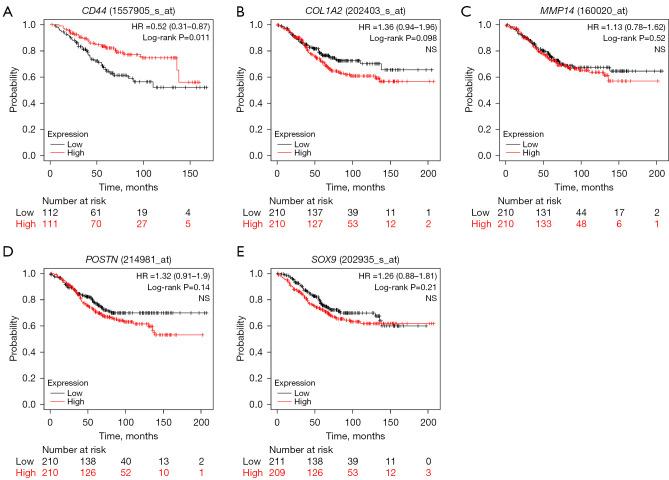
A total of 1,056 DEGs including 767 downregulated and 289 upregulated genes were identified by comparing the microarray data of the HER2-positive BM and primary BC samples. Functional enrichment analysis demonstrated that the DEGs were mainly enriched in pathways related to extracellular matrix (ECM) organization, cell adhesion, and collagen fibril organization. PPI network analysis identified 14 hub genes. Among these, and were associated with the survival outcomes of HER2-positive patients.
CONCLUSIONS
In summary, 5 BM-specific hub genes were identified in the study; those are potential prognostic biomarkers and therapeutic targets for HER2-positive BCBM patients. However, further investigations are necessary to unravel the mechanisms by which these 5 hub genes regulate BM in HER2-positive BC.
背景
脑转移(BM)是乳腺癌(BC)最常见的晚期疾病状态之一,尤其是在人表皮生长因子受体2(HER2)阳性的乳腺癌中,且与不良生存结果相关。
方法
在本研究中,对来自GSE43837数据集的微阵列数据进行了深入分析,该数据集包含19例HER2阳性乳腺癌患者的脑转移样本和19例HER2阳性非转移性原发性乳腺癌样本。鉴定了脑转移样本和原发性乳腺癌样本之间的差异表达基因(DEG),并对这些差异表达基因进行功能富集分析以确定潜在的生物学功能。使用STRING和Cytoscape构建蛋白质-蛋白质相互作用(PPI)网络来鉴定枢纽基因。利用UALCAN和Kaplan-Meier plotter在线工具验证枢纽差异表达基因在HER2阳性伴脑转移乳腺癌(BCBM)中的临床作用。
结果
通过比较HER2阳性脑转移样本和原发性乳腺癌样本的微阵列数据,共鉴定出1056个差异表达基因,其中767个基因下调,289个基因上调。功能富集分析表明,这些差异表达基因主要富集在与细胞外基质(ECM)组织、细胞粘附和胶原纤维组织相关的通路中。PPI网络分析确定了14个枢纽基因。其中,[具体基因1]和[具体基因2]与HER2阳性患者的生存结果相关。
结论
总之,本研究鉴定出5个脑转移特异性枢纽基因;它们是HER2阳性BCBM患者潜在的预后生物标志物和治疗靶点。然而,需要进一步研究来阐明这5个枢纽基因在HER2阳性乳腺癌中调节脑转移的机制。



 Zotero 插件