
芯片上近端肾小管的动态单细胞分析揭示了尿路致病性大肠杆菌在剪切应力下的异质上皮定植策略。
Dynamic single cell analysis in a proximal-tubule-on-chip reveals heterogeneous epithelial colonization strategies of uropathogenic under shear stress.
作者信息
Antypas Haris, Zhang Tianqi, Choong Ferdinand X, Melican Keira, Richter-Dahlfors Agneta
机构信息
AIMES - Center for the Advancement of Integrated Medical and Engineering Sciences, Karolinska Institutet and KTH Royal Institute of Technology, SE-171 77, Stockholm, Sweden.
Department of Neuroscience, Karolinska Institutet, SE-171 77, Stockholm, Sweden.
出版信息
FEMS Microbes. 2023 Mar 3;4:xtad007. doi: 10.1093/femsmc/xtad007. eCollection 2023.
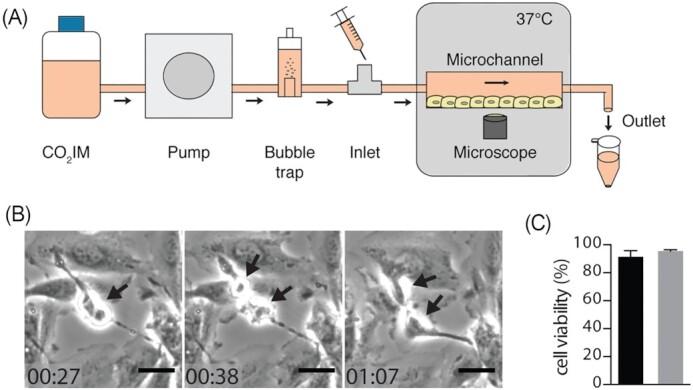
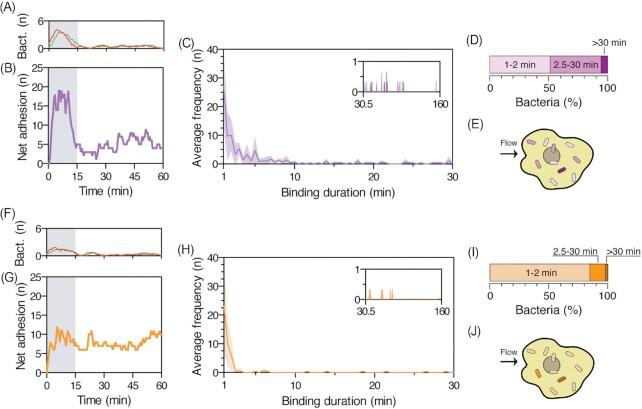
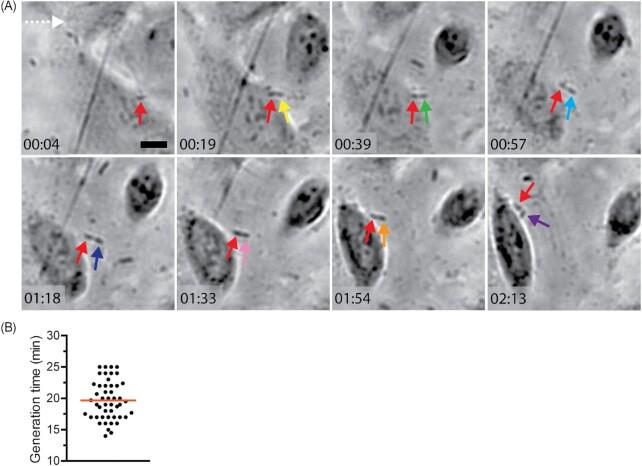
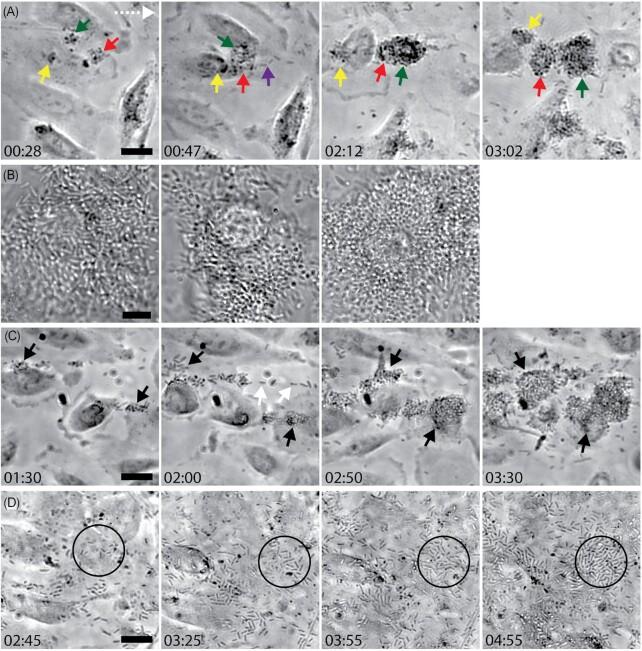
The urinary tract is a hydrodynamically challenging microenvironment and uropathogenic (UPEC) must overcome several physiological challenges in order to adhere and establish a urinary tract infection. Our previous work revealed a synergy between different UPEC adhesion organelles, which facilitated effective colonization of the renal proximal tubule. To allow high-resolution real-time analysis of this colonization behavior, we established a biomimetic proximal-tubule-on-chip (PToC). The PToC allowed for single-cell resolution analysis of the first stages of bacterial interaction with host epithelial cells, under physiological flow. Time-lapse microscopy and single-cell trajectory analysis in the PToC revealed that while the majority of UPEC moved directly through the system, a minority population initiated heterogeneous adhesion, identified as either rolling or bound. Adhesion was predominantly transient and mediated by P pili at the earliest time-points. These bound bacteria initiated a founder population which rapidly divided, leading to 3D microcolonies. Within the first hours, the microcolonies did not express extracellular curli matrix, but rather were dependent on Type 1 fimbriae as the key element in the microcolony structure. Collectively, our results show the application of Organ-on-chip technology to address bacterial adhesion behaviors, demonstrating a well-orchestrated interplay and redundancy between adhesion organelles that enables UPEC to form microcolonies and persist under physiological shear stress.
尿路是一个流体动力学上具有挑战性的微环境,尿路致病性大肠杆菌(UPEC)必须克服若干生理挑战才能黏附并引发尿路感染。我们之前的研究揭示了不同UPEC黏附细胞器之间的协同作用,这有助于在肾近端小管中有效定殖。为了对这种定殖行为进行高分辨率实时分析,我们构建了一种仿生芯片上近端小管(PToC)。PToC能够在生理流动条件下对细菌与宿主上皮细胞相互作用的初始阶段进行单细胞分辨率分析。PToC中的延时显微镜和单细胞轨迹分析表明,虽然大多数UPEC直接通过该系统移动,但少数群体开始了异质性黏附,表现为滚动或黏附。在最早的时间点,黏附主要是短暂的,由P菌毛介导。这些黏附的细菌形成了一个起始群体,该群体迅速分裂,形成三维微菌落。在最初的几个小时内,微菌落不表达细胞外卷曲菌毛基质,而是依赖1型菌毛作为微菌落结构的关键要素。总体而言,我们的结果展示了芯片上器官技术在研究细菌黏附行为方面的应用,证明了黏附细胞器之间精心编排的相互作用和冗余性,使UPEC能够形成微菌落并在生理剪切应力下持续存在。

 Zotero 插件