
2 型糖尿病治疗在多大程度上适合精准糖尿病学?来自 174 项随机试验的血糖控制数据的荟萃回归分析。
How amenable is type 2 diabetes treatment for precision diabetology? A meta-regression of glycaemic control data from 174 randomised trials.
机构信息
Institute for Biometrics and Epidemiology, German Diabetes Center, Leibniz Institute for Diabetes Research at Heinrich Heine University Düsseldorf, Düsseldorf, Germany.
Centre for Health and Society, Faculty of Medicine, Heinrich Heine University Düsseldorf, Düsseldorf, Germany.
出版信息
Diabetologia. 2023 Sep;66(9):1622-1632. doi: 10.1007/s00125-023-05951-2. Epub 2023 Jun 20.
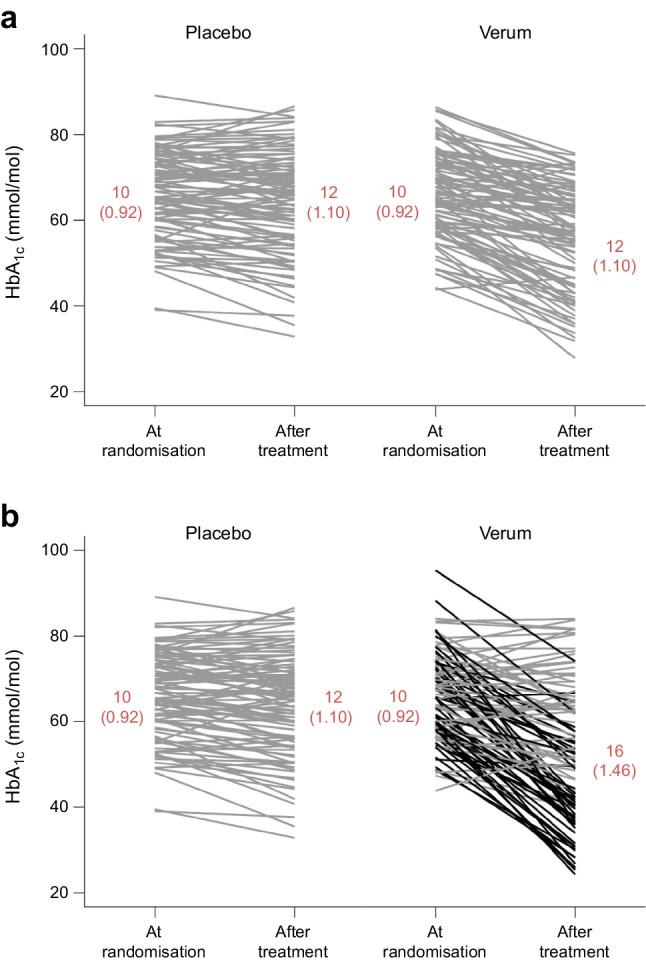
AIMS/HYPOTHESIS: There are two prerequisites for the precision medicine approach to be beneficial for treated individuals. First, there must be treatment heterogeneity; second, in the case of treatment heterogeneity, we need to detect clinical predictors to identify people who would benefit from one treatment more than from others. There is an established meta-regression approach to assess these two prerequisites that relies on measuring the variability of a clinical outcome after treatment in placebo-controlled randomised trials. Our aim was to apply this approach to the treatment of type 2 diabetes.
METHODS
We performed a meta-regression analysis using information from 174 placebo-controlled randomised trials with 178 placebo and 272 verum (i.e. active treatment) arms including 86,940 participants with respect to the variability of glycaemic control as assessed by HbA after treatment and its potential predictors.
RESULTS
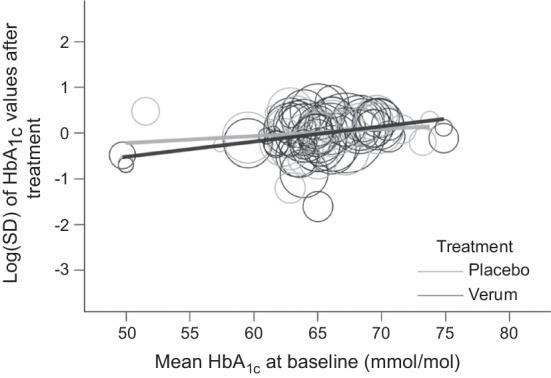
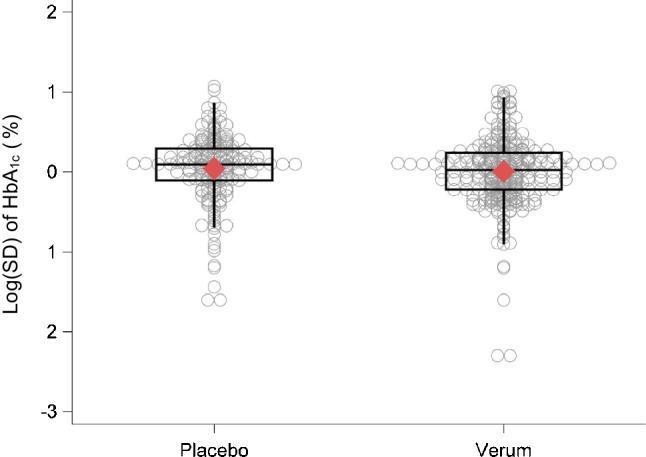
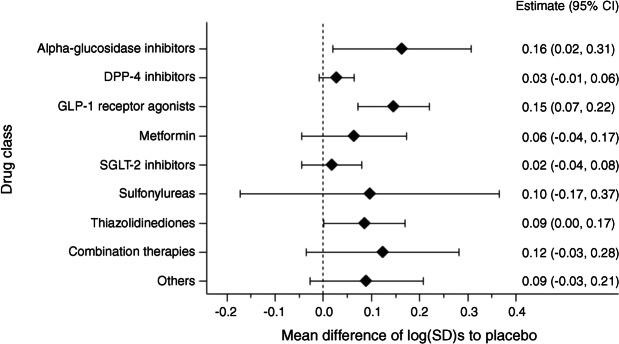
The adjusted difference in log(SD) values between the verum and placebo arms was 0.037 (95% CI: 0.004, 0.069). That is, we found a small increase in the variability of HbA values after treatment in the verum arms. In addition, one potentially relevant predictor for explaining this increase, drug class, was observed, and GLP-1 receptor agonists yielded the largest differences in log(SD) values.
CONCLUSIONS/INTERPRETATION: The potential of the precision medicine approach in the treatment of type 2 diabetes is modest at best, at least with regard to an improvement in glycaemic control. Our finding of a larger variability after treatment with GLP-1 receptor agonists in individuals with poor glycaemic control should be replicated and/or validated with other clinical outcomes and with different study designs.
FUNDING
The research reported here received no specific grant from any funding agency in the public, commercial or not-for-profit sectors.
DATA AVAILABILITY
Two datasets (one for the log[SD] and one for the baseline-corrected log[SD]) to reproduce the analyses from this paper are available on https://zenodo.org/record/7956635 .
目的/假设:精准医疗方法对接受治疗的个体有益有两个前提条件。首先,必须存在治疗异质性;其次,在存在治疗异质性的情况下,我们需要检测临床预测指标,以确定哪些人从一种治疗中获益更多,哪些人从其他治疗中获益更多。有一种已建立的荟萃回归方法可以评估这两个前提条件,该方法依赖于测量安慰剂对照随机试验中治疗后临床结局的变异性。我们的目的是将这种方法应用于 2 型糖尿病的治疗。
方法
我们使用来自 174 项安慰剂对照随机试验的信息进行荟萃回归分析,这些试验包括 178 项安慰剂和 272 项阳性(即活性治疗)臂,涉及 86940 名参与者,评估了治疗后糖化血红蛋白(HbA)控制的变异性及其潜在预测指标。
结果
阳性臂和安慰剂臂之间 HbA 值治疗后变异性的调整差异为 0.037(95%置信区间:0.004,0.069)。也就是说,我们发现阳性臂治疗后 HbA 值的变异性略有增加。此外,观察到药物类别是解释这种增加的一个潜在相关预测指标,GLP-1 受体激动剂产生的对数标准差差值最大。
结论/解释:精准医疗方法在 2 型糖尿病治疗中的潜力充其量只是适度的,至少在改善血糖控制方面是如此。我们发现,血糖控制不佳的个体接受 GLP-1 受体激动剂治疗后变异性更大,这一发现应该用其他临床结局和不同的研究设计进行复制和/或验证。
资助
本研究报告中所涉及的研究没有得到任何公共、商业或非营利部门的特定资助机构的资助。
数据可用性
两个数据集(一个用于对数标准差,一个用于基线校正的对数标准差)可在 https://zenodo.org/record/7956635 上重现本文中的分析。

 Zotero 插件