
权力下放对脆弱和冲突后国家卫生系统的影响:对印度洋-太平洋地区六个案例研究的叙述性综合分析
The impact of decentralisation on health systems in fragile and post-conflict countries: a narrative synthesis of six case studies in the Indo-Pacific.
作者信息
Brennan Elliot, Abimbola Seye
机构信息
Sydney School of Public Health Sydney Medical School, University of Sydney, Edward Ford Building A27, Sydney, NSW, 2006, Australia.
出版信息
Confl Health. 2023 Jun 20;17(1):31. doi: 10.1186/s13031-023-00528-7.
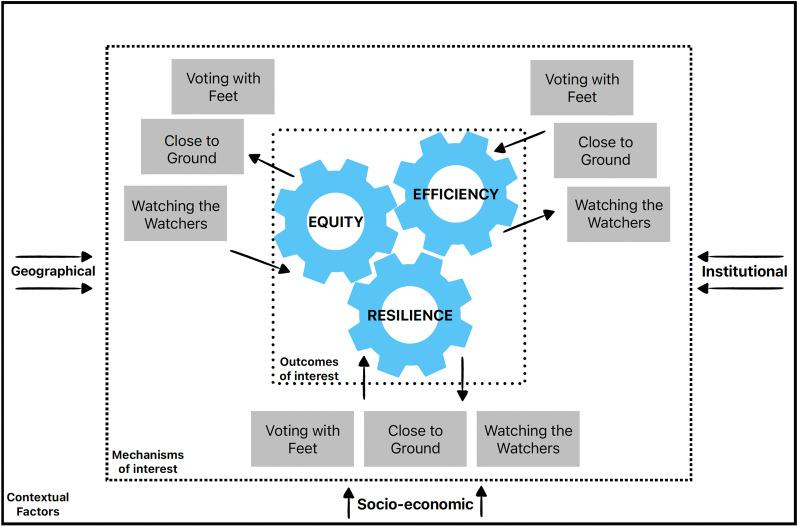
A health system has three key stakeholders, the State-at national and subnational levels-the health service providers and the citizens. In most settings and especially in peacetime, these stakeholders are typically well-defined. In contrast, during conflict and crisis as well as during ceasefire and post-conflict peacebuilding, stakeholders in the health system are often more diverse and contested. Health systems in such settings tend to be more decentralised, de facto-often in addition to de jure decentralisation. Despite much debate on the potential benefits of decentralisation, assessing its impact on health system performance remains difficult and its effect is open to dispute in the literature. This narrative synthesis aims to support efforts to assess and make sense of how decentralisation impacts health system performance in fragile and post-conflict countries-by synthesising evidence on the impact of decentralisation on health system performance from six country case studies: Papua New Guinea, the Philippines, Indonesia, Pakistan, Myanmar and Nepal. The impact of decentralisation on health system performance is optimised when combining centralisation (e.g., the benefits of central coordination in improving efficiency) with decentralisation (e.g., the benefits of local decision making in improving equity and resilience). The findings may inform efforts to think through what to centralise or decentralise, the impacts of those choices, and how the impact may change over time as countries go through and emerge from conflict-and as they go through and recover from the Covid-19 pandemic and prepare for future pandemics.
卫生系统有三个关键利益相关者,即国家和地方各级的政府、卫生服务提供者以及公民。在大多数情况下,尤其是在和平时期,这些利益相关者通常界定明确。相比之下,在冲突和危机期间以及停火和冲突后建设和平期间,卫生系统中的利益相关者往往更加多样化且存在争议。在这种情况下,卫生系统往往更加分散,事实上——通常除了法律上的分权之外。尽管关于分权的潜在好处有很多争论,但评估其对卫生系统绩效的影响仍然很困难,而且其效果在文献中也存在争议。本叙述性综述旨在通过综合来自巴布亚新几内亚、菲律宾、印度尼西亚、巴基斯坦、缅甸和尼泊尔六个国家案例研究中关于分权对卫生系统绩效影响的证据,来支持评估和理解分权如何影响脆弱和冲突后国家卫生系统绩效的努力。当将集权(例如,中央协调在提高效率方面的好处)与分权(例如,地方决策在改善公平性和恢复力方面的好处)结合起来时,分权对卫生系统绩效的影响会得到优化。这些研究结果可能有助于思考哪些方面应集权或分权、这些选择的影响,以及随着各国经历冲突并从中走出,以及随着它们经历新冠疫情并从中恢复并为未来疫情做准备,这种影响可能如何随时间变化。
 Zotero 插件