
儿科中风神经影像学平台(PEDSNIP)的发展。
The development of the pediatric stroke neuroimaging platform (PEDSNIP).
机构信息
Program in Neurosciences and Mental Health, The Hospital for Sick Children, Toronto, Ontario, Canada.
Program in Neurosciences and Mental Health, The Hospital for Sick Children, Toronto, Ontario, Canada; Division of Neurology, The Hospital for Sick Children, Toronto, Ontario, Canada.
出版信息
Neuroimage Clin. 2023;39:103438. doi: 10.1016/j.nicl.2023.103438. Epub 2023 May 19.
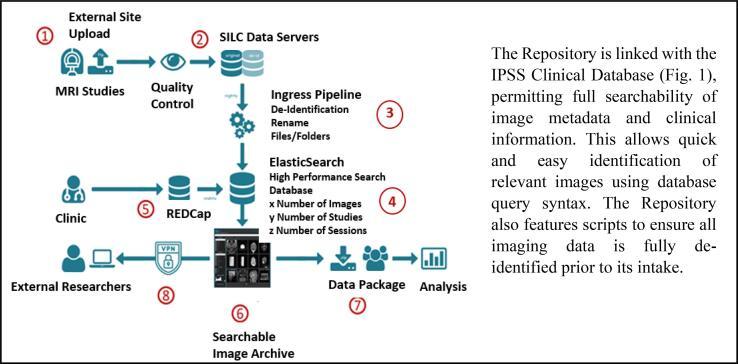
Childhood stroke occurs from birth to 18 years of age, ranks among the top ten childhood causes of death, and leaves lifelong neurological impairments. Arterial ischemic stroke in infancy and childhood occurs due to arterial occlusion in the brain, resulting in a focal lesion. Our understanding of mechanisms of injury and repair associated with focal injury in the developing brain remains rudimentary. Neuroimaging can reveal important insights into these mechanisms. In adult stroke population, multi-center neuroimaging studies are common and have accelerated the translation process leading to improvements in treatment and outcome. These studies are centered on the growing evidence that neuroimaging measures and other biomarkers (e.g., from blood and cerebrospinal fluid) can enhance our understanding of mechanisms of risk and injury and be used as complementary outcome markers. These factors have yet to be studied in pediatric stroke because most neuroimaging studies in this population have been conducted in single-centred, small cohorts. By pooling neuroimaging data across multiple sites, larger cohorts of patients can significantly boost study feasibility and power in elucidating mechanisms of brain injury, repair and outcomes. These aims are particularly relevant in pediatric stroke because of the decreased incidence rates and the lack of mechanism-targeted trials. Toward these aims, we developed the Pediatric Stroke Neuroimaging Platform (PEDSNIP) in 2015, funded by The Brain Canada Platform Support Grant, to focus on three identified neuroimaging priorities. These were: developing and harmonizing multisite clinical protocols, creating the infrastructure and methods to import, store and organize the large clinical neuroimaging dataset from multiple sites through the International Pediatric Stroke Study (IPSS), and enabling central searchability. To do this, developed a two-pronged approach that included building 1) A Clinical-MRI Data Repository (standard of care imaging) linked to clinical data and longitudinal outcomes and 2) A Research-MRI neuroimaging data set acquired through our extensive collaborative, multi-center, multidisciplinary network. This dataset was collected prospectively in eight North American centers to test the feasibility and implementation of harmonized advanced Research-MRI, with the addition of clinical information, genetic and proteomic studies, in a cohort of children presenting with acute ischemic stroke. Here we describe the process that enabled the development of PEDSNIP built to provide the infrastructure to support neuroimaging research priorities in pediatric stroke. Having built this Platform, we are now able to utilize the largest neuroimaging and clinical data pool on pediatric stroke data worldwide to conduct hypothesis-driven research. We are actively working on a bioinformatics approach to develop predictive models of risk, injury and repair and accelerate breakthrough discoveries leading to mechanism-targeted treatments that improve outcomes and minimize the burden following childhood stroke. This unique transformational resource for scientists and researchers has the potential to result in a paradigm shift in the management, outcomes and quality of life in children with stroke and their families, with far-reaching benefits for other brain conditions of people across the lifespan.
儿童脑卒中发生于出生至 18 岁之间,是儿童死亡的十大原因之一,可导致终生神经损伤。婴儿和儿童的动脉缺血性脑卒中是由于大脑中的动脉阻塞引起的,导致局灶性病变。我们对与发育中大脑局灶性损伤相关的损伤和修复机制的理解仍然很初步。神经影像学可以揭示这些机制的重要见解。在成人脑卒中人群中,多中心神经影像学研究很常见,并且加速了转化过程,从而改善了治疗效果和预后。这些研究的重点是越来越多的证据表明,神经影像学测量值和其他生物标志物(例如血液和脑脊液中的标志物)可以增强我们对风险和损伤机制的理解,并可作为补充的结局标志物。这些因素尚未在儿科脑卒中患者中进行研究,因为该人群中的大多数神经影像学研究都是在单中心小队列中进行的。通过在多个地点汇集神经影像学数据,可以显著提高阐明脑损伤、修复和结局机制的研究可行性和效能。在儿科脑卒中患者中,这些目标尤为重要,因为其发病率较低,而且缺乏针对机制的试验。为此,我们于 2015 年成立了儿科脑卒中神经影像学平台(PEDSNIP),该平台由加拿大脑基金平台支持赠款资助,专注于三个已确定的神经影像学优先事项。这些优先事项是:制定和协调多地点临床方案;通过国际儿科脑卒中研究(IPSS)创建基础设施和方法,以导入、存储和组织来自多个地点的大型临床神经影像学数据集;实现中央搜索功能。为此,我们采用了双管齐下的方法,包括:1)构建临床-MRI 数据存储库(标准护理成像),该存储库与临床数据和纵向结局相关联;2)构建研究-MRI 神经影像学数据集,该数据集通过我们广泛的协作性、多中心、多学科网络获得。该数据集在八个北美中心前瞻性收集,用于测试经过协调的先进研究-MRI 的可行性和实施情况,并在急性缺血性脑卒中患儿中添加了临床信息、遗传和蛋白质组学研究。在此,我们描述了建立 PEDSNIP 的过程,该平台旨在为儿科脑卒中的神经影像学研究重点提供基础设施支持。建立了该平台之后,我们现在可以利用全球最大的儿科脑卒中神经影像学和临床数据集来进行基于假设的研究。我们正在积极开发一种生物信息学方法,以开发风险、损伤和修复的预测模型,并加速突破性发现,从而开发出针对机制的治疗方法,改善预后并减轻儿童脑卒中后的负担。对于科学家和研究人员来说,这种独特的变革性资源具有改变管理、结局和生活质量的潜力,可以使患有脑卒中的儿童及其家庭以及整个生命周期中患有其他脑部疾病的人群受益。
 Zotero 插件