
内脏脂肪活性中 F-氟脱氧葡萄糖摄取的预测价值可用于检测结直肠癌转移(前瞻性观察队列研究)。
Predictive value of F-fluorodeoxyglucose accumulation in visceral fat activity to detect colorectal cancer metastases (prospective observational cohort study).
机构信息
Faculty of Medicine and Health Care, Al-Farabi Kazakh National University, Almaty, Almaty, 050040, Kazakhstan.
Nuclear Medicine Department of the Diagnostic Center, Medical Centre Hospital of President's Affairs Administration of the Republic of Kazakhstan, Nur-Sultan, Nur-Sultan, 010000, Kazakhstan.
出版信息
F1000Res. 2022 Oct 10;11:1158. doi: 10.12688/f1000research.122814.1. eCollection 2022.
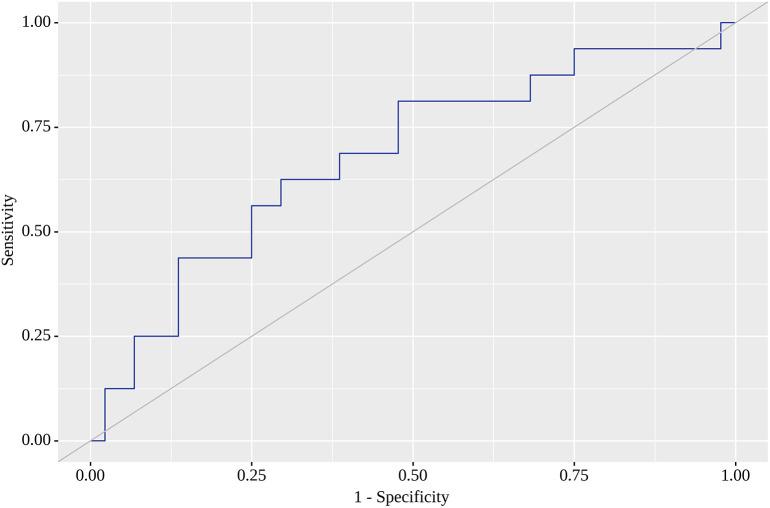
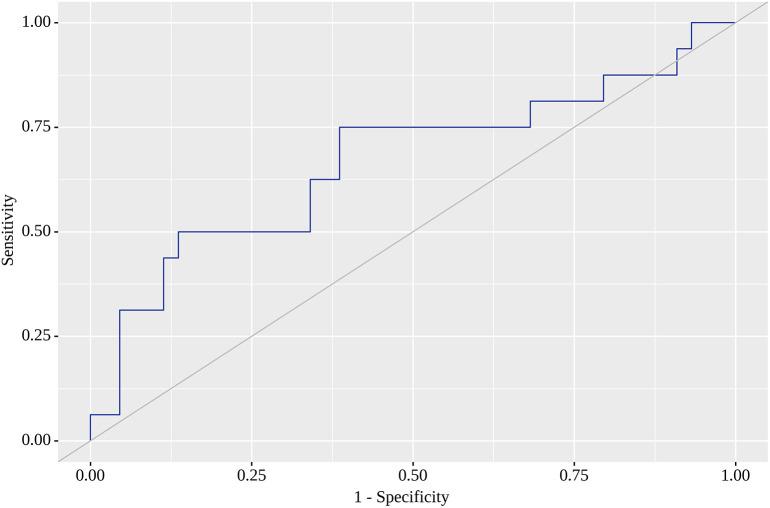
To evaluate functional visceral adipose tissue (VAT) activity assessed by F-fluorodeoxyglucose ( F-FDG) positron emission tomography/computed tomography (PET/CT) as a predictive factor of metastases in colorectal cancer (CRC) patients. We reviewed study protocols and PET/CT data of 534 CRC patients; 474 patients were subsequently excluded for various reasons. The remaining 60 patients with histologically confirmed adenocarcinoma were then prospectively assessed and were exposed to F-FDG PET/CT after a surgical treatment and chemoradiotherapy. Age, histology, stage, and tumor grade data were recorded. Functional VAT activity was verified with maximum standardized uptake value (SUV ) using F-FDG PET/CT and tested as a predictive factor of later metastases in eight subdomains of abdominal regions (RE - epigastric region, RLH - left hypochondriac region, RRL - right lumbar region, RU - umbilical region, RLL - left lumbar region, RRI - right inguinal region, RP - hypogastric (pubic) region, RLI - left inguinal region) and pelvic cavity (P) in the adjusted regression models. In addition, we studied the best areas under the curve (AUC) for SUV with the corresponding sensitivity (Se) and specificity (Sp). In both adjusted for age regression models and receiver operating characteristic (ROC) curve analysis, F-FDG accumulation in RLH (cut-off SUV 0.74; Se 75%; Sp 61%; AUC 0.668; p=0.049), RU (cut-off SUV 0.78; Se 69%; Sp 61%; AUC 0.679; p=0.035), RRL (cut-off SUV 1.05; Se 69%; Sp 77%; AUC 0.682; p=0.032) and RRI (cut-off SUV 0.85; Se 63%; Sp 61%; AUC 0.672; p=0.043) could predict later metastases in CRC patients, as opposed to age, sex, primary tumor location, tumor grade and histology. Functional VAT activity was importantly related to later metastases in CRC patients and can be used as their predictive factor.
评估功能性内脏脂肪组织(VAT)活性,采用 F-氟脱氧葡萄糖(F-FDG)正电子发射断层扫描/计算机断层扫描(PET/CT)作为结直肠癌(CRC)患者转移的预测因子。我们回顾了 534 例 CRC 患者的研究方案和 PET/CT 数据;由于各种原因,随后排除了 474 例患者。随后,对 60 例经组织学证实为腺癌的患者进行前瞻性评估,并在手术治疗和放化疗后接受 F-FDG PET/CT 检查。记录年龄、组织学、分期和肿瘤分级数据。采用 F-FDG PET/CT 验证最大标准化摄取值(SUV)的功能性 VAT 活性,并在调整后的回归模型中测试其作为腹部区域(RE-上腹部区域、RLH-左季肋区、RRL-右腰区、RU-脐区、RLL-左腰区、RRI-右腹股沟区、RP-下腹部(耻骨)区、RLI-左腹股沟区)和盆腔(P)8 个亚区腹部转移的预测因子。此外,我们还研究了 SUV 的最佳曲线下面积(AUC)及其相应的灵敏度(Se)和特异性(Sp)。在调整年龄的回归模型和受试者工作特征(ROC)曲线分析中,RLH(SUV 截断值 0.74;Se 75%;Sp 61%;AUC 0.668;p=0.049)、RU(SUV 截断值 0.78;Se 69%;Sp 61%;AUC 0.679;p=0.035)、RRL(SUV 截断值 1.05;Se 69%;Sp 77%;AUC 0.682;p=0.032)和 RRI(SUV 截断值 0.85;Se 63%;Sp 61%;AUC 0.672;p=0.043)的 F-FDG 摄取可以预测 CRC 患者的晚期转移,而不是年龄、性别、原发肿瘤位置、肿瘤分级和组织学。功能性 VAT 活性与 CRC 患者的晚期转移密切相关,可作为其预测因子。


 Zotero 插件