
采用社区调查方法对肯尼亚农场玉米储存损失的估计
On-farm storage loss estimates of maize in Kenya using community survey methods.
作者信息
De Groote Hugo, Muteti Francisca Ndinda, Bruce Anani Y
机构信息
International Maize and Wheat Improvement Centre (CIMMYT), Kenya.
出版信息
J Stored Prod Res. 2023 May;102:102107. doi: 10.1016/j.jspr.2023.102107.
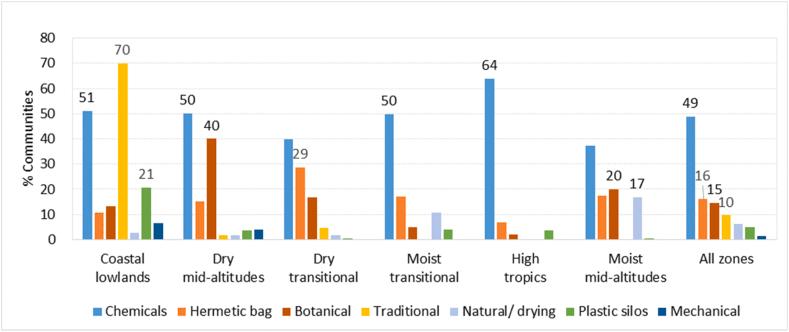
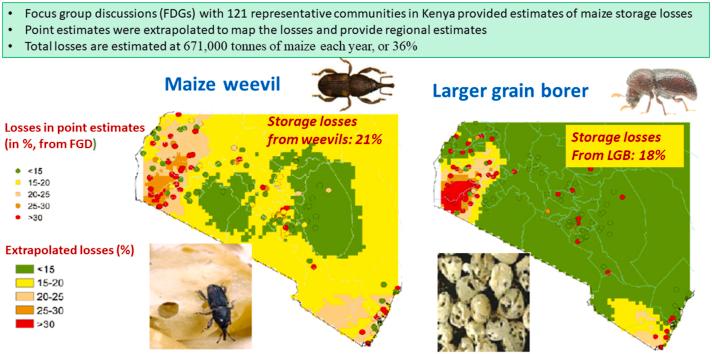
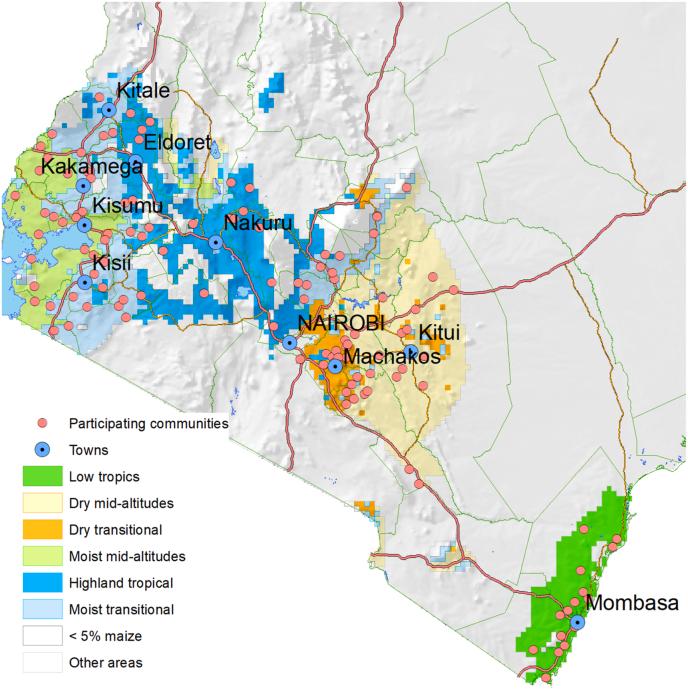
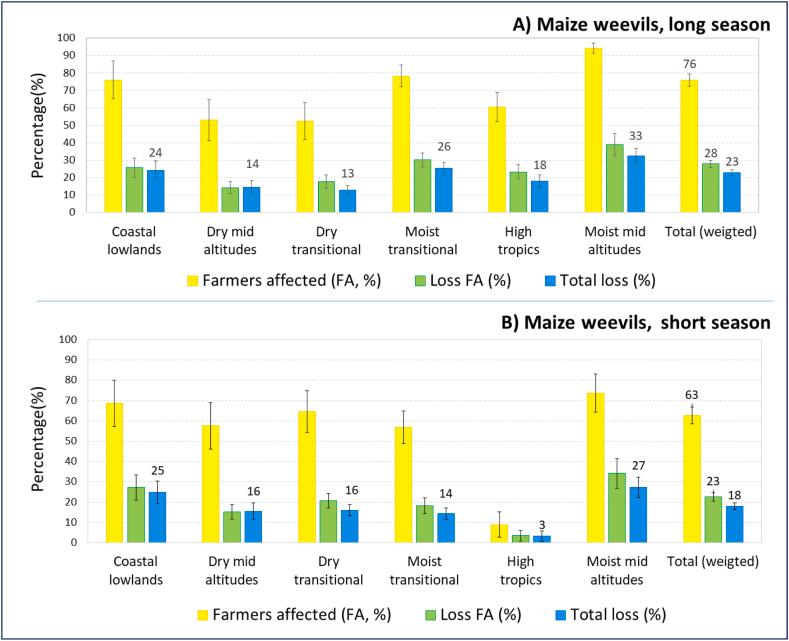
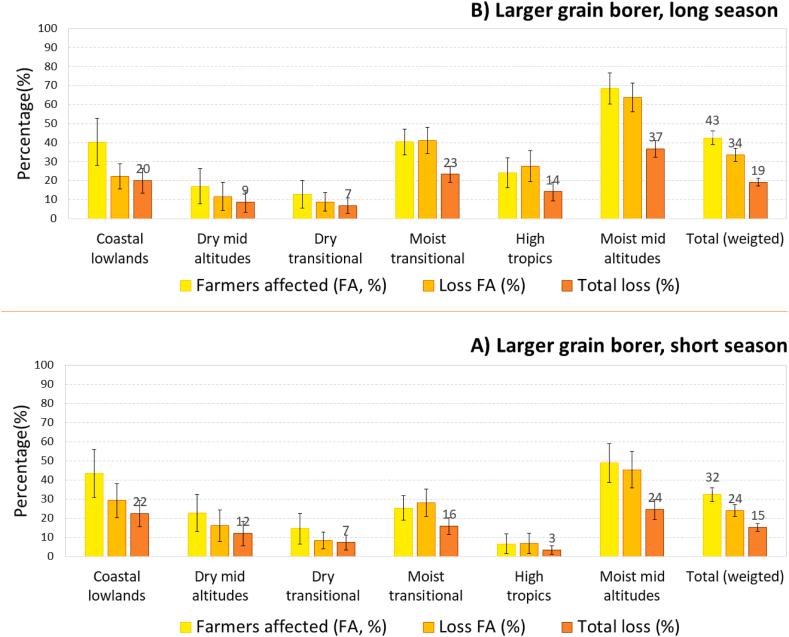
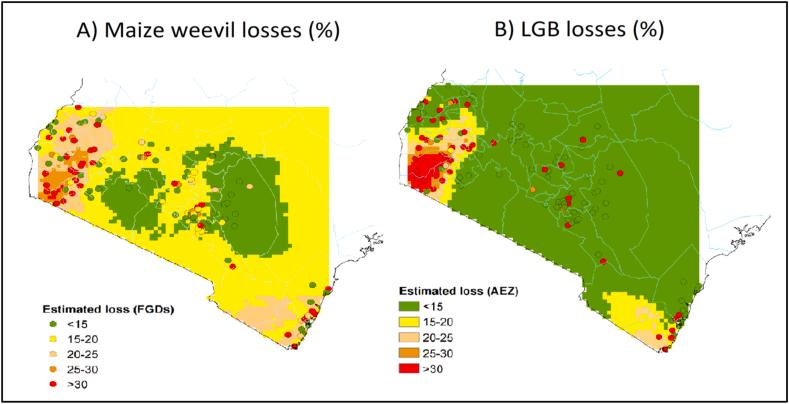
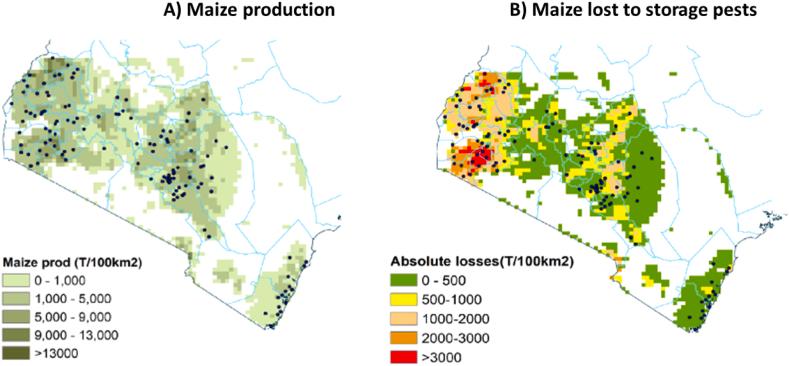
Maize is the most important staple in sub-Saharan Africa (SSA), with highly seasonal production. High storage losses affect food security, but good estimations are lacking. A new method using focus group discussions (FGDs) was tested with 121 communities (1439 farmers, 52% women) in Kenya's six maize-growing zones, to estimate the maize losses to storage pests and analyze farmer practices. As control strategies, half of the farmers used chemical pesticides (49%), while hermetic bags (16%) and botanicals (15%) were also popular. Relative loss from weevils in the long rains was estimated at 23%, in the short rains 18%, and annually 21%. Fewer farmers were affected by the larger grain borer (LGB) than by maize weevils: 42% in the long rainy season and 32% in the short rainy season; losses from LGB were also smaller: 19% in the long season, 17% in the short season, and 18% over the year. Total storage loss, from both species combined, was estimated at 36%, or 671,000 tonnes per year. The greatest losses occur in the humid areas, especially the moist mid-altitudes (56%), and with smaller loss in the drylands (20-23%). Extrapolating the point data and overlaying with the maize production map shows the geographic distribution of the losses, with the most important area found around Lake Victoria. FGDs provide convenient and cheap tools to estimate storage losses in representative communities, but a total loss estimate of 36% is higher than is found in other studies, so its accuracy and framing effects need to be assessed. We conclude that storage pests remain a major problem, especially in western Kenya, and that the use of environmentally friendly technologies such as hermetic storage and botanicals needs more attention, both by the public extension service and private agrodealers.
玉米是撒哈拉以南非洲地区最重要的主食,其生产具有高度季节性。储存损失巨大影响了粮食安全,但目前缺乏可靠的估算方法。一种采用焦点小组讨论(FGD)的新方法在肯尼亚六个玉米种植区的121个社区(1439名农民,其中52%为女性)进行了测试,以估算储存害虫造成的玉米损失,并分析农民的应对措施。作为防治策略,一半的农民使用化学农药(49%),而密封袋(16%)和植物源农药(15%)也很受欢迎。长雨季象鼻虫造成的相对损失估计为23%,短雨季为18%,全年为21%。受大谷蠹影响的农民比受玉米象影响的少:长雨季为42%,短雨季为32%;大谷蠹造成的损失也较小:长季为19%,短季为17%,全年为18%。两种害虫造成的总储存损失估计为36%,即每年67.1万吨。最大的损失发生在潮湿地区,尤其是湿润的中海拔地区(56%),而干旱地区的损失较小(20 - 23%)。通过对这些点数据进行外推并与玉米生产地图叠加,可显示损失的地理分布,其中最重要的区域位于维多利亚湖周边。焦点小组讨论为估算代表性社区的储存损失提供了便捷且廉价的工具,但36%的总损失估计高于其他研究结果,因此需要评估其准确性和框架效应。我们得出结论,储存害虫仍然是一个主要问题,尤其是在肯尼亚西部,公共推广服务机构和私人农资经销商都需要更加关注环保技术的应用,如密封储存和植物源农药。



 Zotero 插件