
对快速生长型肉鸡中与木胸肌病相关的肌内结缔组织的见解。
Insights into Intramuscular Connective Tissue Associated with Wooden Breast Myopathy in Fast-Growing Broiler Chickens.
作者信息
Zhang Yulong, Huang Mingyuan, Shao Xuefei, Zhang Feiyu, Li Zhen, Bai Yun, Xu Xinglian, Wang Peng, Zhao Tinghui
机构信息
College of Food Science and Technology, Nanjing Agricultural University, Nanjing 210095, China.
Jiangsu Synergetic Innovation Center of Meat Production and Processing, Nanjing 210095, China.
出版信息
Foods. 2023 Jun 15;12(12):2375. doi: 10.3390/foods12122375.
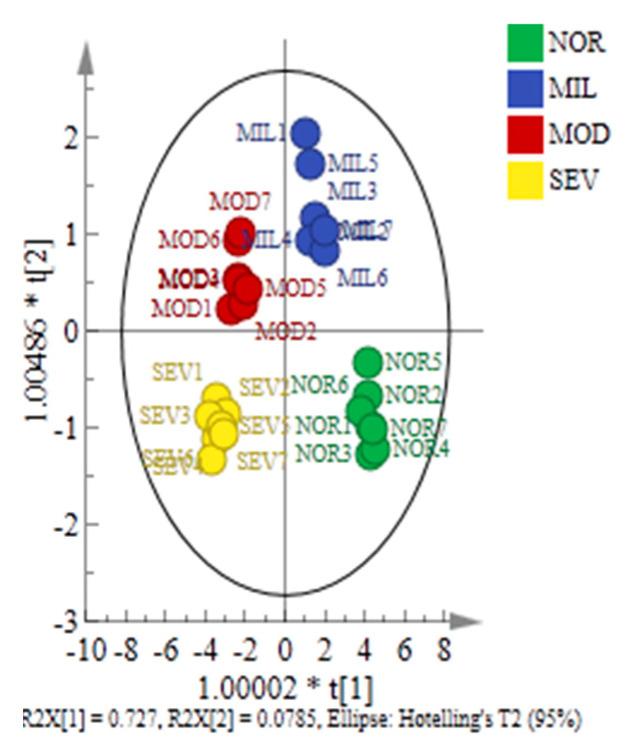
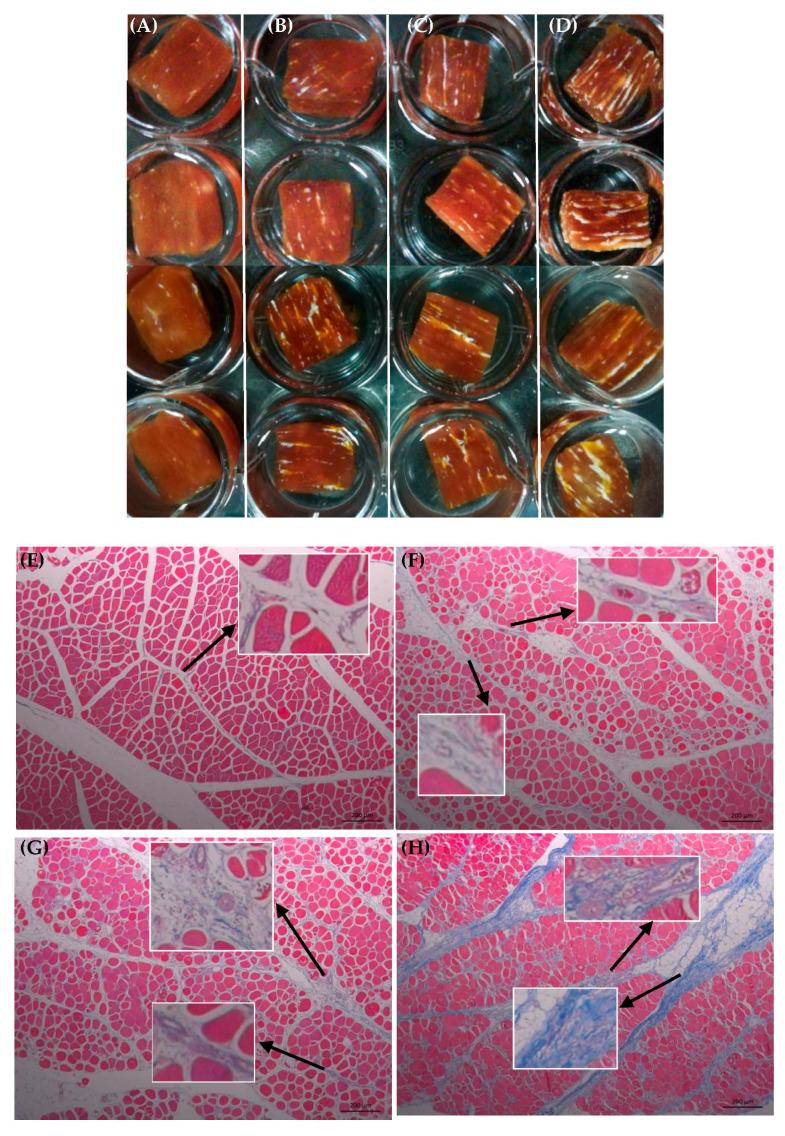
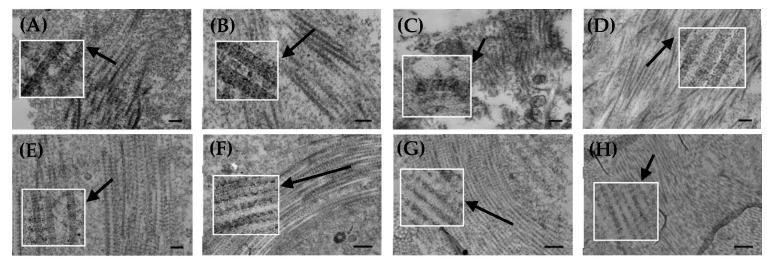
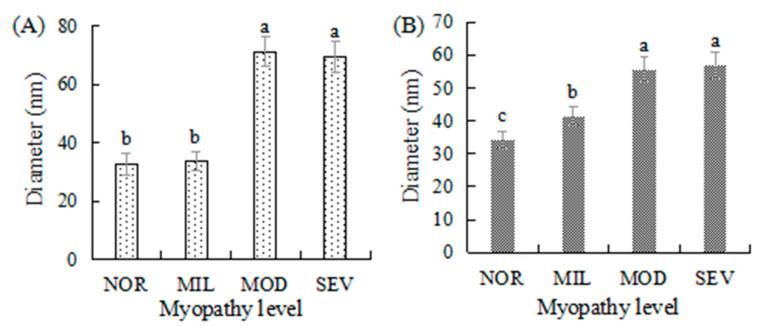
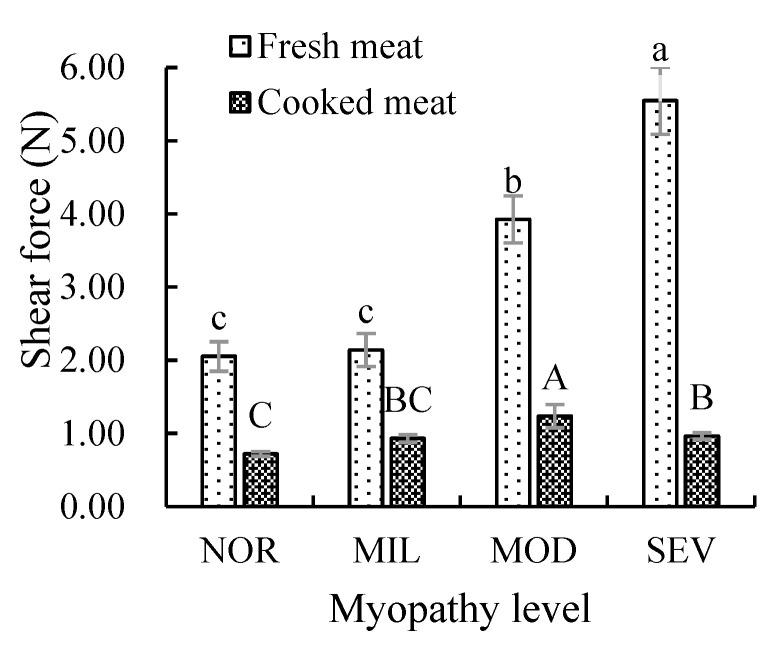
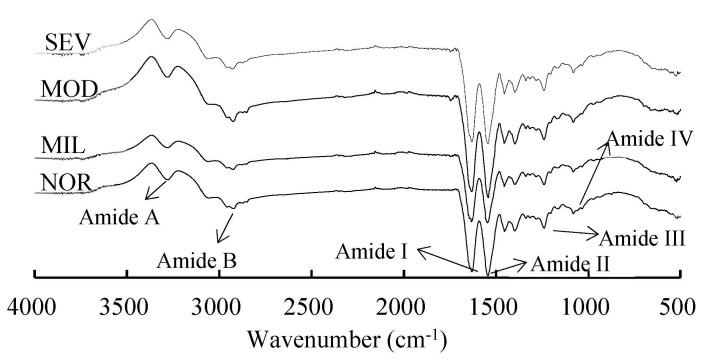
Wooden breast myopathy (WBM) is a meat abnormality affecting (PMs) of fast-growing broiler chickens. WBM-affected PMs exhibited varied meat qualities with increasing WBM severity. Normal PMs (NOR), mild WBM-affected PMs (MIL), moderate WBM-affected PMs (MOD), and severe WBM-affected PMs (SEV) were selected as raw materials. The structure and organization of connective tissue and fibrillar collagen were investigated through immersing with sodium hydroxide solution, Masson trichrome staining, and using an electron microscope. The mechanical strength of intramuscular connective tissue was analyzed via the shear force of samples treated with sodium hydroxide solution. The thermal property and secondary structure of connective tissue were analyzed by differential scanning calorimetry and Fourier transform infrared spectroscopy. The obtained connective tissue was dissolved in a sodium hydroxide solution for the evaluation of the physicochemical properties of proteins, including particle size, molecular weight, surface hydrophobicity, and intrinsic fluorescence. In particular, the particle size was measured using a zeta potential instrument. The molecular weight was analyzed by sodium dodecyl sulfate polyacrylamide gel electrophoresis. The surface hydrophobicity and intrinsic fluorescence were measured by spectroscopy technology. Histologically, macrophage infiltration, myodegeneration and necrosis, regeneration, fibrous connective tissue, and thickened perimysial connective tissue were observed in WBM-affected PMs, especially SEV with fibrosis, including blood vessels. Compared with NOR, WBM led to increased average diameter of the collagen fibrils in perimysial (36.61 nm of NOR to 69.73 nm of SEV) and endomysial (34.19 nm of NOR to 56.93 nm of SEV) layers. A significant increase ( < 0.05) was observed in the mechanical strength (2.05 N to 5.55 N) of fresh PMs and the thermal transition temperature (onset temperature (T), 61.53 °C to 67.50 °C; maximum transition temperature (T), 66.46 °C to 70.18 °C; termination temperature (T), 77.20 °C to 80.88 °C) of connective tissue from NOR to SEV. Cooking decreased the mechanical strength, and MOD samples showed the highest mechanical strength (1.24 N, < 0.05), followed by SEV (0.96 N), MIL (0.93 N), and NOR (0.72 N). For proteins in connective tissue, random coil (19.64% to 29.61%, < 0.0001), particle size ( < 0.05), and surface hydrophobicity ( < 0.05) increased with the decrease in the α-helix (14.61% to 11.54%, < 0.0001), β-sheet (45.71% to 32.80%, < 0.0001), and intrinsic fluorescence of proteins from NOR to SEV. The molecular weights of intramuscular connective tissue proteins were in the ranges of >270 kDa, 180-270 kDa, 110-180 kDa, 95-100 kDa, and <15 kDa. Taken together, WBM resulted in thickened organization, tightly packed collagen fibrils, increased mechanical strength and thermal temperature, and increased particle size, surface hydrophobicity, and intrinsic fluorescence of proteins in connective tissue, as the WBM severity increased.
木质胸肌病(WBM)是一种影响快速生长肉鸡胸肌(PMs)的肉质异常情况。随着WBM严重程度的增加,受WBM影响的胸肌呈现出不同的肉质。选取正常胸肌(NOR)、轻度WBM影响的胸肌(MIL)、中度WBM影响的胸肌(MOD)和重度WBM影响的胸肌(SEV)作为原材料。通过用氢氧化钠溶液浸泡、Masson三色染色和使用电子显微镜来研究结缔组织和纤维状胶原蛋白的结构与组织。通过对用氢氧化钠溶液处理的样品的剪切力来分析肌内结缔组织的机械强度。通过差示扫描量热法和傅里叶变换红外光谱法分析结缔组织的热性质和二级结构。将获得的结缔组织溶解在氢氧化钠溶液中以评估蛋白质的物理化学性质,包括粒径、分子量、表面疏水性和固有荧光。特别地,使用zeta电位仪测量粒径。通过十二烷基硫酸钠聚丙烯酰胺凝胶电泳分析分子量。通过光谱技术测量表面疏水性和固有荧光。组织学上,在受WBM影响的胸肌中观察到巨噬细胞浸润、肌细胞变性和坏死、再生、纤维结缔组织以及增厚的肌束膜结缔组织,尤其是伴有纤维化(包括血管)的重度WBM胸肌。与正常胸肌相比,WBM导致肌束膜(从正常胸肌的36.61 nm增加到重度WBM胸肌的69.73 nm)和肌内膜(从正常胸肌的34.19 nm增加到重度WBM胸肌的56.93 nm)层中胶原纤维的平均直径增加。新鲜胸肌的机械强度(从2.05 N增加到5.55 N)以及结缔组织的热转变温度(起始温度(T₀),从61.53℃增加到67.50℃;最大转变温度(Tₘₐₓ),从66.46℃增加到70.18℃;终止温度(Tₑ),从77.20℃增加到80.88℃)从正常胸肌到重度WBM胸肌有显著增加(P < 0.05)。烹饪降低了机械强度,中度WBM胸肌样品显示出最高的机械强度(1.24 N,P < 0.05),其次是重度WBM胸肌(0.96 N)、轻度WBM胸肌(0.93 N)和正常胸肌(0.72 N)。对于结缔组织中的蛋白质,随着从正常胸肌到重度WBM胸肌蛋白质的α - 螺旋(从14.61%减少到11.54%,P < 0.0001)、β - 折叠(从45.71%减少到32.80%,P < 0.0001)和固有荧光减少,无规卷曲(从19.64%增加到29.61%,P < 0.0001)、粒径(P < 0.05)和表面疏水性(P < 0.05)增加。肌内结缔组织蛋白质的分子量范围为>270 kDa、180 - 270 kDa、110 - 180 kDa、95 - 100 kDa和<15 kDa。综上所述,随着WBM严重程度的增加,WBM导致结缔组织结构增厚、胶原纤维紧密堆积、机械强度和热温度增加,以及结缔组织中蛋白质的粒径、表面疏水性和固有荧光增加。



 Zotero 插件