
高海拔环境下的大脑:从分子信号到认知表现。
The Brain at High Altitude: From Molecular Signaling to Cognitive Performance.
机构信息
Institute of Veterinary Physiology, Vetsuisse Faculty, University of Zürich, 8057 Zurich, Switzerland.
Department of Biochemistry, Faculty of Pharmacy, Ain Shams University, Cairo 11566, Egypt.
出版信息
Int J Mol Sci. 2023 Jun 15;24(12):10179. doi: 10.3390/ijms241210179.
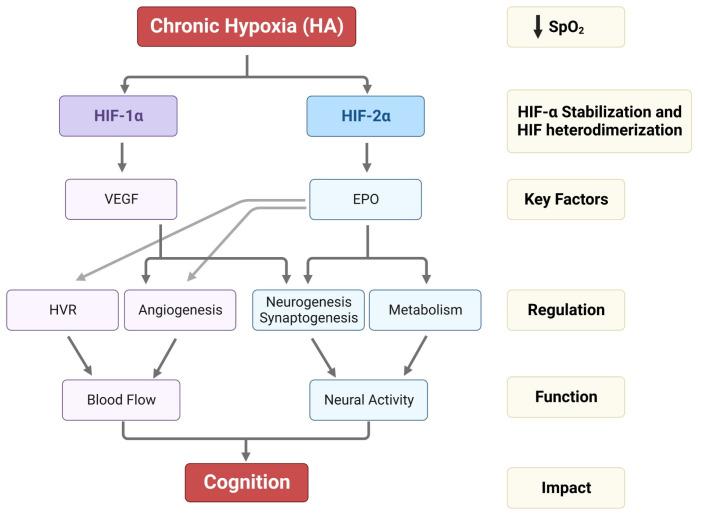
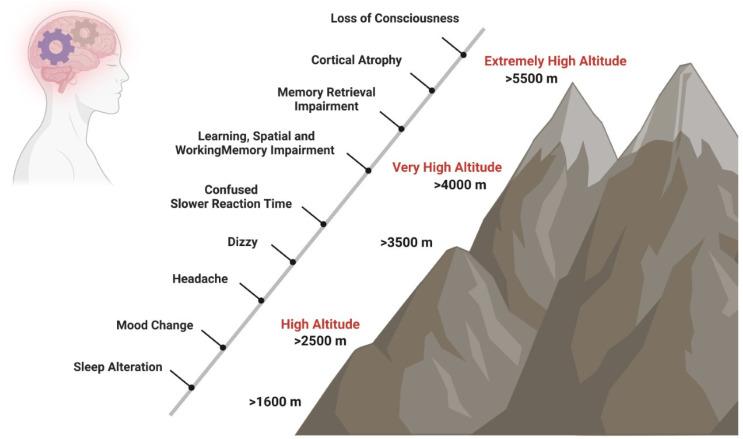
The brain requires over one-fifth of the total body oxygen demand for normal functioning. At high altitude (HA), the lower atmospheric oxygen pressure inevitably challenges the brain, affecting voluntary spatial attention, cognitive processing, and attention speed after short-term, long-term, or lifespan exposure. Molecular responses to HA are controlled mainly by hypoxia-inducible factors. This review aims to summarize the cellular, metabolic, and functional alterations in the brain at HA with a focus on the role of hypoxia-inducible factors in controlling the hypoxic ventilatory response, neuronal survival, metabolism, neurogenesis, synaptogenesis, and plasticity.
大脑正常运转需要超过五分之一的全身氧气需求。在高海拔(HA)地区,较低的大气氧气压力不可避免地对大脑造成挑战,影响短期、长期或终生暴露后的自愿空间注意力、认知处理和注意力速度。分子对 HA 的反应主要由缺氧诱导因子控制。本综述旨在总结 HA 时大脑的细胞、代谢和功能改变,并重点介绍缺氧诱导因子在控制缺氧性通气反应、神经元存活、代谢、神经发生、突触形成和可塑性方面的作用。
 Zotero 插件