
脑内皮细胞在代谢综合征中增大的血管周围空间的发展中起着核心作用。
Brain Endothelial Cells Play a Central Role in the Development of Enlarged Perivascular Spaces in the Metabolic Syndrome.
机构信息
Department of Internal Medicine, Endocrinology Diabetes and Metabolism, Diabetes and Cardiovascular Disease Center, University of Missouri School of Medicine, One Hospital Drive, Columbia, MO 65211, USA.
出版信息
Medicina (Kaunas). 2023 Jun 11;59(6):1124. doi: 10.3390/medicina59061124.
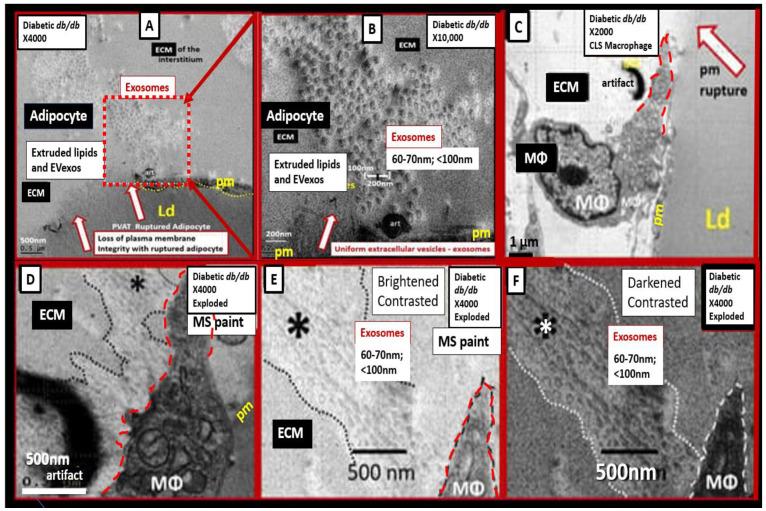
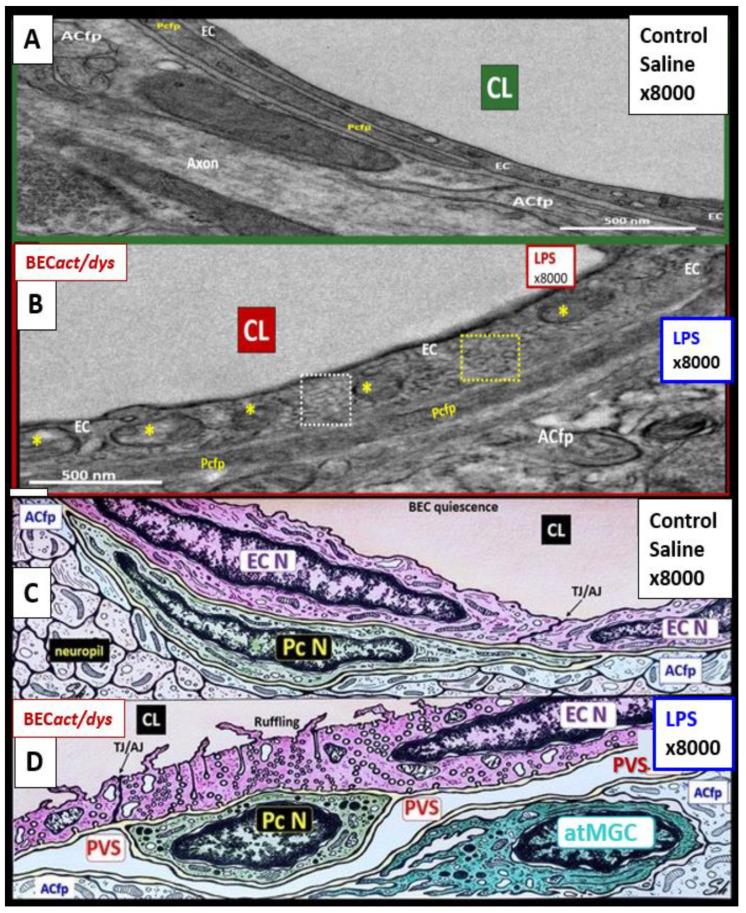
Brain capillary endothelial cell(s) (BECs) have numerous functions, including their semipermeable interface-barrier (transfer and diffusion of solutes), trophic (metabolic homeostasis), tonic (vascular hemodynamics), and trafficking (vascular permeability, coagulation, and leukocyte extravasation) functions to provide brain homeostasis. BECs also serve as the brain's sentinel cell of the innate immune system and are capable of antigen presentation. In metabolic syndrome (MetS), there are two regions resulting in the proinflammatory signaling of BECs, namely visceral adipose tissue depots supplying excessive peripheral cytokines/chemokines (CCs) and gut microbiota dysbiotic regions supplying excessive soluble lipopolysaccharide (sLPS), small LPS-enriched extracellular vesicle exosomes (lpsEVexos), and CCs. This dual signaling of BECs at their receptor sites results in BEC activation and dysfunction (BEC) and neuroinflammation. sLPS and lpsEVexos signal BECs' toll-like receptor 4, which then signals translocated nuclear factor kappa B (NFkB). Translocated NFkB promotes the synthesis and secretion of BEC proinflammatory cytokines and chemokines. Specifically, the chemokine CCL5 (RANTES) is capable of attracting microglia cells to BECs. BEC neuroinflammation activates perivascular space(s) (PVS) resident macrophages. Excessive phagocytosis by reactive resident PVS macrophages results in a stagnation-like obstruction, which along with increased capillary permeability due to BEC could expand the fluid volume within the PVS to result in enlarged PVS (EPVS). Importantly, this remodeling may result in pre- and post-capillary EPVS that would contribute to their identification on T2-weighted MRI, which are considered to be biomarkers for cerebral small vessel disease.
脑毛细血管内皮细胞 (BEC) 具有多种功能,包括半透性界面屏障(溶质的转运和扩散)、营养(代谢稳态)、紧张(血管血液动力学)和运输(血管通透性、凝血和白细胞渗出)功能,以提供大脑内环境稳态。BEC 还作为大脑先天免疫系统的哨兵细胞,能够进行抗原呈递。在代谢综合征 (MetS) 中,有两个区域导致 BEC 的促炎信号,即内脏脂肪组织储存库提供过多的外周细胞因子/趋化因子 (CC) 和肠道微生物区系失调区域提供过多的可溶性脂多糖 (sLPS)、小 LPS 富集细胞外囊泡外泌体 (lpsEVexos) 和 CC。BEC 受体部位的这种双重信号导致 BEC 激活和功能障碍 (BEC) 和神经炎症。sLPS 和 lpsEVexos 信号 BEC 的 Toll 样受体 4,然后信号转位核因子 kappa B (NFkB)。转位 NFkB 促进 BEC 促炎细胞因子和趋化因子的合成和分泌。具体而言,趋化因子 CCL5 (RANTES) 能够吸引小胶质细胞到 BEC。BEC 神经炎症激活血管周围空间 (PVS) 驻留巨噬细胞。反应性驻留 PVS 巨噬细胞的过度吞噬作用导致类似停滞的阻塞,这与由于 BEC 导致的毛细血管通透性增加一起,会使 PVS 内的液体体积膨胀,导致 PVS 增大 (EPVS)。重要的是,这种重塑可能导致毛细血管前和毛细血管后 EPVS,这有助于在 T2 加权 MRI 上识别它们,被认为是脑小血管疾病的生物标志物。






 Zotero 插件