
3D打印倾斜角度对3D打印微针阵列穿透性的影响
The Effect of 3D Printing Tilt Angle on the Penetration of 3D-Printed Microneedle Arrays.
作者信息
Razzaghi Mahmood, Akbari Mohsen
机构信息
Laboratory for Innovations in Microengineering (LiME), Department of Mechanical Engineering, University of Victoria, Victoria, BC V8P 5C2, Canada.
Terasaki Institute for Biomedical Innovations, Los Angeles, CA 90050, USA.
出版信息
Micromachines (Basel). 2023 May 30;14(6):1157. doi: 10.3390/mi14061157.
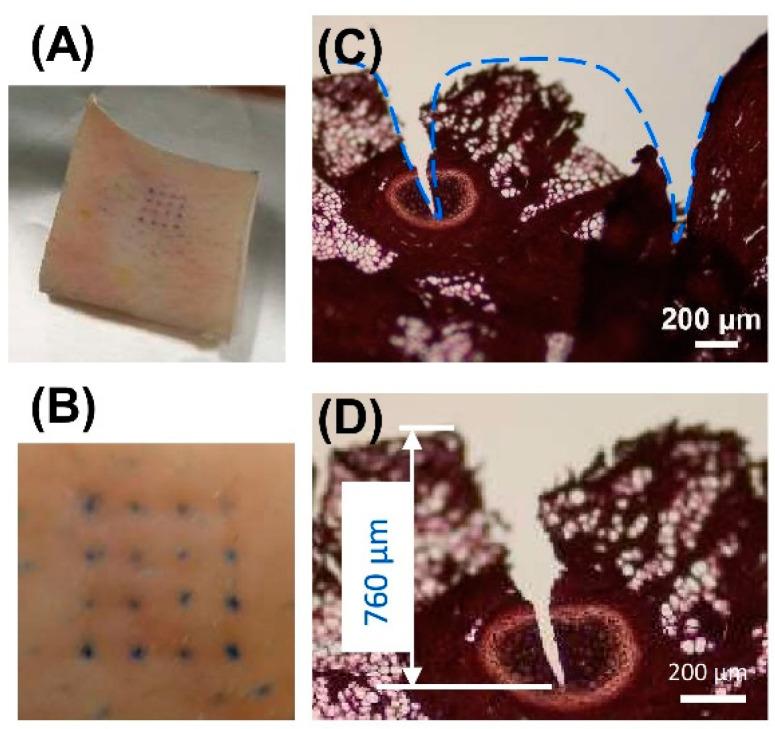
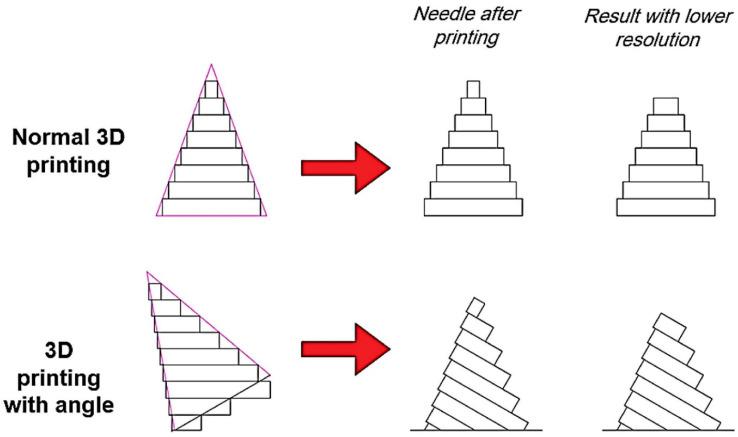
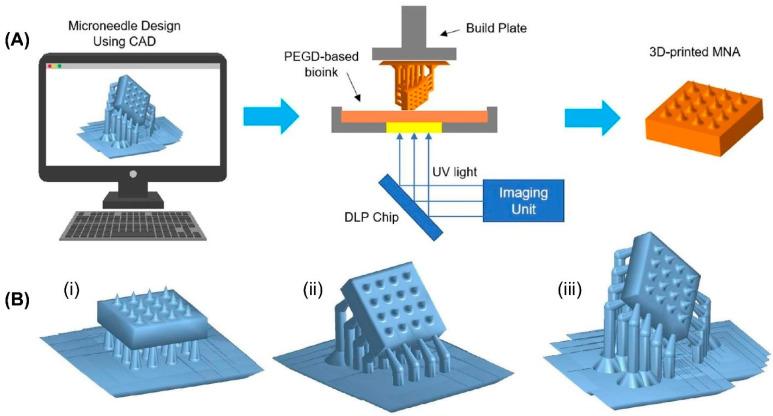
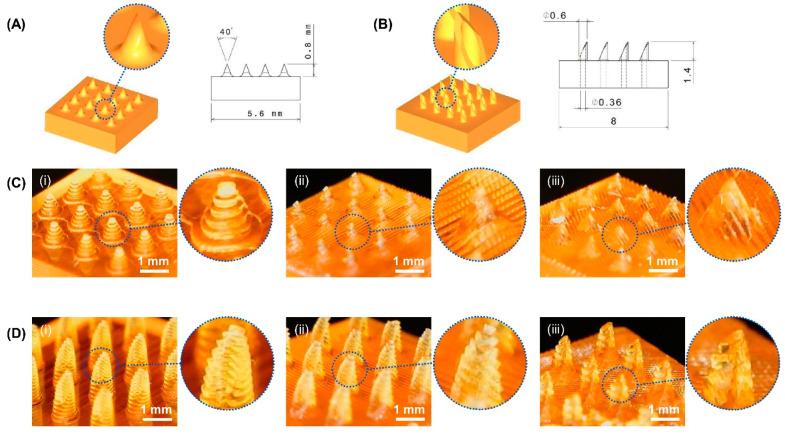
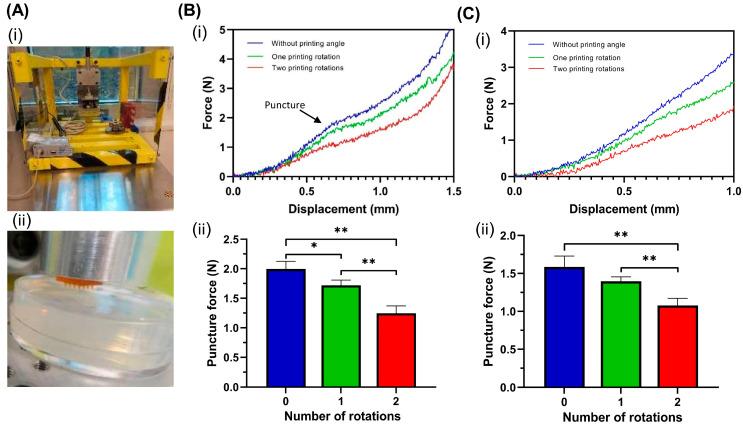
Microneedle arrays (MNAs) are emerging devices that are mainly used for drug delivery and diagnostic applications through the skin. Different methods have been used to fabricate MNAs. Recently developed fabrication methods based on 3D printing have many advantages compared to conventional fabrication methods, such as faster fabrication in one step and the ability to fabricate complex structures with precise control over their geometry, form, size, and mechanical and biological properties. Despite the several advantages that 3D printing offers for the fabrication of microneedles, their poor penetration capability into the skin should be improved. MNAs need a sharp needle tip to penetrate the skin barrier layer, the stratum corneum (SC). This article presents a method to improve the penetration of 3D-printed microneedle arrays by investigating the effect of the printing angle on the penetration force of MNAs. The penetration force needed to puncture the skin for MNAs fabricated using a commercial digital light processing (DLP) printer, with different printing tilt angles (0-60°), was measured in this study. The results showed that the minimum puncture force was achieved using a 45° printing tilt angle. Using this angle, the puncture force was reduced by 38% compared to MNAs printed with a tilting angle of 0°. We also identified that a tip angle of 120° resulted in the smallest penetration force needed to puncture the skin. The outcomes of the research show that the presented method can significantly improve the penetration capability of 3D-printed MNAs into the skin.
微针阵列(MNAs)是一种新兴的设备,主要用于经皮给药和诊断应用。人们已经使用了不同的方法来制造微针阵列。与传统制造方法相比,最近基于3D打印开发的制造方法具有许多优点,例如一步制造速度更快,并且能够制造复杂结构,并精确控制其几何形状、形态、尺寸以及机械和生物学特性。尽管3D打印在微针制造方面具有诸多优势,但其对皮肤的穿透能力较差的问题仍有待改善。微针阵列需要尖锐的针尖来穿透皮肤屏障层——角质层(SC)。本文通过研究打印角度对微针阵列穿透力的影响,提出了一种提高3D打印微针阵列穿透能力的方法。在本研究中,测量了使用商用数字光处理(DLP)打印机、以不同打印倾斜角度(0 - 60°)制造的微针阵列刺穿皮肤所需的穿透力。结果表明,使用45°打印倾斜角度时可实现最小的穿刺力。与倾斜角度为0°打印的微针阵列相比,使用该角度时穿刺力降低了38%。我们还发现,120°的针尖角度导致刺穿皮肤所需的穿透力最小。研究结果表明,所提出的方法可以显著提高3D打印微针阵列对皮肤的穿透能力。

 Zotero 插件