
CMN-001 的临床经验综述,这是一种用于治疗转移性肾细胞癌的肿瘤 RNA 负载树突状细胞免疫疗法。
A review of the clinical experience with CMN-001, a tumor RNA loaded dendritic cell immunotherapy for the treatment of metastatic renal cell carcinoma.
机构信息
Department of Research & Development, CoImmune Inc., Durham, NC, USA.
出版信息
Hum Vaccin Immunother. 2023 Aug 1;19(2):2220629. doi: 10.1080/21645515.2023.2220629. Epub 2023 Jun 30.
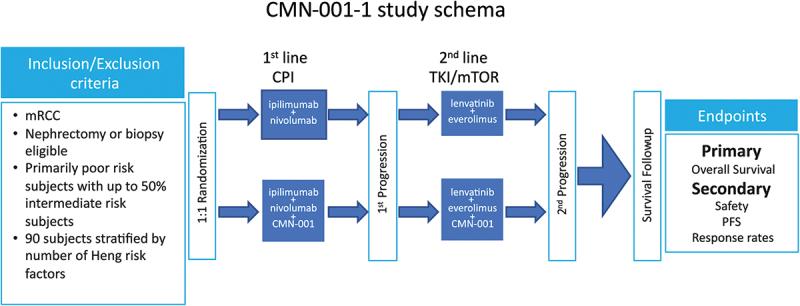
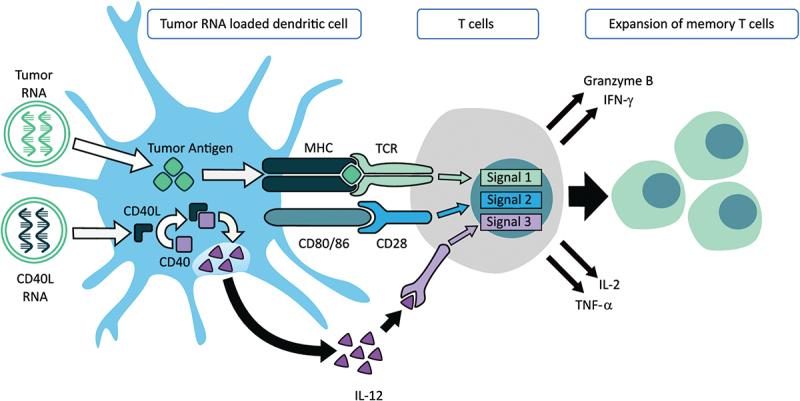
Engineering dendritic cells (DCs) to treat cancer is a long sought-after goal for cell-based immunotherapies. In this review, we focus on the experience with CMN-001, formally AGS-003, a DC-based immunotherapy, employing autologous DC electroporated with autologous tumor RNA to treat subjects with metastatic renal cell carcinoma (mRCC). We will review the early clinical development of CMN-001 up to and including deployment in a multicenter phase 3 study and provide a rationale to continue the development of CMN-001 in an ongoing randomized phase 2 study. The synergy between CMN-001 and everolimus observed in the phase 3 study provides an opportunity to design a phase 2b study building on the mechanism of action of CMN-001 and underlying immune and clinical outcomes revealed in the earlier studies. The design of the phase 2b study combines CMN-001 with first-line checkpoint inhibition therapy and second line lenvatinib/everolimus in poor-risk mRCC subjects.
将树突状细胞(DC)工程化用于治疗癌症是细胞免疫疗法长期以来的目标。在这篇综述中,我们专注于 CMN-001(前称 AGS-003)的经验,这是一种基于 DC 的免疫疗法,采用自体肿瘤 RNA 电穿孔的自体 DC 来治疗转移性肾细胞癌(mRCC)患者。我们将回顾 CMN-001 的早期临床开发,包括在多中心 3 期研究中的应用,并提供继续在正在进行的随机 2 期研究中开发 CMN-001 的理由。在 3 期研究中观察到的 CMN-001 和依维莫司之间的协同作用为设计基于 CMN-001 的作用机制以及早期研究中揭示的免疫和临床结果的 2b 期研究提供了机会。2b 期研究的设计将 CMN-001 与一线检查点抑制治疗以及二线 lenvatinib/everolimus 联合用于低危 mRCC 患者。


 Zotero 插件