
与 mRNA 表达相关的反式作用基因型影响代谢和热耐受性状。
Trans-Acting Genotypes Associated with mRNA Expression Affect Metabolic and Thermal Tolerance Traits.
机构信息
Department of Marine Biology and Ecology, Rosenstiel School of Marine, Atmospheric, and Earth Science, University of Miami, Miami, Florida, USA.
出版信息
Genome Biol Evol. 2023 Jul 3;15(7). doi: 10.1093/gbe/evad123.
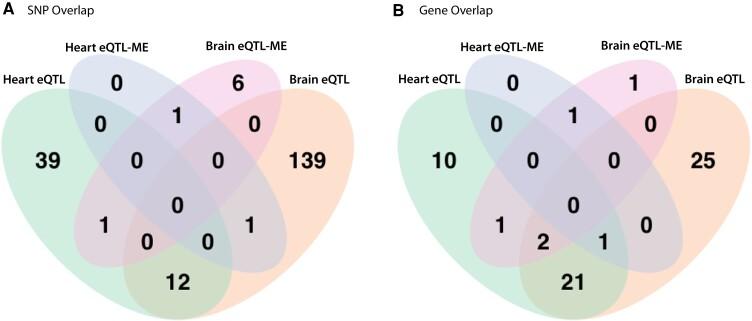
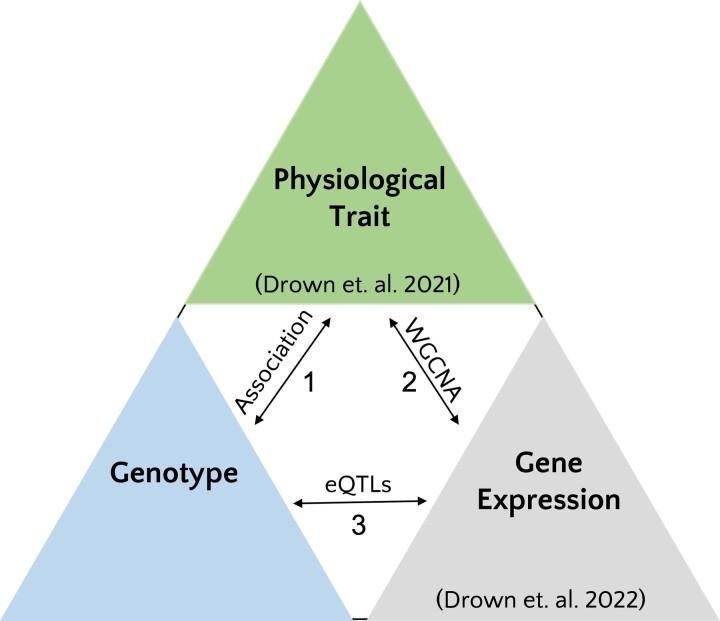
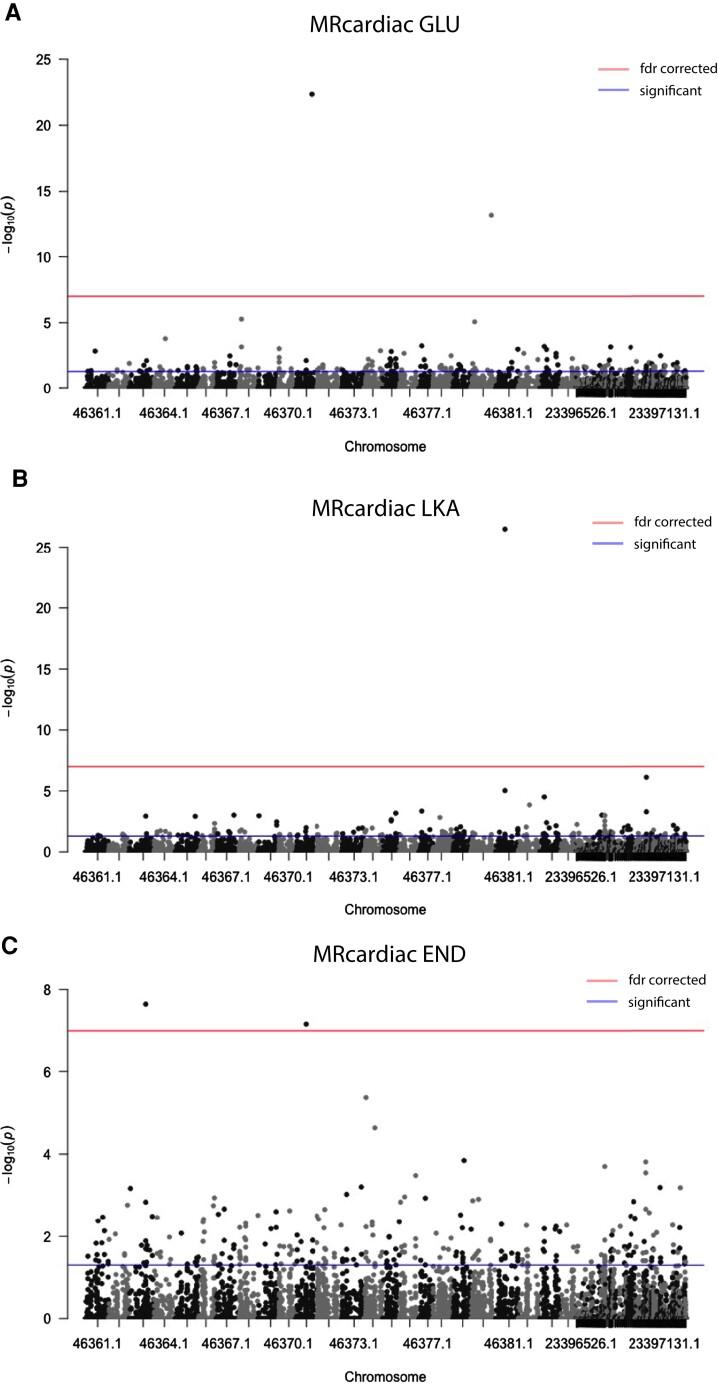
Evolutionary processes driving physiological trait variation depend on the underlying genomic mechanisms. Evolution of these mechanisms depends on the genetic complexity (involving many genes) and how gene expression impacting the traits is converted to phenotype. Yet, genomic mechanisms that impact physiological traits are diverse and context dependent (e.g., vary by environment and tissues), making them difficult to discern. We examine the relationships between genotype, mRNA expression, and physiological traits to discern the genetic complexity and whether the gene expression affecting the physiological traits is primarily cis- or trans-acting. We use low-coverage whole genome sequencing and heart- or brain-specific mRNA expression to identify polymorphisms directly associated with physiological traits and expressed quantitative trait loci (eQTL) indirectly associated with variation in six temperature specific physiological traits (standard metabolic rate, thermal tolerance, and four substrate specific cardiac metabolic rates). Focusing on a select set of mRNAs belonging to co-expression modules that explain up to 82% of temperature specific traits, we identified hundreds of significant eQTL for mRNA whose expression affects physiological traits. Surprisingly, most eQTL (97.4% for heart and 96.7% for brain) were trans-acting. This could be due to higher effect size of trans- versus cis-acting eQTL for mRNAs that are central to co-expression modules. That is, we may have enhanced the identification of trans-acting factors by looking for single nucleotide polymorphisms associated with mRNAs in co-expression modules that broadly influence gene expression patterns. Overall, these data indicate that the genomic mechanism driving physiological variation across environments is driven by trans-acting heart- or brain-specific mRNA expression.
进化过程驱动生理特征的变异取决于潜在的基因组机制。这些机制的进化取决于遗传复杂性(涉及许多基因)以及基因表达如何影响特征转化为表型。然而,影响生理特征的基因组机制是多样的且依赖于背景的(例如,因环境和组织而异),这使得它们难以辨别。我们研究基因型、mRNA 表达和生理特征之间的关系,以辨别遗传复杂性以及影响生理特征的基因表达主要是顺式作用还是反式作用。我们使用低覆盖率全基因组测序和心脏或大脑特异性 mRNA 表达来鉴定直接与生理特征相关的多态性和间接与六个温度特异性生理特征(标准代谢率、热耐受性和四种底物特异性心脏代谢率)变异相关的表达数量性状基因座(eQTL)。我们专注于一组属于共表达模块的选定 mRNA,这些模块可以解释高达 82%的温度特异性特征,鉴定了数百个与影响生理特征的 mRNA 表达相关的显著 eQTL。令人惊讶的是,大多数 eQTL(心脏为 97.4%,大脑为 96.7%)是反式作用的。这可能是由于对共表达模块核心的 mRNA 的顺式和反式作用 eQTL 的效应大小更高。也就是说,我们可能通过寻找与共表达模块中的 mRNA 相关的单核苷酸多态性来增强对广泛影响基因表达模式的反式作用因子的鉴定。总体而言,这些数据表明,跨环境驱动生理变异的基因组机制是由反式作用的心脏或大脑特异性 mRNA 表达驱动的。

 Zotero 插件