
根据经验得出的序列相似性阈值,用于研究与医疗保健相关的细菌病原体之间共享的质粒的基因组流行病学。
Empirically derived sequence similarity thresholds to study the genomic epidemiology of plasmids shared among healthcare-associated bacterial pathogens.
机构信息
Department of Infectious Diseases and Microbiology, University of Pittsburgh Graduate School of Public Health, Pittsburgh, PA, USA.
Division of Infectious Diseases, University of Pittsburgh School of Medicine, Pittsburgh, PA, USA; Center for Genomic Epidemiology, University of Pittsburgh School of Medicine, Pittsburgh, PA, USA.
出版信息
EBioMedicine. 2023 Jul;93:104681. doi: 10.1016/j.ebiom.2023.104681. Epub 2023 Jun 29.
BACKGROUND
Healthcare-associated bacterial pathogens frequently carry plasmids that contribute to antibiotic resistance and virulence. The horizontal transfer of plasmids in healthcare settings has been previously documented, but genomic and epidemiologic methods to study this phenomenon remain underdeveloped. The objectives of this study were to apply whole-genome sequencing to systematically resolve and track plasmids carried by nosocomial pathogens in a single hospital, and to identify epidemiologic links that indicated likely horizontal plasmid transfer.
METHODS
We performed an observational study of plasmids circulating among bacterial isolates infecting patients at a large hospital. We first examined plasmids carried by isolates sampled from the same patient over time and isolates that caused clonal outbreaks in the same hospital to develop thresholds with which horizontal plasmid transfer within a tertiary hospital could be inferred. We then applied those sequence similarity thresholds to perform a systematic screen of 3074 genomes of nosocomial bacterial isolates from a single hospital for the presence of 89 plasmids. We also collected and reviewed data from electronic health records for evidence of geotemporal links between patients infected with bacteria encoding plasmids of interest.
FINDINGS
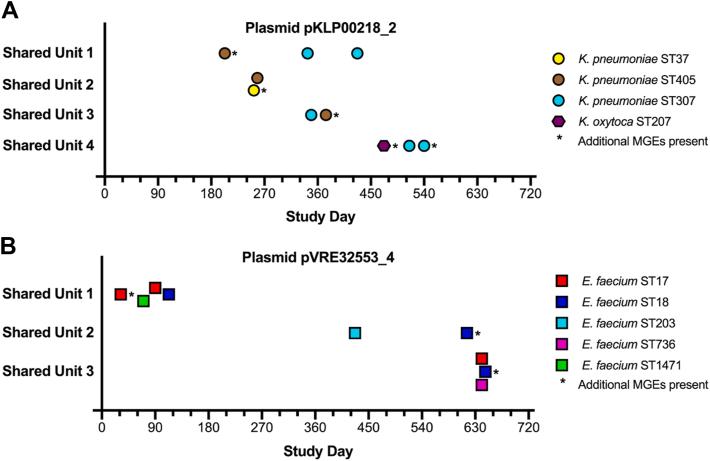
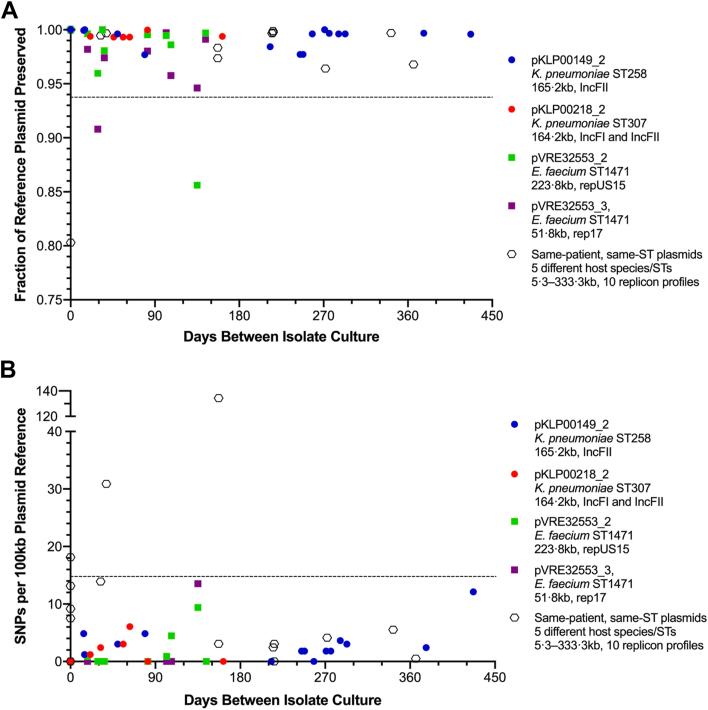
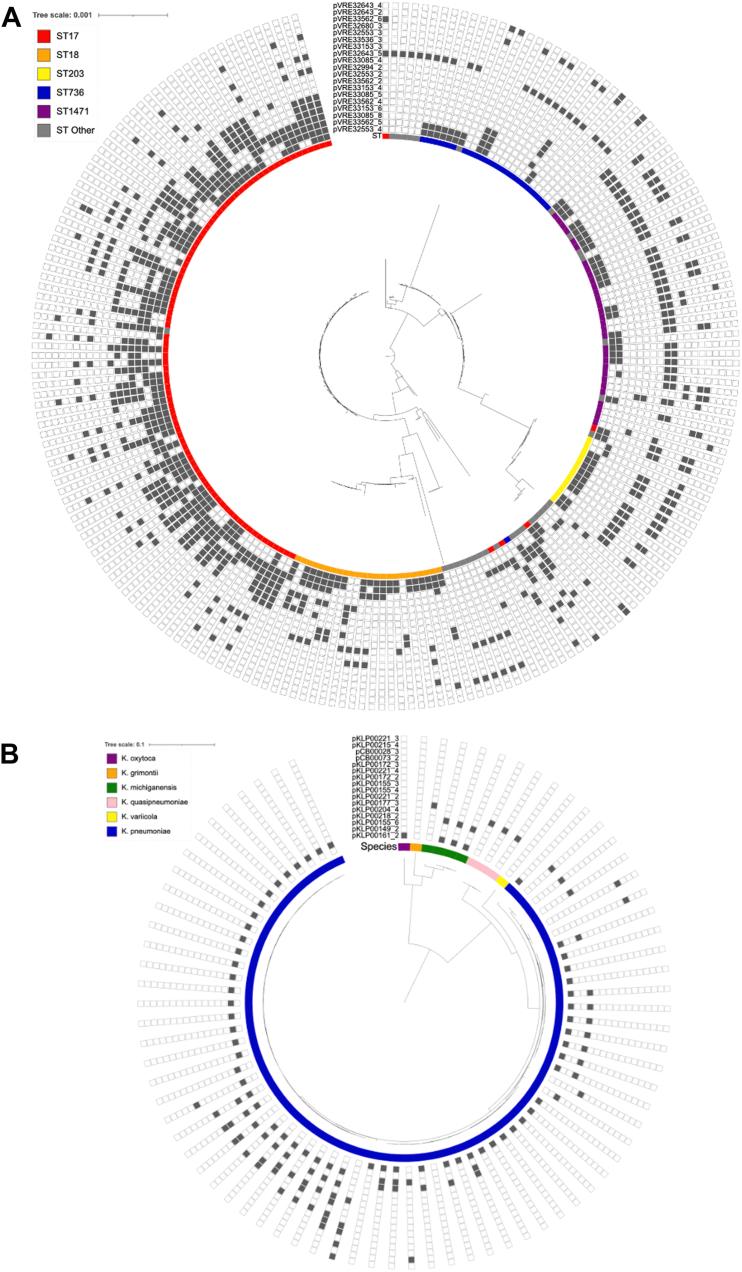
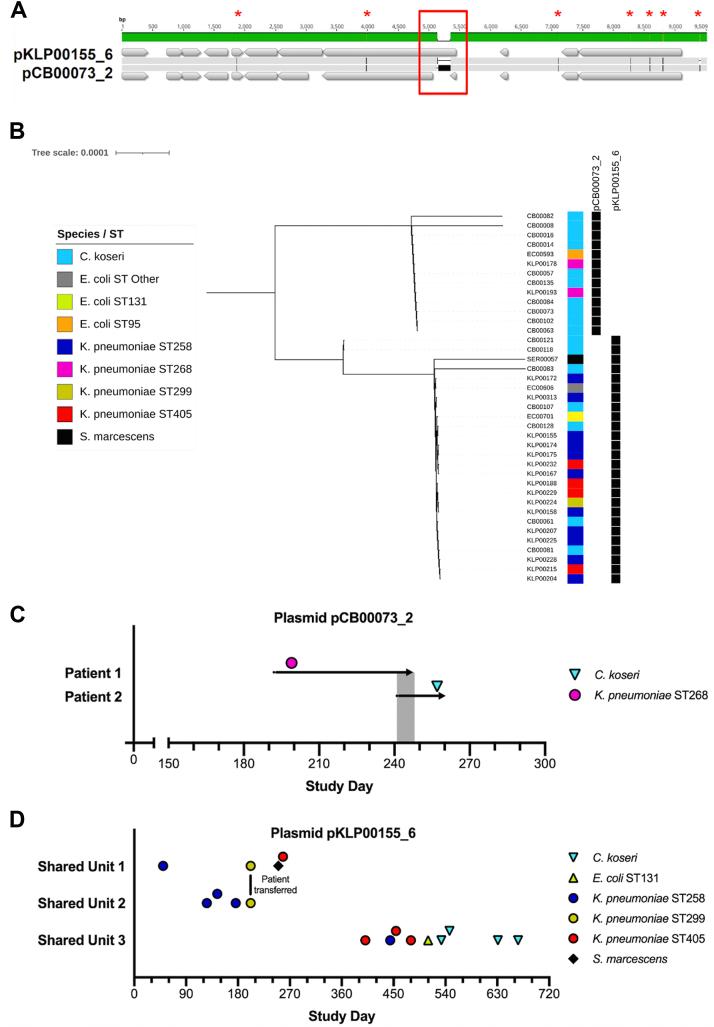
Our analyses determined that 95% of analyzed genomes maintained roughly 95% of their plasmid genetic content and accumulated fewer than 15 SNPs per 100 kb of plasmid sequence. Applying these similarity thresholds to identify horizontal plasmid transfer identified 45 plasmids that potentially circulated among clinical isolates. Ten highly preserved plasmids met criteria for geotemporal links associated with horizontal transfer. Several plasmids with shared backbones also encoded different additional mobile genetic element content, and these elements were variably present among the sampled clinical isolate genomes.
INTERPRETATION
Evidence suggests that the horizontal transfer of plasmids among nosocomial bacterial pathogens appears to be frequent within hospitals and can be monitored with whole genome sequencing and comparative genomics approaches. These approaches should incorporate both nucleotide identity and reference sequence coverage to study the dynamics of plasmid transfer in the hospital.
FUNDING
This research was supported by the US National Institute of Allergy and Infectious Disease (NIAID) and the University of Pittsburgh School of Medicine.
背景
与医疗保健相关的细菌病原体经常携带有助于抗生素耐药性和毒力的质粒。先前已经记录了医疗保健环境中质粒的水平转移,但研究这种现象的基因组和流行病学方法仍不够发达。本研究的目的是应用全基因组测序系统地解析和跟踪单个医院中医院获得性病原体携带的质粒,并确定表明可能发生水平质粒转移的流行病学联系。
方法
我们对感染大型医院患者的细菌分离株中循环的质粒进行了观察性研究。我们首先检查了来自同一患者的随时间推移携带的分离株和在同一医院引起克隆性暴发的分离株所携带的质粒,以开发可以推断三级医院内部水平质粒转移的阈值。然后,我们应用这些序列相似性阈值对来自单个医院的 3074 个医院获得性细菌分离株的基因组进行系统筛选,以确定 89 个质粒的存在情况。我们还收集并审查了电子病历中的数据,以寻找携带感兴趣质粒的细菌感染患者之间的地理时间联系的证据。
结果
我们的分析确定,分析的基因组中有 95%的基因组大致保持其质粒遗传内容的 95%,并且每 100kb 的质粒序列积累少于 15 个 SNPs。应用这些相似性阈值来识别水平质粒转移,鉴定出 45 个可能在临床分离株之间循环的质粒。10 个高度保存的质粒符合与水平转移相关的地理时间联系的标准。具有共享骨架的几个质粒还编码了不同的额外移动遗传元件内容,并且这些元件在采样的临床分离株基因组中存在差异。
解释
有证据表明,医院内医院获得性细菌病原体之间的质粒水平转移似乎很频繁,可以通过全基因组测序和比较基因组学方法进行监测。这些方法应将核苷酸同一性和参考序列覆盖范围结合起来,以研究医院内质粒转移的动态。
资金
这项研究得到了美国国立过敏和传染病研究所(NIAID)和匹兹堡大学医学院的支持。
 Zotero 插件