
探索苯乙炔基自由基 (CHCC;XA)与丙二烯 (HCCCH;XA)和甲基乙炔 (CHCCH;XA)反应的化学动力学。
Exploring the Chemical Dynamics of Phenylethynyl Radical (CHCC; XA) Reactions with Allene (HCCCH; XA) and Methylacetylene (CHCCH; XA).
机构信息
Department of Chemistry, University of Hawaii at Ma̅noa, Honolulu, Hawaii 96822, United States.
Lehrstuhl für Organische Chemie II, Ruhr-Universität Bochum, Bochum 44801, Germany.
出版信息
J Phys Chem A. 2023 Jul 13;127(27):5723-5733. doi: 10.1021/acs.jpca.3c03077. Epub 2023 Jul 4.
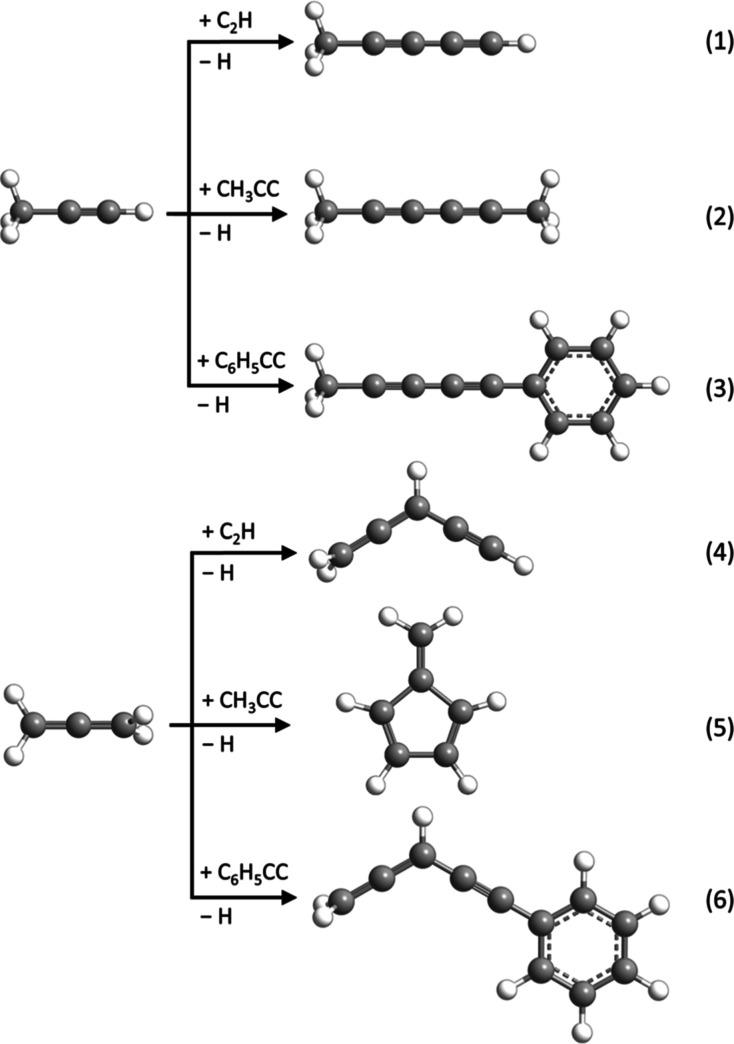
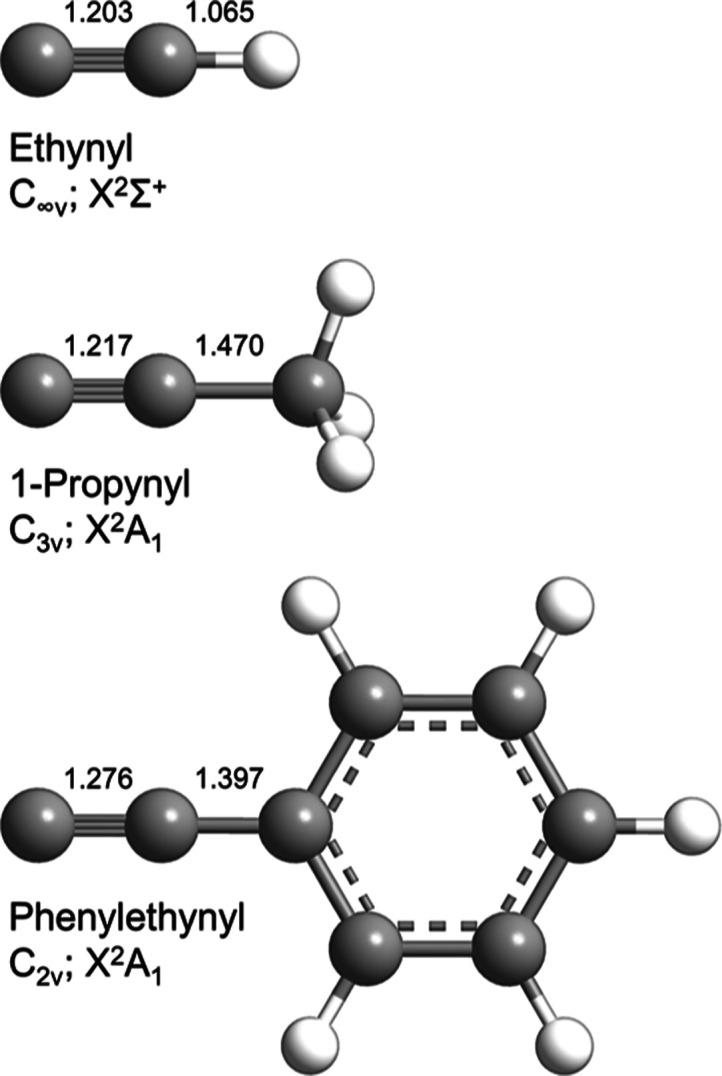
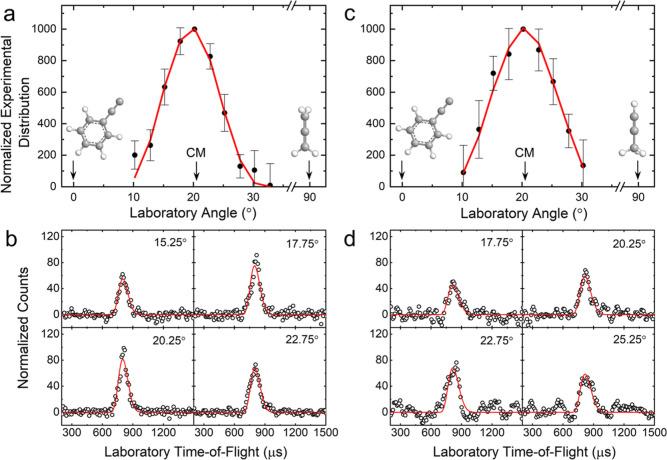
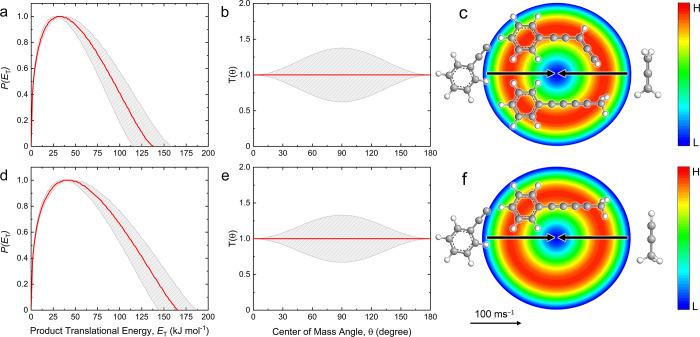
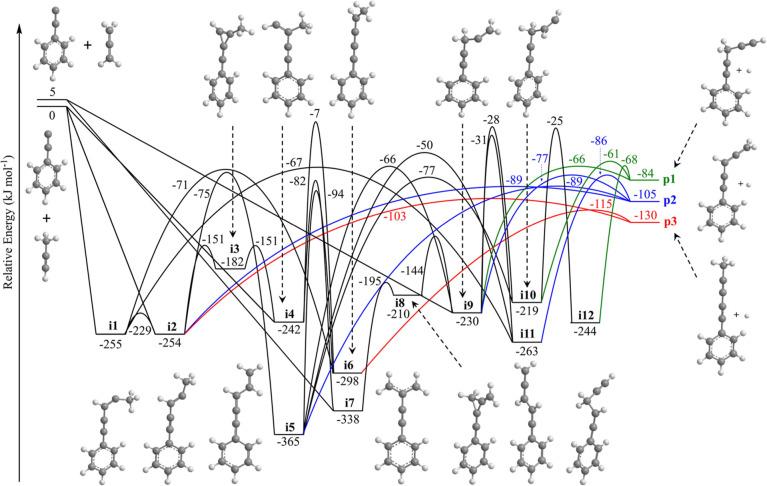
The bimolecular gas-phase reactions of the phenylethynyl radical (CHCC, XA) with allene (HCCCH), allene- (DCCCD), and methylacetylene (CHCCH) were studied under single-collision conditions utilizing the crossed molecular beams technique and merged with electronic structure and statistical calculations. The phenylethynyl radical was found to add without an entrance barrier to the C1 carbon of the allene and methylacetylene reactants, resulting in doublet CH collision complexes with lifetimes longer than their rotational periods. These intermediates underwent unimolecular decomposition via atomic hydrogen loss through tight exit transition states in facile radical addition─hydrogen atom elimination mechanisms forming predominantly 3,4-pentadien-1-yn-1-ylbenzene (CHCCCHCCH) and 1-phenyl-1,3-pentadiyne (CHCCCCCH) in overall exoergic reactions (-110 kJ mol and -130 kJ mol) for the phenylethynyl-allene and phenylethynyl-methylacetylene systems, respectively. These barrierless reaction mechanisms mirror those of the ethynyl radical (CH, XΣ) with allene and methylacetylene forming predominantly ethynylallene (HCCCHCCH) and methyldiacetylene (HCCCCCH), respectively, suggesting that in the aforementioned reactions the phenyl group acts as a spectator. These molecular mass growth processes are accessible in low-temperature environments such as cold molecular clouds (TMC-1) or Saturn's moon Titan, efficiently incorporating a benzene ring into unsaturated hydrocarbons.
苯乙炔基自由基(CHCC,XA)与丙二烯(HCCCH)、丙二烯-(DCCCD)和甲基乙炔(CHCCH)的双分子气相反应在单分子碰撞条件下利用交叉分子束技术进行了研究,并与电子结构和统计计算相结合。研究发现,苯乙炔基自由基在没有入口势垒的情况下与丙二烯和甲基乙炔反应物的 C1 碳原子加成,形成寿命长于其旋转周期的双重 CH 碰撞复合物。这些中间体通过紧密出口过渡态经历了单分子分解,通过紧密出口过渡态失去原子氢,通过容易的自由基加成-氢原子消除机制形成主要的 3,4-戊二烯-1-炔-1-基苯(CHCCCHCCH)和 1-苯基-1,3-戊二炔(CHCCCCCH),在总放能反应中(-110 kJ mol 和-130 kJ mol)对于苯乙炔基-丙二烯和苯乙炔基-甲基乙炔体系,分别。这些无势垒反应机制反映了乙炔基自由基(CH,XΣ)与丙二烯和甲基乙炔的反应机制,分别形成主要的乙炔基丙二烯(HCCCHCCH)和甲基二乙炔(HCCCCCH),这表明在上述反应中,苯基基团作为旁观者。这些分子质量增长过程可在低温环境中进行,例如冷分子云(TMC-1)或土星的卫星泰坦,有效地将苯环掺入不饱和烃中。

 Zotero 插件