
雾化硫酸镁作为慢性阻塞性肺疾病急性加重期治疗的辅助药物:一项采用序贯试验分析的随机对照试验的系统评价和荟萃分析
Nebulised magnesium sulphate as an adjuvant to the treatment of acute exacerbation of COPD: A systematic review and meta-analysis of randomised controlled trials with trial sequential analysis.
作者信息
Datta Priyankar Kumar, Aravindan Ajisha, Nath Sayan, Chowdhury Sumit Roy, Dutta Deep
机构信息
Department of Anaesthesiology, Pain Medicine and Critical Care, All India Institute of Medical Sciences, New Delhi, India.
Department of Neuro-Anaesthesiology and Critical Care, All India Institute of Medical Sciences, New Delhi, India.
出版信息
Lung India. 2023 Jul-Aug;40(4):339-348. doi: 10.4103/lungindia.lungindia_473_22.
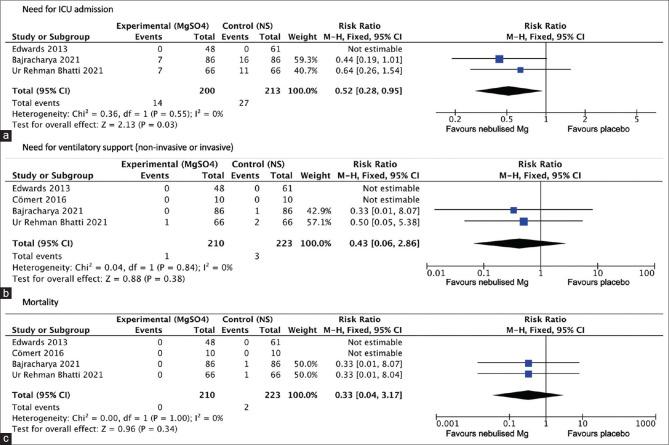
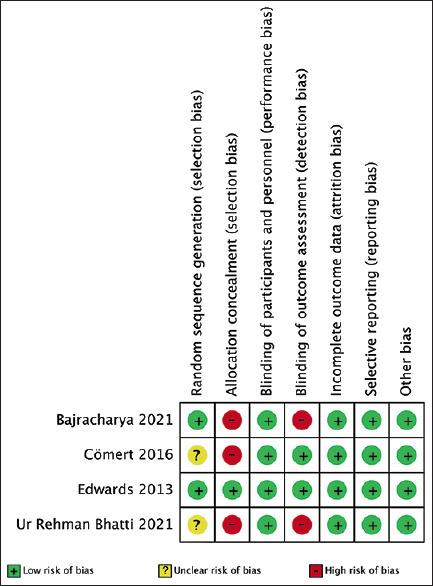
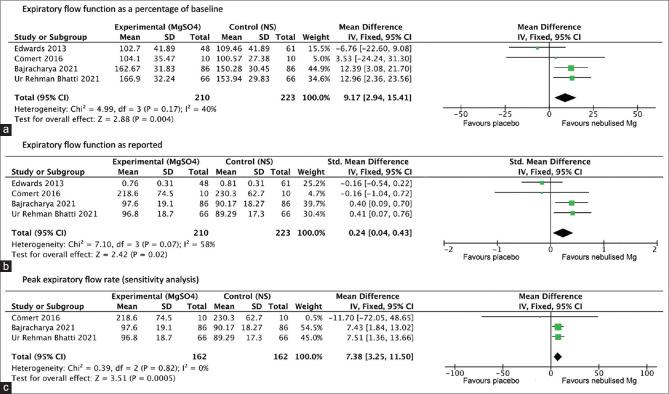
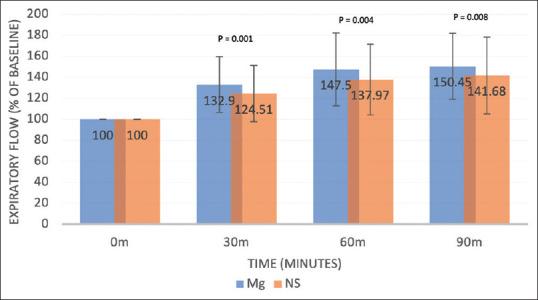
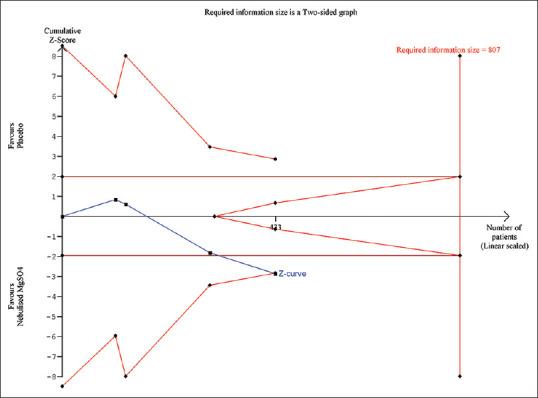
The purpose of this meta-analysis was to evaluate the efficacy of nebulised magnesium in the treatment of acute exacerbation of COPD. PubMed and Embase databases were searched for randomised controlled trials comparing any dose of nebulised magnesium sulphate with placebo for treatment of acute exacerbation of COPD, published from database inception till 30 June 2022. Bibliographic mining of relevant results was performed to identify any additional studies. Data extraction and analyses were done independently by review authors and any disagreements were resolved through consensus. Meta-analysis was done using a fixed-effect model at clinically significant congruent time points reported across maximum studies to ensure comparability of treatment effect. Four studies met the inclusion criteria, randomly assigning 433 patients to the comparisons of interest in this review. Pooled analysis showed that nebulised magnesium sulphate improved pulmonary expiratory flow function at 60 minutes after initiation of intervention compared to placebo [median difference (MD) 9.17%, 95% confidence interval (CI) 2.94 to 15.41]. Analysis of expiratory function in terms of standardised mean differences (SMD) revealed a small yet significant positive effect size (SMD 0.24, 95% CI 0.04 to 0.43). Among the secondary outcomes, nebulised magnesium sulphate reduced the need for ICU admission (risk ratio 0.52, 95% CI 0.28 to 0.95), amounting to 61 fewer ICU admissions per 1000 patients. No difference was noted in the need for hospital admission, need for ventilatory support, or mortality. No adverse events were reported. Nebulised magnesium sulphate improves pulmonary expiratory flow function and reduces the need for ICU admission in patients with acute exacerbation of COPD.
本荟萃分析的目的是评估雾化吸入镁治疗慢性阻塞性肺疾病(COPD)急性加重期的疗效。检索了PubMed和Embase数据库,以查找从数据库建立至2022年6月30日发表的比较任何剂量雾化硫酸镁与安慰剂治疗COPD急性加重期的随机对照试验。对相关结果进行文献挖掘以识别任何其他研究。数据提取和分析由综述作者独立完成,任何分歧通过协商解决。在大多数研究报告的具有临床意义的一致时间点使用固定效应模型进行荟萃分析,以确保治疗效果的可比性。四项研究符合纳入标准,将433例患者随机分配至本综述感兴趣的比较组。汇总分析显示,与安慰剂相比,雾化硫酸镁在干预开始后60分钟时改善了肺呼气流量功能[中位数差异(MD)9.17%,95%置信区间(CI)2.94至15.41]。根据标准化均数差(SMD)对呼气功能进行分析显示,效应量虽小但具有显著的正向作用(SMD 0.24,95%CI 0.04至0.43)。在次要结局中,雾化硫酸镁减少了入住重症监护病房(ICU)的需求(风险比0.52,95%CI 0.28至0.95),相当于每1000例患者中少61例入住ICU。在住院需求、通气支持需求或死亡率方面未发现差异。未报告不良事件。雾化硫酸镁可改善COPD急性加重期患者的肺呼气流量功能并减少入住ICU的需求。

 Zotero 插件