
新冠肺炎长期康复后 SARS-CoV-2 特异性 T 细胞应答的广度和持久性。
Breadth and Durability of SARS-CoV-2-Specific T Cell Responses following Long-Term Recovery from COVID-19.
机构信息
AIDS Research Center, National Institute of Infectious Diseases, Tokyo, Japan.
Joint Research Center for Human Retrovirus Infection, Kumamoto University, Kumamoto, Japan.
出版信息
Microbiol Spectr. 2023 Aug 17;11(4):e0214323. doi: 10.1128/spectrum.02143-23. Epub 2023 Jul 10.
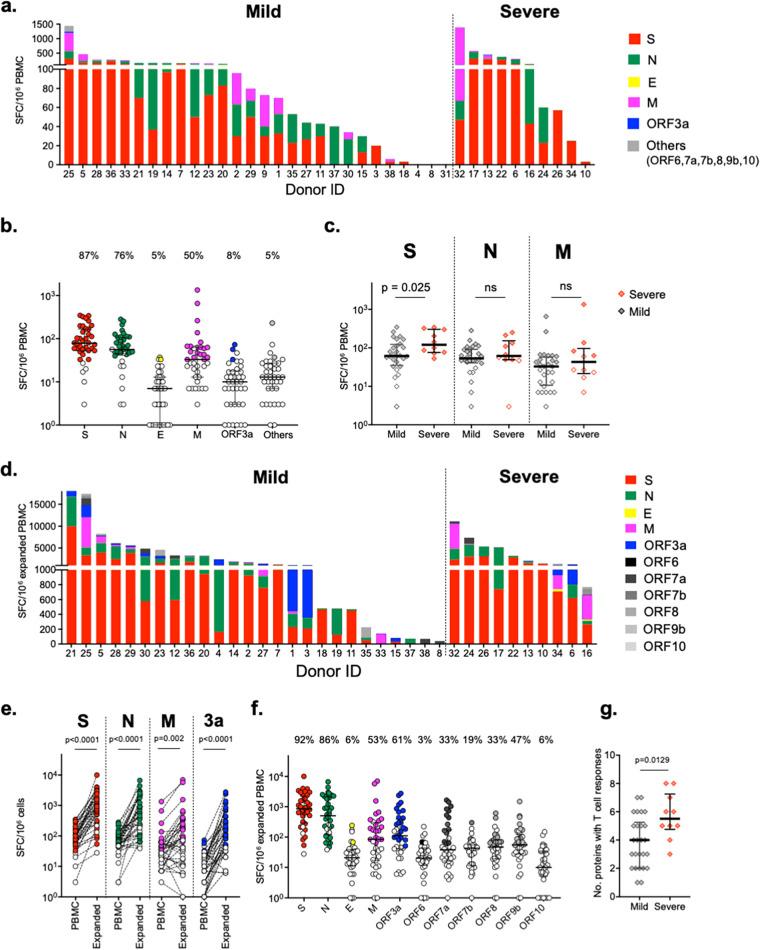
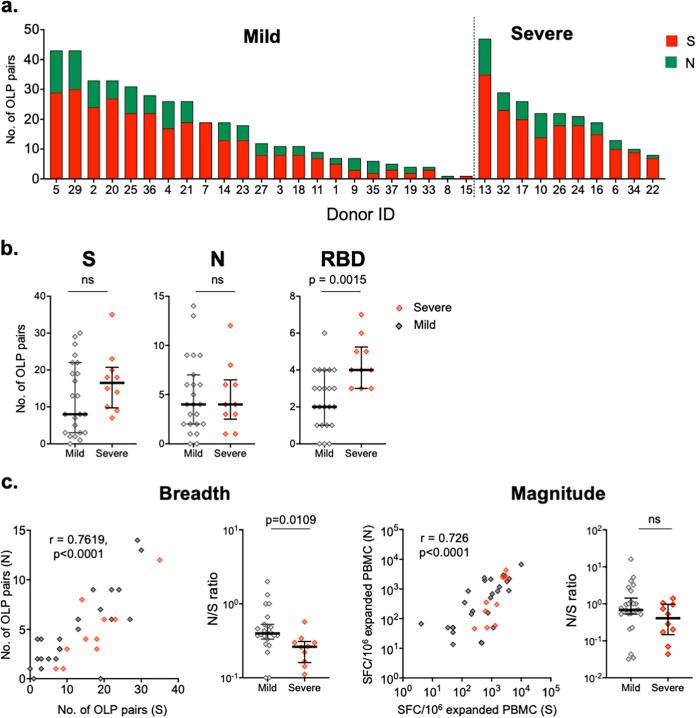
T cell immunity is crucial for long-term immunological memory, but the profile of severe acute respiratory syndrome coronavirus 2 (SARS-CoV-2)-specific memory T cells in individuals who recovered from COVID-19 (COVID-19-convalescent individuals) is not sufficiently assessed. In this study, the breadth and magnitude of SARS-CoV-2-specific T cell responses were determined in COVID-19-convalescent individuals in Japan. Memory T cells against SARS-CoV-2 were detected in all convalescent individuals, and those with more severe disease exhibited a broader T cell response relative to cases with mild symptoms. Comprehensive screening of T cell responses at the peptide level was conducted for spike (S) and nucleocapsid (N) proteins, and regions frequently targeted by T cells were identified. Multiple regions in S and N proteins were targeted by memory T cells, with median numbers of target regions of 13 and 4, respectively. A maximum of 47 regions were recognized by memory T cells for an individual. These data indicate that SARS-CoV-2-convalescent individuals maintain a substantial breadth of memory T cells for at least several months following infection. Broader SARS-CoV-2-specific CD4 T cell responses, relative to CD8 T cell responses, were observed for the S but not the N protein, suggesting that antigen presentation is different between viral proteins. The binding affinity of predicted CD8 T cell epitopes to HLA class I molecules in these regions was preserved for the Delta variant and at 94 to 96% for SARS-CoV-2 Omicron subvariants, suggesting that the amino acid changes in these variants do not have a major impact on antigen presentation to SARS-CoV-2-specific CD8 T cells. RNA viruses, including SARS-CoV-2, evade host immune responses through mutations. As broader T cell responses against multiple viral proteins could minimize the impact of each single amino acid mutation, the breadth of memory T cells would be one essential parameter for effective protection. In this study, breadth of memory T cells to S and N proteins was assessed in COVID-19-convalescent individuals. While broad T cell responses were induced against both proteins, the ratio of N to S proteins for breadth of T cell responses was significantly higher in milder cases. The breadth of CD4 and CD8 T cell responses was also significantly different between S and N proteins, suggesting different contributions of N and S protein-specific T cells for COVID-19 control. Most CD8 T cell epitopes in the immunodominant regions maintained their HLA binding to SARS-CoV-2 Omicron subvariants. Our study provides insights into understanding the protective efficacy of SARS-CoV-2-specific memory T cells against reinfection.
T 细胞免疫对于长期的免疫记忆至关重要,但从 COVID-19(COVID-19 康复者)中康复的个体中,严重急性呼吸综合征冠状病毒 2(SARS-CoV-2)特异性记忆 T 细胞的特征尚未得到充分评估。在这项研究中,研究人员在日本的 COVID-19 康复者中确定了 SARS-CoV-2 特异性 T 细胞反应的广度和幅度。在所有康复者中均检测到针对 SARS-CoV-2 的记忆 T 细胞,并且与轻症病例相比,疾病更严重的患者表现出更广泛的 T 细胞反应。对 Spike(S)和核衣壳(N)蛋白进行了广泛的 T 细胞反应筛查,并鉴定了经常被 T 细胞靶向的区域。记忆 T 细胞靶向 S 和 N 蛋白的多个区域,分别靶向的中位数分别为 13 和 4 个。单个个体的记忆 T 细胞可识别多达 47 个区域。这些数据表明,SARS-CoV-2 康复者在感染后至少几个月内保持了大量的记忆 T 细胞。与 N 蛋白相比,S 蛋白的 SARS-CoV-2 特异性 CD4 T 细胞反应更广泛,这表明病毒蛋白之间的抗原呈递不同。在这些区域中,预测的 CD8 T 细胞表位与 HLA Ⅰ类分子的结合亲和力在 Delta 变体中保持不变,对于 SARS-CoV-2 Omicron 亚变体为 94%至 96%,这表明这些变体中的氨基酸变化对 SARS-CoV-2 特异性 CD8 T 细胞的抗原呈递没有重大影响。包括 SARS-CoV-2 在内的 RNA 病毒通过突变逃避宿主免疫反应。由于针对多种病毒蛋白的更广泛的 T 细胞反应可以最小化每个单个氨基酸突变的影响,因此记忆 T 细胞的广度将是有效保护的一个重要参数。在这项研究中,评估了 COVID-19 康复者中针对 S 和 N 蛋白的记忆 T 细胞的广度。虽然针对两种蛋白都诱导了广泛的 T 细胞反应,但在轻症病例中,N 蛋白与 S 蛋白的 T 细胞反应广度比值显著更高。CD4 和 CD8 T 细胞反应的广度在 S 和 N 蛋白之间也有显著差异,这表明 N 和 S 蛋白特异性 T 细胞对 COVID-19 控制的不同贡献。免疫优势区域的大多数 CD8 T 细胞表位仍保持与 SARS-CoV-2 Omicron 亚变体的 HLA 结合。我们的研究提供了对 SARS-CoV-2 特异性记忆 T 细胞对再感染的保护效力的理解。



 Zotero 插件