
RNA 干扰或 runt 相关转录因子 1 小分子抑制在边缘区可预防心肌梗死后的心脏收缩功能障碍。
Ribonucleicacid interference or small molecule inhibition of Runx1 in the border zone prevents cardiac contractile dysfunction following myocardial infarction.
机构信息
British Heart Foundation Glasgow Cardiovascular Research Centre, School of Cardiovascular and Metabolic Health, University of Glasgow, University Place, Glasgow G12 8TA, UK.
Faculty of Medicine, Institute for Experimental Cardiovascular Medicine, University Heart Centre Freiburg/Bad Krozingen, 79110 Freiburg, Germany.
出版信息
Cardiovasc Res. 2023 Dec 19;119(16):2663-2671. doi: 10.1093/cvr/cvad107.
AIMS
Myocardial infarction (MI) is a major cause of death worldwide. Effective treatments are required to improve recovery of cardiac function following MI, with the aim of improving patient outcomes and preventing progression to heart failure. The perfused but hypocontractile region bordering an infarct is functionally distinct from the remote surviving myocardium and is a determinant of adverse remodelling and cardiac contractility. Expression of the transcription factor RUNX1 is increased in the border zone 1-day after MI, suggesting potential for targeted therapeutic intervention.
OBJECTIVE
This study sought to investigate whether an increase in RUNX1 in the border zone can be therapeutically targeted to preserve contractility following MI.
METHODS AND RESULTS
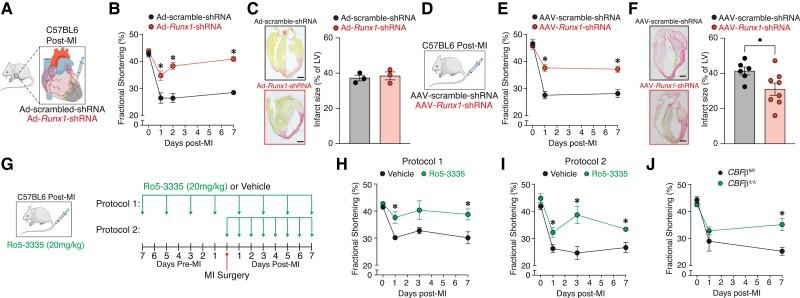
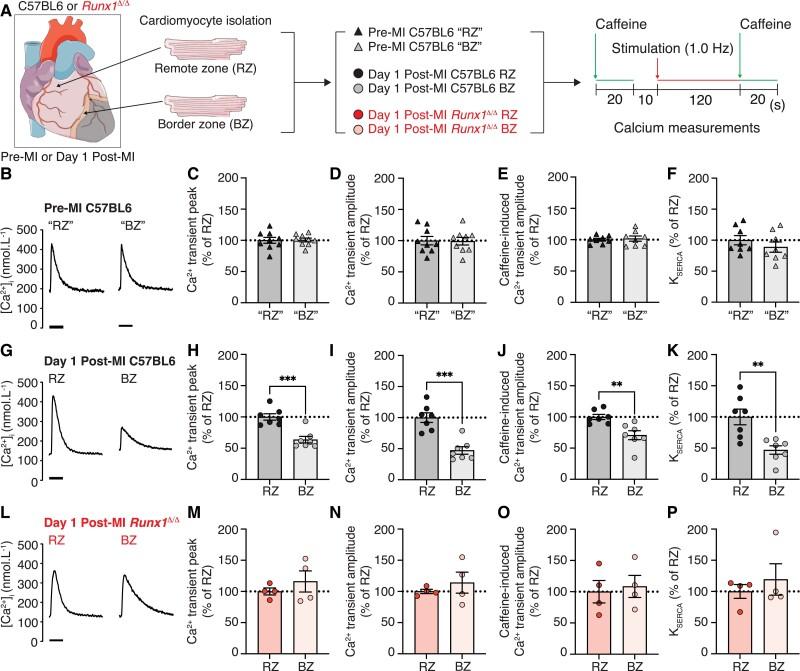
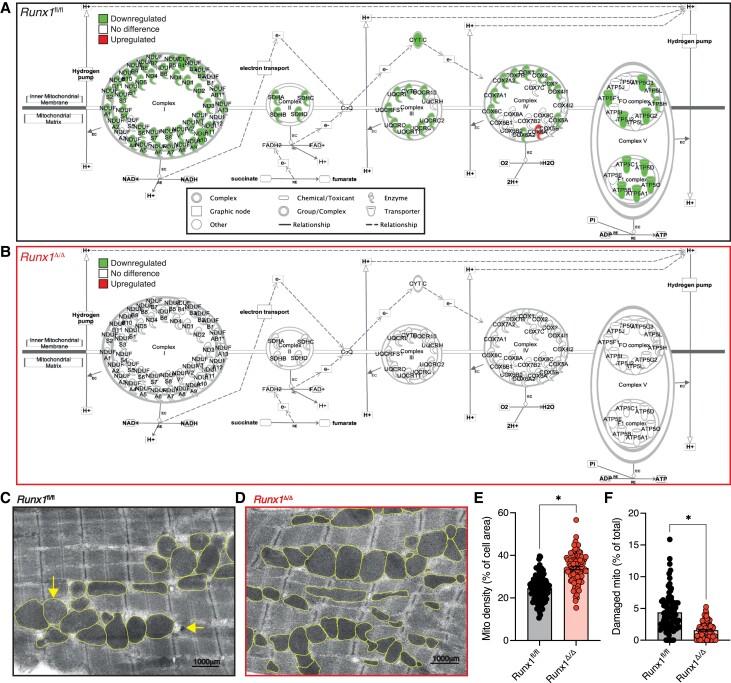
In this work we demonstrate that Runx1 drives reductions in cardiomyocyte contractility, calcium handling, mitochondrial density, and expression of genes important for oxidative phosphorylation. Both tamoxifen-inducible Runx1-deficient and essential co-factor common β subunit (Cbfβ)-deficient cardiomyocyte-specific mouse models demonstrated that antagonizing RUNX1 function preserves the expression of genes important for oxidative phosphorylation following MI. Antagonizing RUNX1 expression via short-hairpin RNA interference preserved contractile function following MI. Equivalent effects were obtained with a small molecule inhibitor (Ro5-3335) that reduces RUNX1 function by blocking its interaction with CBFβ.
CONCLUSIONS
Our results confirm the translational potential of RUNX1 as a novel therapeutic target in MI, with wider opportunities for use across a range of cardiac diseases where RUNX1 drives adverse cardiac remodelling.
目的
心肌梗死(MI)是全球范围内主要的死亡原因。需要有效的治疗方法来改善 MI 后心脏功能的恢复,以改善患者的预后并防止进展为心力衰竭。与梗死相邻的灌注但收缩功能低下的区域在功能上与远程存活心肌不同,是不良重构和心脏收缩力的决定因素。转录因子 RUNX1 的表达在 MI 后 1 天在边界区增加,表明有针对性的治疗干预的潜力。
目的
本研究旨在探讨边界区 RUNX1 的增加是否可以通过靶向治疗来维持 MI 后收缩功能。
方法和结果
在这项工作中,我们证明了 Runx1 导致心肌细胞收缩力、钙处理、线粒体密度和参与氧化磷酸化的基因表达减少。Tamoxifen 诱导的 Runx1 缺陷型和必需的共同辅因子β亚基(Cbfβ)缺陷型心肌细胞特异性小鼠模型均表明,拮抗 RUNX1 功能可在 MI 后维持参与氧化磷酸化的基因表达。通过短发夹 RNA 干扰拮抗 RUNX1 表达可在 MI 后保持收缩功能。通过阻断其与 CBFβ 的相互作用来减少 RUNX1 功能的小分子抑制剂(Ro5-3335)也可获得等效的效果。
结论
我们的结果证实了 RUNX1 作为 MI 中一种新型治疗靶点的转化潜力,并且在 RUNX1 驱动不良心脏重构的一系列心脏疾病中具有更广泛的应用机会。

 Zotero 插件