
微塑料会是早发性结直肠癌的一个驱动因素吗?
Could Microplastics Be a Driver for Early Onset Colorectal Cancer?
作者信息
Li Shelley, Keenan Jacqueline I, Shaw Ian C, Frizelle Frank A
机构信息
Department of Surgery, University of Otago Christchurch, Christchurch 8011, New Zealand.
School of Physical & Chemical Sciences, University of Canterbury, Christchurch 8041, New Zealand.
出版信息
Cancers (Basel). 2023 Jun 24;15(13):3323. doi: 10.3390/cancers15133323.
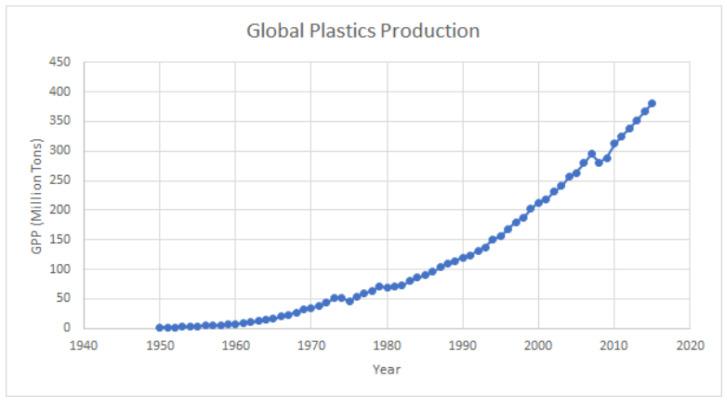
The incidence of colorectal cancer in those under 50 years of age (early onset colorectal cancer (EOCRC)) is increasing throughout the world. This has predominantly been an increase in distal colonic and rectal cancers, which are biologically similar to late onset colorectal cancer (LOCRC) but with higher rates of mucinous or signet ring histology, or poorly differentiated cancers. The epidemiology of this change suggests that it is a cohort effect since 1960, and is most likely driven by an environmental cause. We explore the possible role of microplastics as a driver for this change. The development of sporadic colorectal cancer is likely facilitated by the interaction of gut bacteria and the intestinal wall. Normally, a complex layer of luminal mucus provides colonocytes with a level of protection from the effects of these bacteria and their toxins. Plastics were first developed in the early 1900s. After 1945 they became more widely used, with a resultant dramatic increase in plastic pollution and their breakdown to microplastics. Microplastics (MPs) are consumed by humans from an early age and in increasingly large quantities. As MPs pass through the gastrointestinal tract they interact with the normal physiological mechanism of the body, particularly in the colon and rectum, where they may interact with the protective colonic mucus layer. We describe several possible mechanisms of how microplastics may disrupt this mucus layer, thus reducing its protective effect and increasing the likelihood of colorectal cancer. The epidemiology of increase in EOCRC suggests an environmental driver. This increase in EOCRC matches the time sequence in which we could expect to see an effect of rapid increase of MPs in the environment and, as such, we have explored possible mechanisms for this effect. We suggest that it is possible that the MPs damage the barrier integrity of the colonic mucus layer, thus reducing its protective effect. MPs in CRC pathogenesis warrants further investigation. Further clarification needs to be sought regarding the interaction between MPs, gut microbiota and the mucus layer. This will need to be modelled in long-term animal studies to better understand how chronic consumption of environmentally-acquired MPs may contribute to an increased risk of colorectal carcinogenesis.
50岁以下人群的结直肠癌发病率(早发性结直肠癌,EOCRC)在全球范围内呈上升趋势。这种增长主要表现为远端结肠癌和直肠癌的增加,它们在生物学上与晚发性结直肠癌(LOCRC)相似,但黏液性或印戒样组织学类型的发生率更高,或者是低分化癌。这种变化的流行病学表明,自1960年以来这是一种队列效应,很可能是由环境因素驱动的。我们探讨了微塑料作为这一变化驱动因素的可能作用。散发性结直肠癌的发生可能得益于肠道细菌与肠壁的相互作用。正常情况下,一层复杂的腔内黏液为结肠细胞提供了一定程度的保护,使其免受这些细菌及其毒素的影响。塑料最早于20世纪初被开发出来。1945年以后,它们的使用更加广泛,导致塑料污染急剧增加,并分解为微塑料。微塑料在人们幼年时就开始被摄入,且摄入量越来越大。当微塑料通过胃肠道时,它们会与人体的正常生理机制相互作用,尤其是在结肠和直肠,在那里它们可能会与保护性的结肠黏液层相互作用。我们描述了微塑料可能破坏这一黏液层的几种可能机制,从而降低其保护作用,增加患结直肠癌的可能性。早发性结直肠癌增加的流行病学表明存在环境驱动因素。早发性结直肠癌的这种增加与我们预期在环境中微塑料迅速增加会产生影响的时间顺序相匹配,因此,我们探讨了这种影响的可能机制。我们认为微塑料有可能损害结肠黏液层的屏障完整性,从而降低其保护作用。微塑料在结直肠癌发病机制中的作用值得进一步研究。关于微塑料、肠道微生物群和黏液层之间的相互作用,需要进一步阐明。这需要在长期动物研究中进行模拟,以更好地了解长期摄入环境中的微塑料如何可能导致结直肠癌发生风险增加。

 Zotero 插件