
基于复合材料的离子选择性电极:综述。
Ion-Selective Electrodes with Solid Contact Based on Composite Materials: A Review.
机构信息
Department of Analytical Chemistry, Institute of Chemical Sciences, Faculty of Chemistry, Maria Curie-Sklodowska University, Maria Curie-Sklodowska Square. 3, 20-031 Lublin, Poland.
Department of Food and Nutrition, Medical University of Lublin, 4a Chodzki Str., 20-093 Lublin, Poland.
出版信息
Sensors (Basel). 2023 Jun 23;23(13):5839. doi: 10.3390/s23135839.
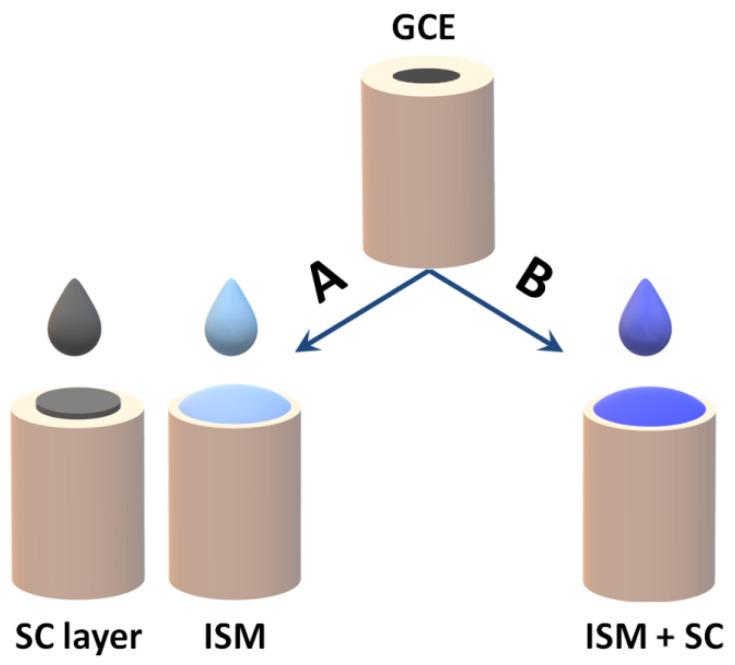
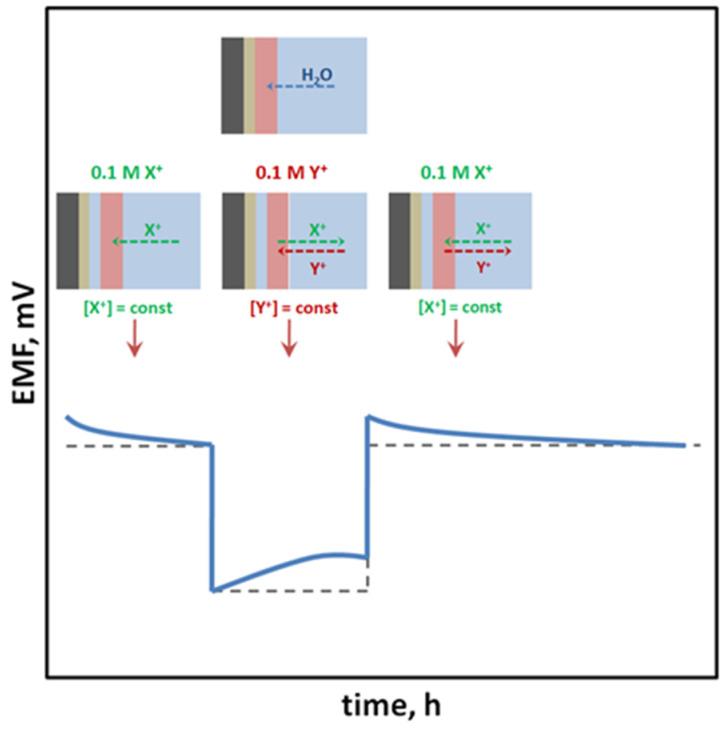
Potentiometric sensors are the largest and most commonly used group of electrochemical sensors. Among them, ion-selective electrodes hold a prominent place. Since the end of the last century, their re-development has been observed, which is a consequence of the introduction of solid contact constructions, i.e., electrodes without an internal electrolyte solution. Research carried out in the field of potentiometric sensors primarily focuses on developing new variants of solid contact in order to obtain devices with better analytical parameters, and at the same time cheaper and easier to use, which has been made possible thanks to the achievements of material engineering. This paper presents an overview of new materials used as a solid contact in ion-selective electrodes over the past several years. These are primarily composite and hybrid materials that are a combination of carbon nanomaterials and polymers, as well as those obtained from carbon and polymer nanomaterials in combination with others, such as metal nanoparticles, metal oxides, ionic liquids and many others. Composite materials often have better mechanical, thermal, electrical, optical and chemical properties than the original components. With regard to their use in the construction of ion-selective electrodes, it is particularly important to increase the capacitance and surface area of the material, which makes them more effective in the process of charge transfer between the polymer membrane and the substrate material. This allows to obtain sensors with better analytical and operational parameters. Brief characteristics of electrodes with solid contact, their advantages and disadvantages, as well as research methods used to assess their parameters and analytical usefulness were presented. The work was divided into chapters according to the type of composite material, while the data in the table were arranged according to the type of ion. Selected basic analytical parameters of the obtained electrodes have been collected and summarized in order to better illustrate and compare the achievements that have been described till now in this field of analytical chemistry, which is potentiometry. This comprehensive review is a compendium of knowledge in the research area of functional composite materials and state-of-the-art SC-ISE construction technologies.
电位传感器是电化学传感器中最大和最常用的一类。其中,离子选择性电极占有突出地位。自上世纪末以来,人们观察到它们的重新发展,这是由于采用了固体接触结构,即没有内部电解质溶液的电极。电位传感器领域的研究主要集中在开发新的固体接触变体上,以获得具有更好分析参数的器件,同时使其更便宜、更易于使用,这得益于材料工程的成就。本文综述了近年来用作离子选择性电极固体接触的新材料。这些主要是复合材料和混合材料,它们是碳纳米材料和聚合物的组合,以及由碳和聚合物纳米材料与其他材料(如金属纳米粒子、金属氧化物、离子液体等)组合而成的材料。复合材料通常具有比原始成分更好的机械、热、电、光和化学性能。就其在离子选择性电极结构中的应用而言,特别重要的是增加材料的电容和表面积,这使其在聚合物膜和基底材料之间的电荷转移过程中更有效。这使得可以获得具有更好分析和操作参数的传感器。简要介绍了具有固体接触的电极的特点、优点和缺点,以及用于评估其参数和分析有用性的研究方法。该工作根据复合材料的类型分为章节,而表中的数据则根据离子的类型进行排列。为了更好地说明和比较迄今为止在这个分析化学领域(即电位法)中所描述的成就,收集并总结了获得的电极的选定基本分析参数。这篇全面的综述是功能复合材料研究领域和最新 SC-ISE 构建技术的知识纲要。



 Zotero 插件