
缺氧诱导因子在肾脏疾病发病机制中的作用:通过细胞代谢建立的联系
The impact of hypoxia-inducible factors in the pathogenesis of kidney diseases: a link through cell metabolism.
作者信息
Foresto-Neto Orestes, da Silva Ana Ruth Paolinetti Alves, Cipelli Marcella, Santana-Novelli Fernanda Paula Roncon, Camara Niels Olsen Saraiva
机构信息
Department of Immunology, Institute of Biomedical Sciences, University of São Paulo, São Paulo, Brazil.
Division of Nephrology, Department of Medicine, Federal University of São Paulo, São Paulo, Brazil.
出版信息
Kidney Res Clin Pract. 2023 Sep;42(5):561-578. doi: 10.23876/j.krcp.23.012. Epub 2023 Jun 15.
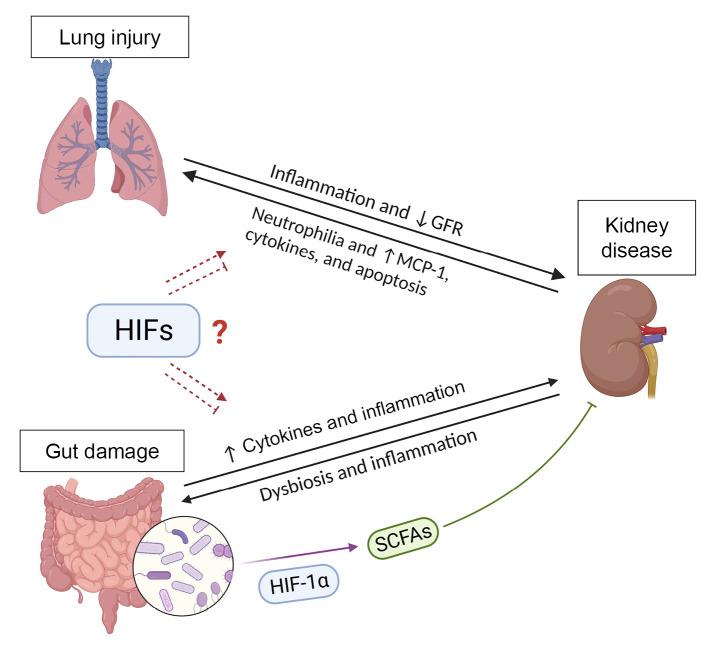
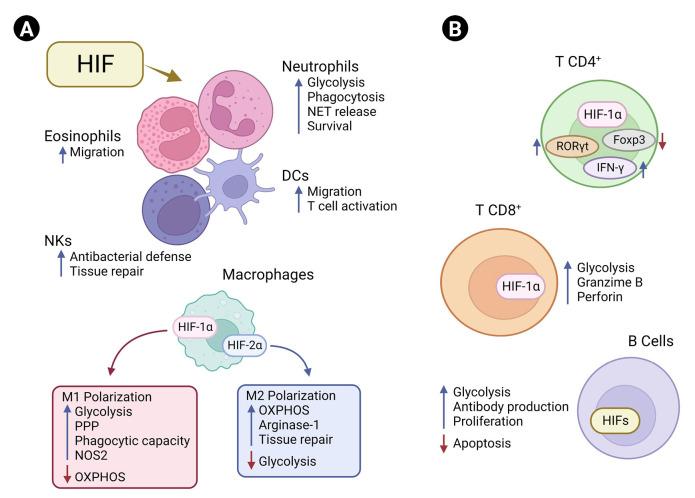
Kidneys are sensitive to disturbances in oxygen homeostasis. Hypoxia and activation of the hypoxia-inducible factor (HIF) pathway alter the expression of genes involved in the metabolism of renal and immune cells, interfering with their functioning. Whether the transcriptional activity of HIF protects the kidneys or participates in the pathogenesis of renal diseases is unclear. Several studies have indicated that HIF signaling promotes fibrosis in experimental models of kidney disease. Other reports showed a protective effect of HIF activation on kidney inflammation and injury. In addition to the direct effect of HIF on the kidneys, experimental evidence indicates that HIF-mediated metabolic shift activates inflammatory cells, supporting the HIF cascade as a link between lung or gut damage and worsening of renal disease. Although hypoxia and HIF activation are present in several scenarios of renal diseases, further investigations are needed to clarify whether interfering with the HIF pathway is beneficial in different pathological contexts.
肾脏对氧稳态的紊乱很敏感。缺氧和缺氧诱导因子(HIF)途径的激活会改变参与肾细胞和免疫细胞代谢的基因表达,干扰它们的功能。HIF的转录活性是保护肾脏还是参与肾脏疾病的发病机制尚不清楚。几项研究表明,HIF信号传导在肾脏疾病的实验模型中促进纤维化。其他报告显示HIF激活对肾脏炎症和损伤有保护作用。除了HIF对肾脏的直接作用外,实验证据表明HIF介导的代谢转变会激活炎症细胞,支持HIF级联反应作为肺或肠道损伤与肾脏疾病恶化之间的联系。尽管在几种肾脏疾病情况下都存在缺氧和HIF激活,但仍需要进一步研究以阐明干扰HIF途径在不同病理背景下是否有益。
 Zotero 插件